





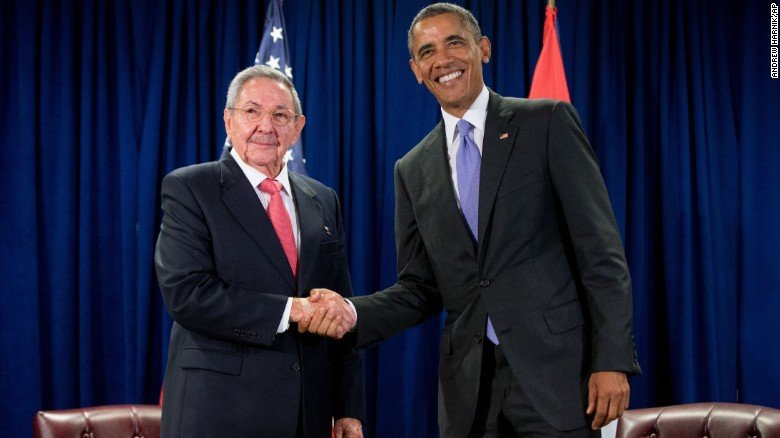
In a significant development, US President Barack Obama is set to make a historic official visit to Cuba from March 21–22. Announcing the decision, Mr Obama said: “We still have differences with the Cuban government that I will raise directly. America will always stand for human rights around the world. Next month, I’ll travel to Cuba to advance our progress and efforts that can improve the lives of the Cuban people.” US and Cuba had restored diplomatic ties towards the end of 2014 and opened their respective diplomatic missions in Washington DC and Havana in 2015. Mr Obama’s visit to Cuba will be the first by an American President after more than 88 years; the last one being that by President Calvin Coolidge in 1928. The White House in a statement said that Mr Obama will meet with Cuban President Raul Castro, as well as the entrepreneurs and different members of the Cuban society. Mr. Obama has long been expected to visit Cuba in his final year. The US government’s Cuba policy has come in for severe criticism from opponents, who have cautioned against having warmer ties with Cuba. This mostly includes the Republican candidates contesting the coming Presidential elections. Texas Senator Ted Cruz, a frontrunner for the Republican nomination, whose father fled to the U.S. from Cuba in the 1950s, said that Mr. Obama shouldn’t visit while the Castro family remains in power. Senator Marco Rubio from Florida, who is also in the race for the Republican nomination and a descendant of Cuban immigrants, criticised the President for visiting what he called an “anti-American communist dictatorship.” “Today, a year and two months after the opening of Cuba, the Cuban government remains as oppressive as ever,” Mr Rubio said. When asked for his reaction on President Obama’s visit, he added, “Probably he’s not going to invite me.” President Obama has less than a year left in office and he has been eager to make rapid progress on restoring economic and diplomatic ties to cement warming relations with Cuba that his administration had started. The two countries restored ties following secret negotiations between their governments. Mr. Obama and his Cuban counterpart Mr. Castro announced in late 2014 that they would begin normalising ties. Months later, the two leaders held a first face-to-face meeting between an American and Cuban President since 1958. The restoring of ties with Cuba has been one of Mr. Obama’s biggest foreign policy achievements during his tenure. The US and Cuba have also signed an agreement to resume flights between the two countries. At the same time, obstacles remain in the way of cementing ties between the two countries. Mr Obama has been facing opposition to normalised relations with Cuba from Republicans and some Democrats He has so far not been able to deliver on Cuba’s biggest request, viz., lifting of the U.S. economic embargo. Critics of the US-Cuba relations argue that repealing those sanctions would reward a government still engaging in human rights abuses and stifling democratic aspirations. However, the US does have close ties to serve American interests with several other countries around the world that don’t have a good human rights record either. Hence, the Obama government can consider how to convince the American people about having good relations with Cuba in order to boost American economic growth. The other option before the US is to scale down close relations with other countries that don’t have a good human rights record. Whether economy should take precedence over human rights is an issue that Obama administration has to consider and justify. Mr. Obama’s statement seems to indicate that his government is considering an attempt at a trade-off between improved human rights record in Cuba and more investment from the US in to the Cuban businesses. However, the exact nature of this dialogue will be clear only after the details of his negotiations are made public next month.