








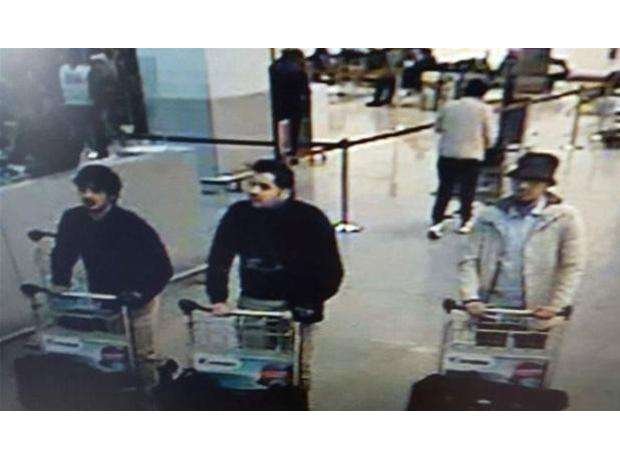
Belgium launched a massive hunt to track down an Islamic State suspect spotted with three supposed suicide bombers just before they attacked Brussels airport and a metro station, killing at least 34 people and wounding hundreds. In the meanwhile, the Islamic State group has issued an updated communique taking credit for the Brussels attacks and threatening other countries taking part in the anti-IS coalition. The statement threatens “dark days” for countries allied against the Islamic State, intimidating that “what is coming is worse and more bitter.” The communique was published in Arabic and French, and an English translation was provided by the SITE Intelligence Group, which monitors jihadi websites. Belgian authorities have released pictures of three of the suspects pushing trolleys with their bombs through the terminal and said they were “actively searching” for a man ‘wearing a hat’ whose explosives did not to go off. Police helicopters hovered over the city till late night and raids were conducted across Belgium, prosecutors said, adding that a bomb, an Islamic State flag and chemicals had been found in one apartment. The fact that IS was able to hit sensitive targets in Brussels, capital of the European Union (EU), just months after IS militants killed 130 people in Paris, there are now doubts being raised over the EU’s ability to prevent terrorism. Soon after the terror attack, Belgium reintroduced border checks and this move triggered speculations about the future of an open border policy. The Schengen Agreement, which includes 22 EU countries and four European Free Trade Association member states, permits travellers to cross border of participating countries without immigration controls. “Today’s attacks are certainly not good news for Schengen. When countries first started instituting border controls across Europe in September, it was a question of managing the flow of migrants,” Eurasia Group president Ian Bremmer said. “With Paris, suspending Schengen became a question of national security. Brussels fits into this latter category.”