
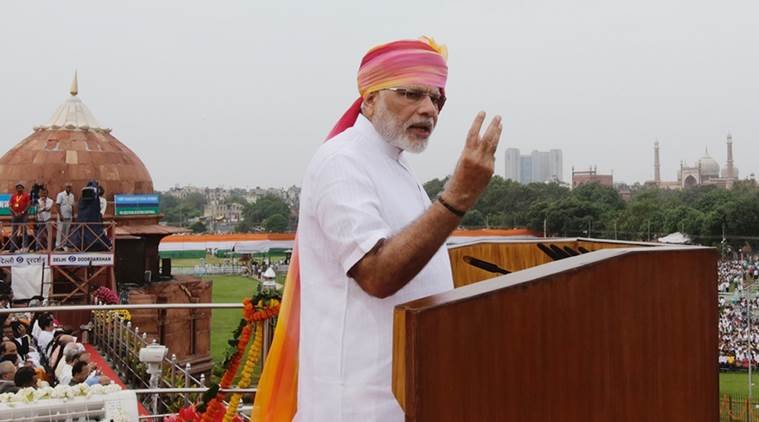
Upping the stakes in the ongoing war of words between India and Pakistan over the Kashmir situation, Prime Minister Narendra Modi lashed out “at the other side which glorifies terrorists” and underlined India’s solidarity with the people of Balochistan, Gilgit and Pak-occupied Kashmir, who have been at the receiving end of atrocities in Pakistan. Stop glorifying terrorists In a hard-hitting message aimed at Pakistan, Mr Modi, in his third Independence Day speech, exhorted the neighbouring country not to glorify terrorist, but to fight poverty together. Seeking to expose Pakistan’s duplicity on terror, the prime minister contrasted the reaction of India and Pakistan towards the killing of innocents by terrorists. “I tell those who believe in human values, to weigh in the scale of humanity, when innocent children were massacred in a school in Peshawar. In India, every school was weeping, there were tears in the eyes of every parliamentarian,” he said. “That was a reflection of our human value, but look at the other side which glorifies terrorists.” “I say to our neighbours, Let’s fight poverty, by fighting our own people we will destroy ourselves, only by fighting poverty together will we prosper,” he added. What about horrors in Balochistan? Alluding to atrocities perpetrated by Pakistani forces on people from Pakistan-occupied Kashmir, the prime minister said: “In the last few days the way the people of Balochistan, Gilgit, from Pak-occupied Kashmir have thanked me, it is the honour of 1.25 billion people of India. I thank those people from Balochistan, Gilgit and Pak-occupied Kashmir.” This is the first time Mr Modi, or for that matter any Indian prime minister, has raised the issue of human rights abuses in Balochistan in their Independence Day speech, which indicates the hardening of the Indian government’s attitude towards relentless campaign by Pakistan to internationalise the Kashmir issue. Only two days ago, Mr Modi had lashed out at horrific abuses perpetrated by Pakistan against the Baloch community, which clearly showed that India will play the Balochistan card with a vengeance in response to Pakistan’s brazen support to separatists and militants in Jammu and Kashmir. “The time has come when Pakistan shall have to answer to the world for the atrocities committed by it against people in Baluchistan and PoK (Pakistan Occupied Kashmir),” he had said. Stop exporting terror 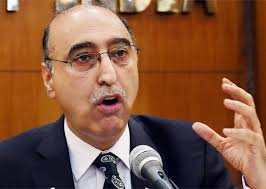 Mr Modi’s remarks came a day after Pakistan celebrated its Independence Day and its envoy Abdul Basit, with support from the powers-that-be in Islamabad, challenged India by dedicating his country’s independence day celebrations to the freedom of Kashmir. “We are dedicating this year’s independence day to the freedom of Kashmir. And we firmly believe the sacrifices made by people in Jammu and Kashmir will not go in vain,” Mr Basit had said. The envoy’s remarks showed that Pakistan was determined to up the ante over the Kashmir issue, eliciting a hardline response from New Delhi. Rejecting Pakistan’s unilateral offer of dialogue exclusively on Kashmir and its proposal to send supplies to the violence-riven state, India launched a blistering attack on Pakistan’s trademark export of terrorism. “India and the others in the region have already received enough of Pakistan’s traditional exports – international terrorism, cross-border infiltrators, weapons, narcotics and fake currency,” said Vikas Swarup, the spokesperson of India’s external affairs ministry in New Delhi on August 14. This Kashmir-Balochistan rhetorical warfare clearly indicates that the strained India-Pakistan relations are headed for a prolonged downslide.