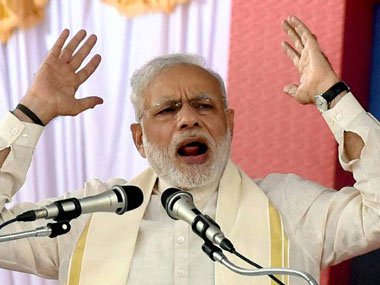
In his first public rally after the Uri terror attack, India’s Prime Minister PM Narendra Modi, under pressure from hardliners to retaliate against Pakistan, struck a statesman-like tone, challenging Pakistan to join the battle against terrorism, rather than unleash terror in Asia. Mr Modi’s message blended controlled aggression and a steely determination to take on the perpetrators of the Uri massacre of 18 Indian soldiers by Pakistani militants, allegedly with support from sections of Pakistan’s state machinery. Addressing a huge gathering in Kozhikode, Kerala, he launched a scathing attack on Pakistan, threatened to isolate the country on global forums and urged people of both nations to put an end to the long battle of poverty and unemployment. Mr Modi acknowledged ‘aakrosh’ (national anguish and outrage) in the wake of the Uri attack and reminded the people of India that ‘we will not forget the Uri attack’ and sacrifice of 18 soldiers lives will not go in vain. Why is Pakistan thwarting Asian Century It was a full-throttle attack and denunciation of Pakistan’s use of terrorism as an instrument of state policy. “We’ve been hearing it for a while – 21st century is Asia’s century. And Asia has all it takes to achieve that. But there is one country in Asia that is working towards thwarting that vision,” he said. “It is doing all it can to ensure Asia is bloodied, it is bruised by violence, falls prey to terror. Wherever terrorism is happening in Asia, the blame is on one country.” “Not just India, every country in Asia believes this. One country is exporting terror everywhere.” Debunking and taunting Pakistan’s rulers who have used the cynical strategy to stoke unrest in Jammu and Kashmir, Mr Modi asked them to look within and clean up the mess in their country first before pointing fingers at others. “You have PoK (Pakistan-occupied Kashmir). You cannot manage it. Bangladesh used to be yours, you couldn’t manage it. You cannot manage Gilgit, Baltistan, Pakhtunkhwa, Balochistan, Sindh…and you are talking about Kashmir.” In remarks laced with irony, Mr Modi’s speech in Kerala sought to encourage introspection in the people of Pakistan by exhorting them to call their rulers to account for their sponsorship of terror. ‘Both our countries got freedom together. Why does India export software and yours export terrorists? Wherever a terror attack takes place, it emerges either the terrorist set out from there (Pakistan), or after the attack, like Osama Bin Laden, took refuge there. From the leaders who read speeches written by terrorists, the world can expect nothing.” The prime minister’s concluding comments at the public rally were statesman-like as he urged the people of Pakistan and India to draw battle lines as to see ‘who ends poverty first, who solves unemployment, who prevents infant deaths, malnutrition and who eradicates illiteracy.” Balance & Moderation 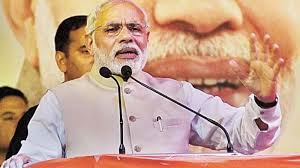 Mr Modi’s speech suggests that his government is prudent not to rush into extreme options of military strike amid a clarion call from hardliners to punish Pakistan, but has chosen a long-term strategy to isolate and expose Pakistan internationally for its cynical use of cross-border terrorism against India and other targets in the region. This strategic restraint may, however, change if there is another major terror strike from across the border. (Mrittika Nandy contributed inputs for this article)