After all the dust has settled, it is now evident that the US operation to bomb parts of Venezuela and abduct socialist leader Nicolas Maduro is not as clear cut as it looks.
Let us first dispel some myths: this is not comparable to previous US invasions, be it Iraq or Panama. The US is not interested in a permanent US military presence in Venezuela, nor is it interested in micromanaging Venezuelan society. Washington prefers to leave domestic, societal matters to the “Chavista” regime in Venezuela. The US’ main interest is oil, something that US President Donald Trump has made abundantly clear in press conferences and through public comments. Washington is interested in controlling Venezuela’s oil production and also wants to direct its exports. They are less concerned about the state of democracy in Venezuela. It is unfortunate that the Venezuelan opposition has been unable to take advantage of the situation, and democracy still appears to be a far cry.
Regime Change?
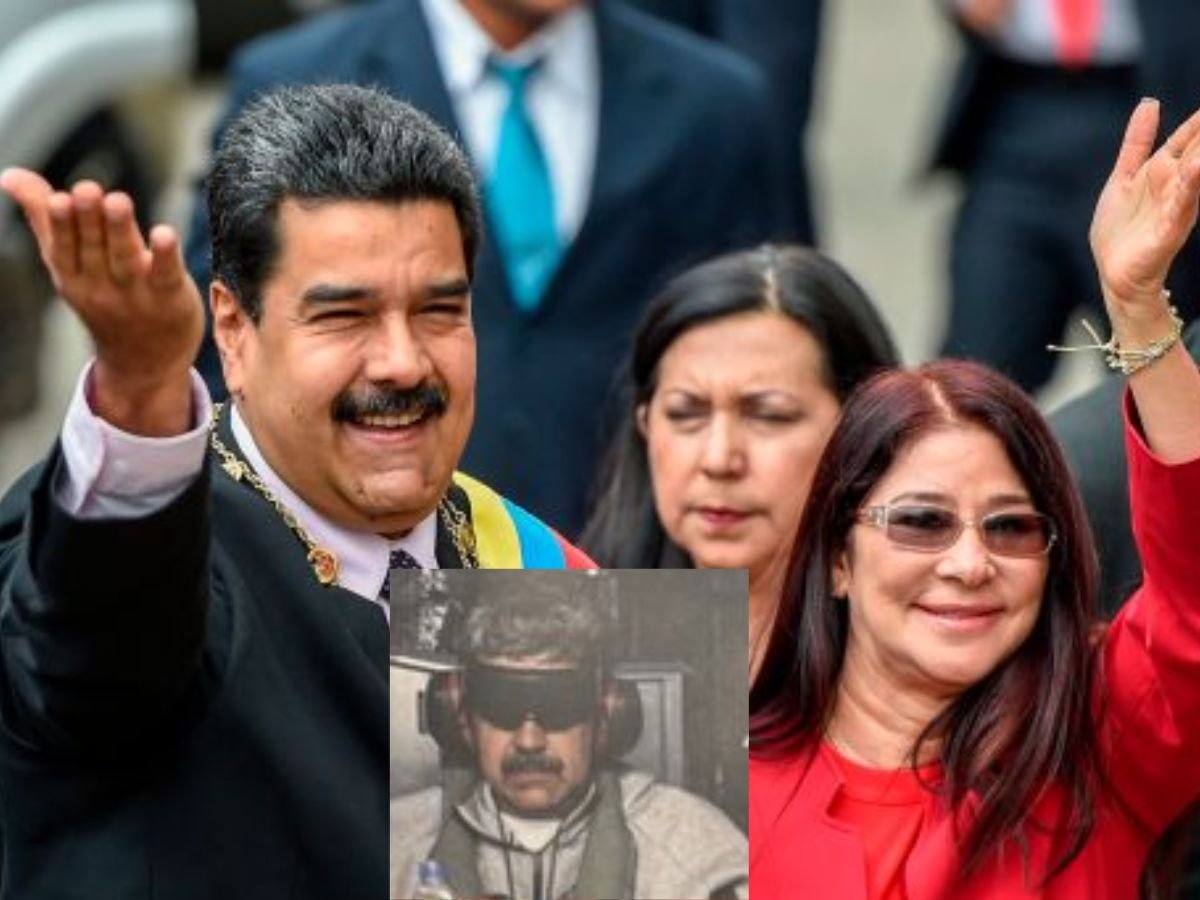
Secondly, and more importantly, it is erroneous to call the current situation in Venezuela ‘regime change.’ The regime remains entrenched in power. The United Socialist Party of Venezuela (PSUV), which has run the country for about two decades, continues to govern. They continue to espouse Chavismo, the ideology eponymous to late Venezuelan socialist leader Hugo Chavez. While Chavez initially came to power through free and fair elections, democracy eroded in the country decades ago and for the past few years has been run as a autocracy, with the PSUV controlling all arms of government, the military, judiciary, media and most tenets of public life. But there is one new and significant distinction now: the regime has a power-sharing agreement with Trump, who claims to be running the show remotely sitting in Washington, along with his Secretary of State Marco Rubio and Energy Secretary Chris Wright, amongst others. This is a vital distinction, and one that has only just begun. It is still unclear how long Washington wishes to maintain their influence over Caracas, and whether they will be able to continue striking a delicate balance between power structures within Venezuela in order to maintain peace.
Rules-based Order
Despite both these factors, we must admit that the US operations was a flagrant violation of sovereignty that runs counter to international law, a fact that many countries, the United Nations, and even US senators and commentators have confirmed. Coming as it does after the era of colonialism and the Cold War, such foreign interventions seem like they belong in the past century. As Chilean scholar-diplomat Jorge Heine notes, “it is also the first U.S. military attack on the South American mainland in 200 years. Such attacks have been common in Mexico, Central America and the Caribbean (most recently in Panama in 1989), but had never taken place in South America. A threshold has been crossed, and the consequences are unpredictable.”
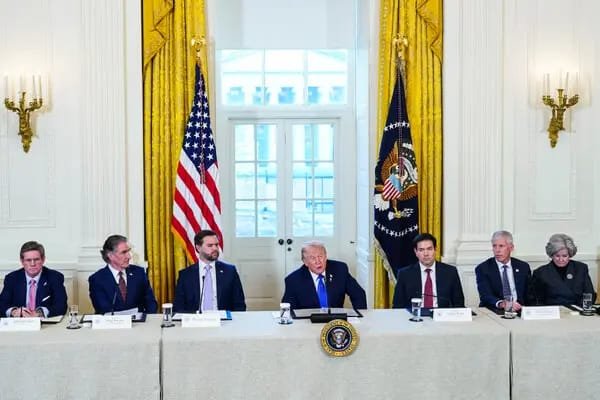
The US operation upends the status quo globally for what is considered an acceptable use of force and sets a dangerous example that other countries may follow with their own operations in their own spheres of influence. It also heralds the death of the so-called ‘rules-based’ international order, which was standing on flimsy ground ever since it was conceptualized, given that the ‘rules’ seemed to favour the West. If the world’s largest democracy can run roughshod over a foreign country, this gives carte blanche to autocratic countries that seek territorial expansion.
Yet, for the US to conduct such an operation in a foreign country with a military and paramilitary force of about half a million people, with tanks, fighter aircraft and warships in tow, without any loss of life and no casualties, it begs the question: did Washington receive tacit support from Caracas to enter their country and remove Maduro? If so, was Delcy Rodriguez (the new acting president of Venezuela) complicit, along with the three other ringleaders in Venezuela (her brother Jorge Rodríguez who heads the National Assembly, the defense minister General Vladimir Padrino López, and interior minister Diosdado Cabello)? How credible are the reports of the ‘Madurismo without Maduro’ plans presented by Qatari mediators to Washington, through the implicit backing of Delcy Rodriguez? There are no straightforward answers to these questions, and only time will tell the extent of support Washington received from within Venezuela.
The View from India
Other than ruffling feathers across the world, the US operation in Venezuela may seem irrelevant to some in Asia and India, but Delhi is likely to pay attention given its own interests of energy security. While India has never been a strong political ally of the Chavistas, it has maintained a cordial relationship over the past two decades, built on a foundation of one product: oil. In 2019, India was the single-largest importer of Venezuelan oil, and between 2012-2019, as much as 10% of India’s total oil imports came from Venezuela. Indian private firms like Reliance Industries and Nayara Energy feasted on Venezuelan heavy crude, which they can refine in their complex refineries and earn a high profit. India’s state-led firms like ONGC Videsh, Oil India and Indian Oil Corporation also have a participation stake in multiple oil fields in Venezuela – all of which are currently producing little to no oil. New Delhi will not want to interfere in the goings-on in Venezuela, which is a pragmatic decision. If and when the moment arrives when Venezuelan oil requires a large new buyer, Indian companies will be happy to oblige and import copious amounts.
What Next for Venezuela?
Yet, the path forward for the Venezuelan people is not much better or worse than before. Poverty, inflation, security and a lack of basic necessities remains a challenge for Venezuelans. It is unlikely that we will see new elections, given that the opposition has just missed out on a golden opportunity to be part of the future governance of Venezuela. Trump, too, seems nonchalant, stating that opposition figures like Maria Corina Machado, the recent recipient of the Nobel Peace Prize, “doesn’t have the support or respect” amongst Venezuelans.
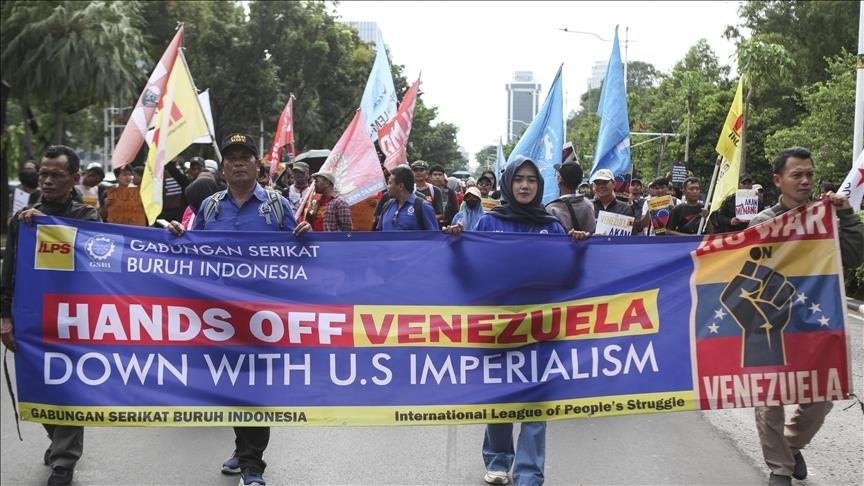
Regardless of the US operation, the future of Venezuela – at least for the Venezuelan people – appears murky and uncertain. So far, Trump appears mostly interested in Venezuelan oil and is keen on prepping up US companies to produce more oil and ‘start making money for the country.’ For the near and medium term, we can expect Venezuelan oil production to increase marginally, and for exports to be directed either to the US or to destinations that Washington approves of. Still, we should temper our expectations: it will take as much as $100 billion to double production from the current levels, and this is unlikely to happen within the next few years. If oil is the US’s sole focus on Venezuela going forward, and this approach results in increased production, Caracas is unlikely to object – since they would also receive tax and royalties on this production, and there will be enough oil to go around.


Decoding Trump’s “Operation oil” in Venezuela
After all the dust has settled, it is now evident that the US operation to bomb parts of Venezuela and abduct socialist leader Nicolas Maduro is not as clear cut as it looks.
Let us first dispel some myths: this is not comparable to previous US invasions, be it Iraq or Panama. The US is not interested in a permanent US military presence in Venezuela, nor is it interested in micromanaging Venezuelan society. Washington prefers to leave domestic, societal matters to the “Chavista” regime in Venezuela. The US’ main interest is oil, something that US President Donald Trump has made abundantly clear in press conferences and through public comments. Washington is interested in controlling Venezuela’s oil production and also wants to direct its exports. They are less concerned about the state of democracy in Venezuela. It is unfortunate that the Venezuelan opposition has been unable to take advantage of the situation, and democracy still appears to be a far cry.
Regime Change?
Secondly, and more importantly, it is erroneous to call the current situation in Venezuela ‘regime change.’ The regime remains entrenched in power. The United Socialist Party of Venezuela (PSUV), which has run the country for about two decades, continues to govern. They continue to espouse Chavismo, the ideology eponymous to late Venezuelan socialist leader Hugo Chavez. While Chavez initially came to power through free and fair elections, democracy eroded in the country decades ago and for the past few years has been run as a autocracy, with the PSUV controlling all arms of government, the military, judiciary, media and most tenets of public life. But there is one new and significant distinction now: the regime has a power-sharing agreement with Trump, who claims to be running the show remotely sitting in Washington, along with his Secretary of State Marco Rubio and Energy Secretary Chris Wright, amongst others. This is a vital distinction, and one that has only just begun. It is still unclear how long Washington wishes to maintain their influence over Caracas, and whether they will be able to continue striking a delicate balance between power structures within Venezuela in order to maintain peace.
Rules-based Order
Despite both these factors, we must admit that the US operations was a flagrant violation of sovereignty that runs counter to international law, a fact that many countries, the United Nations, and even US senators and commentators have confirmed. Coming as it does after the era of colonialism and the Cold War, such foreign interventions seem like they belong in the past century. As Chilean scholar-diplomat Jorge Heine notes, “it is also the first U.S. military attack on the South American mainland in 200 years. Such attacks have been common in Mexico, Central America and the Caribbean (most recently in Panama in 1989), but had never taken place in South America. A threshold has been crossed, and the consequences are unpredictable.”
The US operation upends the status quo globally for what is considered an acceptable use of force and sets a dangerous example that other countries may follow with their own operations in their own spheres of influence. It also heralds the death of the so-called ‘rules-based’ international order, which was standing on flimsy ground ever since it was conceptualized, given that the ‘rules’ seemed to favour the West. If the world’s largest democracy can run roughshod over a foreign country, this gives carte blanche to autocratic countries that seek territorial expansion.
Yet, for the US to conduct such an operation in a foreign country with a military and paramilitary force of about half a million people, with tanks, fighter aircraft and warships in tow, without any loss of life and no casualties, it begs the question: did Washington receive tacit support from Caracas to enter their country and remove Maduro? If so, was Delcy Rodriguez (the new acting president of Venezuela) complicit, along with the three other ringleaders in Venezuela (her brother Jorge Rodríguez who heads the National Assembly, the defense minister General Vladimir Padrino López, and interior minister Diosdado Cabello)? How credible are the reports of the ‘Madurismo without Maduro’ plans presented by Qatari mediators to Washington, through the implicit backing of Delcy Rodriguez? There are no straightforward answers to these questions, and only time will tell the extent of support Washington received from within Venezuela.
The View from India
Other than ruffling feathers across the world, the US operation in Venezuela may seem irrelevant to some in Asia and India, but Delhi is likely to pay attention given its own interests of energy security. While India has never been a strong political ally of the Chavistas, it has maintained a cordial relationship over the past two decades, built on a foundation of one product: oil. In 2019, India was the single-largest importer of Venezuelan oil, and between 2012-2019, as much as 10% of India’s total oil imports came from Venezuela. Indian private firms like Reliance Industries and Nayara Energy feasted on Venezuelan heavy crude, which they can refine in their complex refineries and earn a high profit. India’s state-led firms like ONGC Videsh, Oil India and Indian Oil Corporation also have a participation stake in multiple oil fields in Venezuela – all of which are currently producing little to no oil. New Delhi will not want to interfere in the goings-on in Venezuela, which is a pragmatic decision. If and when the moment arrives when Venezuelan oil requires a large new buyer, Indian companies will be happy to oblige and import copious amounts.
What Next for Venezuela?
Yet, the path forward for the Venezuelan people is not much better or worse than before. Poverty, inflation, security and a lack of basic necessities remains a challenge for Venezuelans. It is unlikely that we will see new elections, given that the opposition has just missed out on a golden opportunity to be part of the future governance of Venezuela. Trump, too, seems nonchalant, stating that opposition figures like Maria Corina Machado, the recent recipient of the Nobel Peace Prize, “doesn’t have the support or respect” amongst Venezuelans.
Regardless of the US operation, the future of Venezuela – at least for the Venezuelan people – appears murky and uncertain. So far, Trump appears mostly interested in Venezuelan oil and is keen on prepping up US companies to produce more oil and ‘start making money for the country.’ For the near and medium term, we can expect Venezuelan oil production to increase marginally, and for exports to be directed either to the US or to destinations that Washington approves of. Still, we should temper our expectations: it will take as much as $100 billion to double production from the current levels, and this is unlikely to happen within the next few years. If oil is the US’s sole focus on Venezuela going forward, and this approach results in increased production, Caracas is unlikely to object – since they would also receive tax and royalties on this production, and there will be enough oil to go around.
Hari Seshasayee
Related Posts
Modi-Macron bonding: Innovation powers India-France ties
Indian Ocean at Strategic Crossroads
China’s Calculus in the Iran Conflict
India, US focus on restoring trust, strategic convergence
Writing a green & blue chapter in India-Norway strategic partnership
A new dawn in India-Nordic partnership
Latest Events
G20@20: Africa’s Moment – The Once and Future World Order
Speakers
Professor Anil Sooklal
Kenneth da Nobrega
Manish Chand
Ambassador Philip Green
sanjay Kumar Verma
Shambhu Hakki
Vikramjit Singh Sahney
MPs, diplomats laud Operation Sindoor, call for national unity to combat Pakistan-sponsored terror
Speakers
Aparajita Sarangi
Brij Lal
Dr Amar Patnaik
Manish Chand
Priyanka Chaturvedi
Sujan Chinoy
Yashvardhan Kumar Sinha
BRICS summit in Rio to focus on Global South, local currency trade
Speakers
Dammu Ravi
Denis Alipov
Ina Hagniningtyas Krisnamurthi
Jyoti Vij
Kamel Zayed Kamel Galal
Kenneth da Nobrega
Manish Chand
Book
India’s G20 Legacy: Shaping a New World Order
Editor: Manish Chand
Pages: 206
Publisher: Pentagon Press LLP
Cover Price: INR 995
In Conversation
PM Modi’s visit to Indonesia will provide a fresh impetus: India’s Ambassador
In The Press
Rescuing G20 from North-South divide: Ubuntu Moment
The Sunday Guardian: India calls for strengthened BRICS cooperation
Daily Excelsior: Ahead BRICS summit in Rio, envoys call for greater focus on combating terrorism
Rediff: BRICS Summit 2024: Focus on National Currencies
Latest From CGII
Modi-Macron bonding: Innovation powers India-France ties
Indian Ocean at Strategic Crossroads
China’s Calculus in the Iran Conflict
India, US focus on restoring trust, strategic convergence
Writing a green & blue chapter in India-Norway strategic partnership
A new dawn in India-Nordic partnership
The Journal
India’s G20 Journey – Scaling A New Summit
India’s G20 Moment: Hope, Healing and Harmony