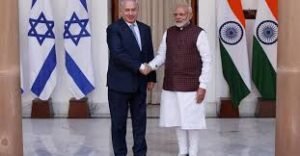
While some critics have questioned the timing of the visit, the real strategic significance of PM Modi’s Israel journey lies precisely in choosing this particular juncture to visit the country which has supported India unambiguously against the scourge of cross-border terror. Israel was the only country that did not mince words and overtly came out in support of India during Operation Sindoor – the retaliatory strikes launched by India against Pakistan for choreographing the Pahalgam terror attack, in the summer of 2025.
Bolstering counter-terror cooperation and strengthening deterrence against states employing terror as a policy will top the agenda when PM Modi sits down for wide-ranging talks with Israeli Prime Minister Benjamin Netanyahu in Jerusalem on February 26.
Expanding defence cooperation between India and Israel and aligning the growing partnership with “Aatmanirbhar Bharat” and the larger development journey is the driving force that will animate Modi’s latest trip to Israel. The big takeaway will be to recalibrate defence partnership from the buyer-seller template to that of co-production and co-development of cutting-edge weaponry.
The outcomes will include new initiatives and plans in joint research and co-production of advanced weapons. Upgrading defence cooperation with focus on drones and AI-enabled weapons, will figure prominently in the delegation-level discussions between the two leaders in Jerusalem. This expanded and upgraded defence cooperation will be reflected in a new security pact that will be signed by the leaders of India and Israel. The pact will include technology sharing, and joint development of advanced weapons systems.
Highly-placed sources said that India is keen to acquire Israel’s Iron Beam, which uses high-energy laser bursts to intercept rockets, mortars and drones at low operational cost. India’s interest in procuring Iron Beam has become a strategic necessity after the four-day conflict with Pakistan in May 2025. The conflict saw Pakistan using drones supplied by Turkey and missiles provided by China to target Indian facilities. Against the backdrop of enhanced threat perception from Pakistan and China, India’s military planners have prioritised the acquisition of Iron Beam, which is known for faster response times and enhanced interception capability. On a parallel track, India’s Defence Research and Development Organisation (DRDO) has developed a 30-kilowatt laser weapon prototype with a view to plugging gaps in India’s air defence system.
India’s multi-layered air defence programme, called ‘Sudarshan Chakra’, could also integrate advanced missile systems, artificial intelligence, sensors, and cyber defence technologies supplied by Israel. ‘Sudarshan Chakra’ will protect major cities and strategic installations from aerial threats by 2035. The success of Israeli-origin weapons during ‘Operation Sindoor’ in May 2025 has made Israeli weapons more attractive for India’s military planners. The Israeli weapons used in Operation Sindoor included Rampage air-to-surface missiles, Harpy loitering munitions, and Harop kamikaze drones, which were leveraged to strike terror infrastructure and military targets.
Israel is now one of India’s top defence suppliers, with India finalising an $8.6 billion package in 2026. These include SPICE-1000 precision bombs, Rampage missiles with a range of 250 km, Air Lora ballistic missiles, and the IceBreaker missile system capable of striking targets up to 300 km away. India has emerged as Israel’s largest defense customer, with deals focusing on advanced systems that align with Prime Minister Modi’s “Aatmanirbhar Bharat” (self-reliant India) initiative.
According to the Stockholm International Peace Research Institute (SIPRI), India has been Israel’s largest defense customer for years, accounting for 34% of total sales between 2020 and 2024. Israel’s total arms sales to India during this period amounted to about $20.5 billion.
Besides defence, the new phase of enhanced India-Israel cooperation will be marked by concrete outcomes in critical and emerging technologies, a crucial area marked by synergies and confluence of interests. The talks in Jerusalem will focus on joint R&D, technology transfer, and co-development in AI, quantum technologies, cybersecurity, and space.
Israel PM Netanyahu has highlighted “high-tech, AI, and quantum” as key priorities in cooperation with India. This builds on existing strengths and aims at supply-chain resilience in critical technologies amid global disruptions.
PM Modi’s visit will also see visible progress on connectivity and regional integration. In this regard, the two sides will seek to advance the India-Middle East-Europe Economic Corridor (IMEC), a flagship infrastructure and trade project involving Israel that aims to boost energy, digital, and shipping links.
Geopolitically, PM Modi’s visit is part of a deft balancing act, juggling ties with Tel Aviv and the Arab world, as the trip comes barely days after India hosted the Arab Ministerial Forum in New Delhi.
(Manish Chand is in Jerusalem to report on and analyse PM Modi’s second visit to Israel).









Unravelling Modi’s Israel journey: What to expect
While some critics have questioned the timing of the visit, the real strategic significance of PM Modi’s Israel journey lies precisely in choosing this particular juncture to visit the country which has supported India unambiguously against the scourge of cross-border terror. Israel was the only country that did not mince words and overtly came out in support of India during Operation Sindoor – the retaliatory strikes launched by India against Pakistan for choreographing the Pahalgam terror attack, in the summer of 2025.
Expanding defence cooperation between India and Israel and aligning the growing partnership with “Aatmanirbhar Bharat” and the larger development journey is the driving force that will animate Modi’s latest trip to Israel. The big takeaway will be to recalibrate defence partnership from the buyer-seller template to that of co-production and co-development of cutting-edge weaponry.
Highly-placed sources said that India is keen to acquire Israel’s Iron Beam, which uses high-energy laser bursts to intercept rockets, mortars and drones at low operational cost. India’s interest in procuring Iron Beam has become a strategic necessity after the four-day conflict with Pakistan in May 2025. The conflict saw Pakistan using drones supplied by Turkey and missiles provided by China to target Indian facilities. Against the backdrop of enhanced threat perception from Pakistan and China, India’s military planners have prioritised the acquisition of Iron Beam, which is known for faster response times and enhanced interception capability. On a parallel track, India’s Defence Research and Development Organisation (DRDO) has developed a 30-kilowatt laser weapon prototype with a view to plugging gaps in India’s air defence system.
India’s multi-layered air defence programme, called ‘Sudarshan Chakra’, could also integrate advanced missile systems, artificial intelligence, sensors, and cyber defence technologies supplied by Israel. ‘Sudarshan Chakra’ will protect major cities and strategic installations from aerial threats by 2035. The success of Israeli-origin weapons during ‘Operation Sindoor’ in May 2025 has made Israeli weapons more attractive for India’s military planners. The Israeli weapons used in Operation Sindoor included Rampage air-to-surface missiles, Harpy loitering munitions, and Harop kamikaze drones, which were leveraged to strike terror infrastructure and military targets.
Israel is now one of India’s top defence suppliers, with India finalising an $8.6 billion package in 2026. These include SPICE-1000 precision bombs, Rampage missiles with a range of 250 km, Air Lora ballistic missiles, and the IceBreaker missile system capable of striking targets up to 300 km away. India has emerged as Israel’s largest defense customer, with deals focusing on advanced systems that align with Prime Minister Modi’s “Aatmanirbhar Bharat” (self-reliant India) initiative.
According to the Stockholm International Peace Research Institute (SIPRI), India has been Israel’s largest defense customer for years, accounting for 34% of total sales between 2020 and 2024. Israel’s total arms sales to India during this period amounted to about $20.5 billion.
Besides defence, the new phase of enhanced India-Israel cooperation will be marked by concrete outcomes in critical and emerging technologies, a crucial area marked by synergies and confluence of interests. The talks in Jerusalem will focus on joint R&D, technology transfer, and co-development in AI, quantum technologies, cybersecurity, and space.
Israel PM Netanyahu has highlighted “high-tech, AI, and quantum” as key priorities in cooperation with India. This builds on existing strengths and aims at supply-chain resilience in critical technologies amid global disruptions.
PM Modi’s visit will also see visible progress on connectivity and regional integration. In this regard, the two sides will seek to advance the India-Middle East-Europe Economic Corridor (IMEC), a flagship infrastructure and trade project involving Israel that aims to boost energy, digital, and shipping links.
Geopolitically, PM Modi’s visit is part of a deft balancing act, juggling ties with Tel Aviv and the Arab world, as the trip comes barely days after India hosted the Arab Ministerial Forum in New Delhi.
(Manish Chand is in Jerusalem to report on and analyse PM Modi’s second visit to Israel).
Manish Chand
Related Posts
Modi-Macron bonding: Innovation powers India-France ties
Indian Ocean at Strategic Crossroads
China’s Calculus in the Iran Conflict
India, US focus on restoring trust, strategic convergence
Writing a green & blue chapter in India-Norway strategic partnership
A new dawn in India-Nordic partnership
Latest Events
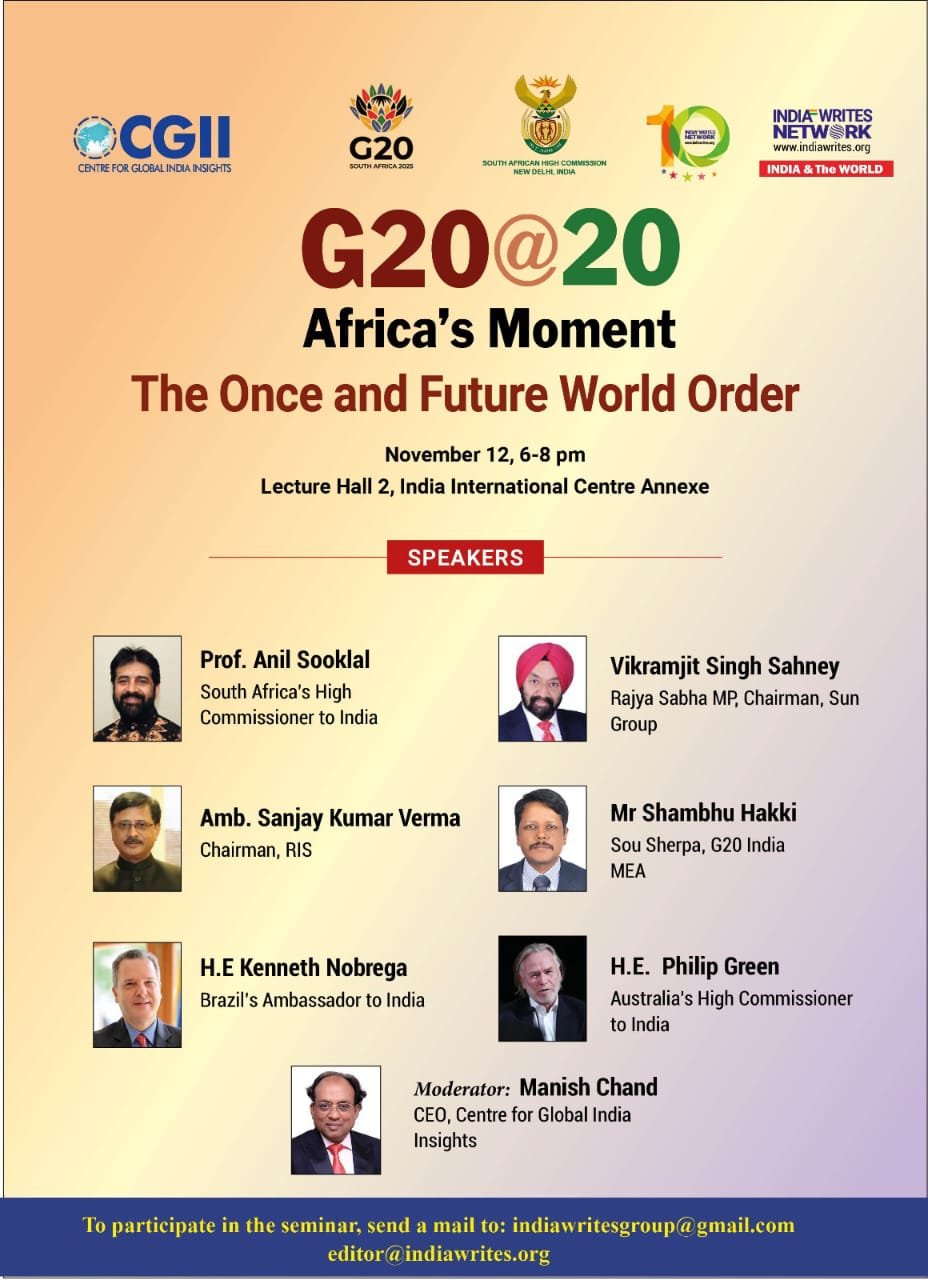
G20@20: Africa’s Moment – The Once and Future World Order
Speakers
Professor Anil Sooklal
Kenneth da Nobrega
Manish Chand
Ambassador Philip Green
sanjay Kumar Verma
Shambhu Hakki
Vikramjit Singh Sahney
MPs, diplomats laud Operation Sindoor, call for national unity to combat Pakistan-sponsored terror
Speakers
Aparajita Sarangi
Brij Lal
Dr Amar Patnaik
Manish Chand
Priyanka Chaturvedi
Sujan Chinoy
Yashvardhan Kumar Sinha
BRICS summit in Rio to focus on Global South, local currency trade
Speakers
Dammu Ravi
Denis Alipov
Ina Hagniningtyas Krisnamurthi
Jyoti Vij
Kamel Zayed Kamel Galal
Kenneth da Nobrega
Manish Chand
Book
India’s G20 Legacy: Shaping a New World Order
Editor: Manish Chand
Pages: 206
Publisher: Pentagon Press LLP
Cover Price: INR 995
In Conversation
PM Modi’s visit to Indonesia will provide a fresh impetus: India’s Ambassador
In The Press
Rescuing G20 from North-South divide: Ubuntu Moment
The Sunday Guardian: India calls for strengthened BRICS cooperation
Daily Excelsior: Ahead BRICS summit in Rio, envoys call for greater focus on combating terrorism
Rediff: BRICS Summit 2024: Focus on National Currencies
Latest From CGII
Modi-Macron bonding: Innovation powers India-France ties
Indian Ocean at Strategic Crossroads
China’s Calculus in the Iran Conflict
India, US focus on restoring trust, strategic convergence
Writing a green & blue chapter in India-Norway strategic partnership
A new dawn in India-Nordic partnership
The Journal
India’s G20 Journey – Scaling A New Summit
India’s G20 Moment: Hope, Healing and Harmony