China’s foremost concern in the ongoing Iran Conflict is economic stability. Over the past decade, its growth rate has slowed significantly, from nearly 10 percent in 2010 to around 5 percent in recent years, with projections under its latest five-year plan hovering between 4.5 and 5 percent. In such a context, external disruptions carry disproportionate consequences.
Energy insecurity has emerged as the most immediate and destabilising consequence of the conflict for China. China’s dependence on West Asia for crude oil and liquefied natural gas (LNG) imports makes it particularly vulnerable to disruptions in maritime routes. The Strait of Hormuz, through which a substantial portion of global energy shipments passes, has become a critical chokepoint in the current crisis. Any restriction or blockade in this region directly affects China’s energy flows from major suppliers such as Qatar and the United Arab Emirates.
The economic ripple effects are significant. Rising energy prices increase production costs, fuel inflation, and affect domestic consumption patterns. They also complicate China’s balance of trade and investment flows, adding pressure on an already moderating economy. These challenges underscore how deeply intertwined China’s economic stability is with geopolitical developments in West Asia.
Trade dynamics further highlight this vulnerability. China’s trade with the region has expanded dramatically, from $36 billion in 2004 to over $400 billion in 2025, reflecting the region’s growing importance in Beijing’s economic calculus. However, the outbreak of conflict has led to a sharp contraction in exports, alongside escalating shipping costs and insurance premiums. Supply chain disruptions are compounding these challenges, affecting China’s broader global trade surplus and economic momentum.
BRI Investments Under Strategic Stress
China’s extensive investments in West Asia under the Belt and Road Initiative face heightened risks in the current conflict environment. Over the years, Beijing has invested approximately $270 billion in regional infrastructure, with nearly half directed towards energy-related projects.
Long-term strategic investments are now exposed to immediate geopolitical and security risks. Key projects include LNG facilities in Qatar, port infrastructure in Israel’s Haifa and the UAE’s Khalifa Port, and critical transport corridors linking Asia, Europe, and Africa. These investments are not merely economic assets; they represent China’s long-term strategic vision of connectivity and influence.
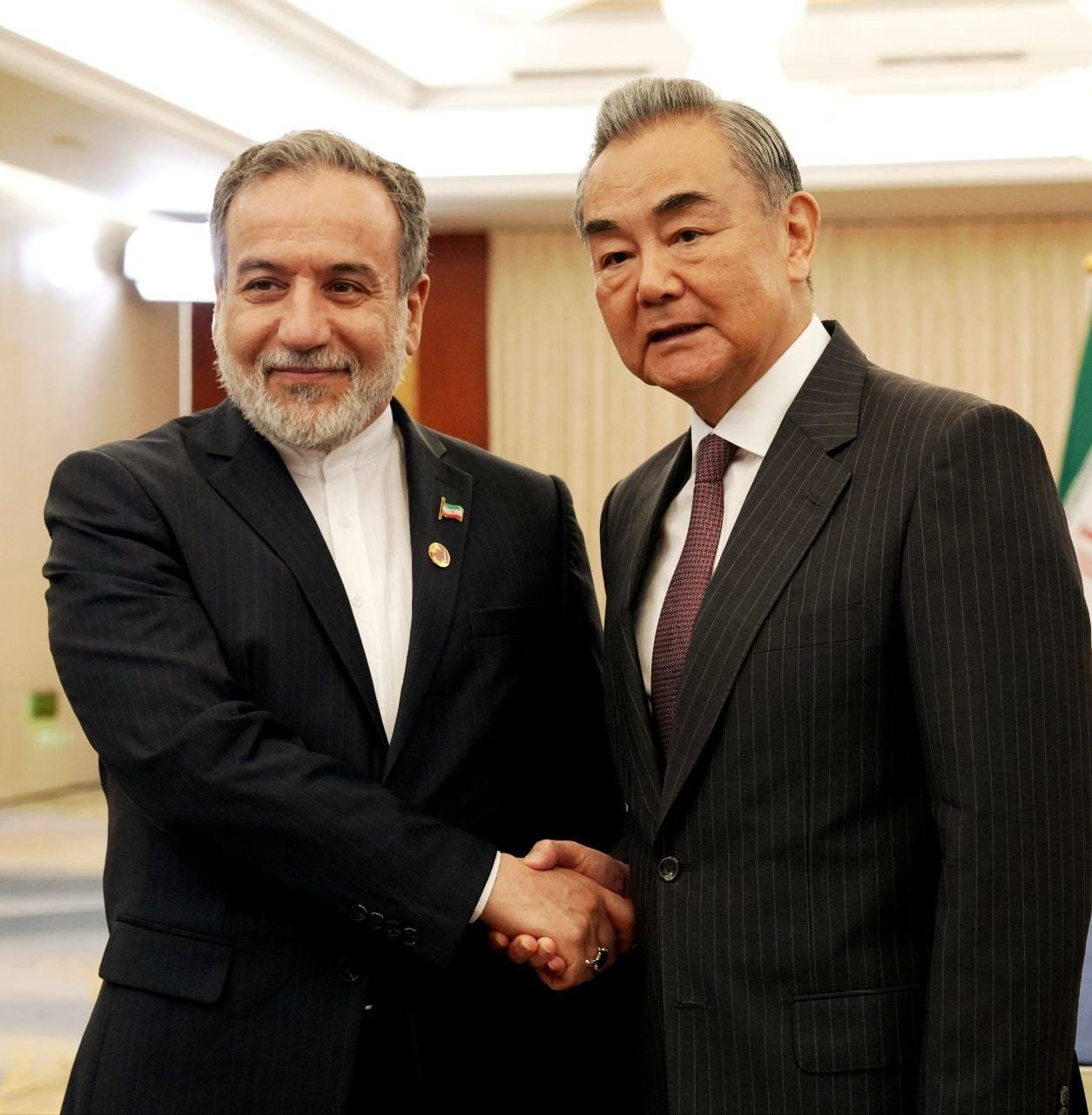
However, recent developments, including drone strikes on infrastructure and disruptions to railway links, have exposed the vulnerability of these assets. Attacks on such projects not only undermine economic returns but also challenge China’s credibility as a reliable development partner.
At the same time, Gulf states have expressed concerns over China’s deepening ties with Iran, particularly the long-term cooperation agreements between the two countries. This creates a delicate balancing act for Beijing, which must maintain relationships with rival actors in the region while protecting its investments. The conflict thus tests China’s ability to navigate complex regional rivalries without jeopardizing its broader strategic objectives.
Shifting Global Order and Strategic Anxiety
Beyond immediate economic concerns, the Iran conflict has triggered deeper anxieties within China regarding the evolving global order. Beijing has long viewed the international system as transitioning towards multipolarity, with greater space for its rise. However, recent developments challenge this assumption.
The conflict raises a critical question: will it accelerate multipolarity or reinforce US dominance? China has closely observed the assertiveness of US actions, including pre-emptive strikes and rapid military deployments. These actions signal Washington’s continued willingness to shape global outcomes decisively, contradicting assumptions of US retrenchment.
Within Chinese strategic circles, there is a divergence of views. Some analysts argue that prolonged US involvement in conflicts could deplete its resources, creating opportunities for China to expand its influence. Others caution that decisive US victories could limit China’s strategic space and weaken prospects for a multipolar world order.
The diversion of US military assets to West Asia has also sparked discussions about implications for the Indo-Pacific. Some analysts see potential openings for China to assert itself more strongly in regions such as the Taiwan Strait or the South China Sea. However, these possibilities are tempered by the risks of escalation and the unpredictability of conflict dynamics.
Balancing the United States Relationship
The Iran conflict unfolds at a sensitive juncture in US–China relations, marked by both competition and interdependence. High-level engagements between the two countries, covering trade, technology, and strategic issues, add further complexity to China’s response.
China’s restrained reaction reflects a deliberate strategy of calibrated ambiguity. Beijing has avoided taking a strong public stance on the conflict, instead issuing cautious statements emphasizing concern and the need for dialogue. This approach allows China to maintain flexibility while avoiding direct confrontation with either the United States or regional actors.
At the same time, tensions persist over issues such as Taiwan, arms transfers, and alleged Chinese support to Iran’s military capabilities. The United States has warned against such support, while China seeks to ensure that US policies do not undermine its strategic interests.
Historically, US-China relations have been shaped by economic interdependence, technological exchanges, and strategic engagement. However, recent shifts, driven by competing ambitions and policy reassessments, have introduced greater uncertainty. The Iran conflict provides both a challenge and an opportunity for recalibrating this relationship.
Implications for India and Regional Dynamics
The evolving crisis in West Asia also has implications for China’s approach towards India and broader regional alignments. Although India–China relations have seen limited normalization in recent years, geopolitical shifts may open new avenues for engagement.
Energy cooperation could emerge as a pragmatic area of convergence between India and China. Both countries are heavily dependent on energy imports from West Asia, making them vulnerable to disruptions in supply and price volatility. This shared vulnerability may encourage dialogue and cooperation in areas such as energy security and supply chain resilience.
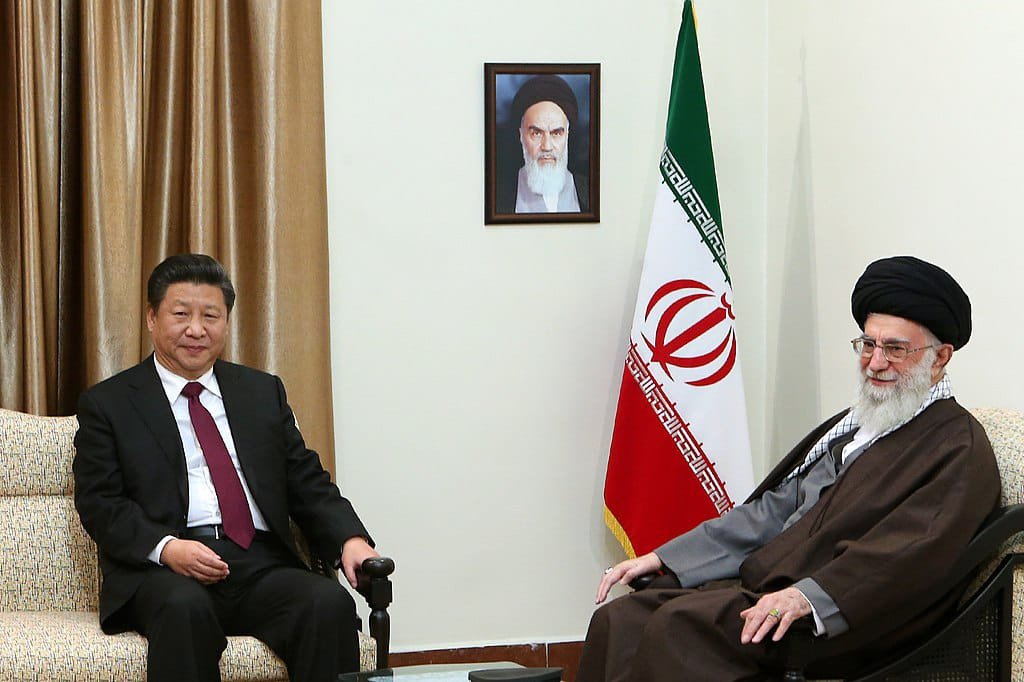
China may also seek to revive multilateral frameworks such as the Russia–India–China (RIC) grouping, leveraging the current geopolitical environment to promote multipolarity. Additionally, Beijing could intensify efforts to promote alternative financial mechanisms, including de-dollarization, as part of its broader strategic agenda.
However, underlying strategic mistrust and competing interests will continue to shape the trajectory of India–China relations, limiting the scope of deeper cooperation.
Rethinking Non-Interventionism
A central debate within China concerns the future of its traditional policy of non-intervention. As China’s global footprint expands, the limitations of this approach are becoming increasingly evident.
China’s global ambitions are beginning to outgrow its traditional strategic restraint. Some Chinese scholars advocate a more proactive role in international crises, arguing that China must protect its overseas interests and contribute to global stability. Others emphasize caution, pointing to the risks of entanglement in complex conflicts.
The current approach appears to favour strategic patience. China is likely to avoid direct involvement while positioning itself as a potential mediator at a later stage. This allows Beijing to maintain its image as a responsible global actor while minimizing risks.
Navigating Strategic Uncertainty
The Iran conflict has emerged at a critical juncture for China, disrupting its economic trajectory, strategic investments, and geopolitical calculations.
Beijing faces a delicate balance between risk management and strategic opportunity. As the conflict evolves, China must navigate multiple challenges, securing energy supplies, protecting investments, managing relations with the United States, and adapting to shifting global power dynamics. The situation underscores the need for a more agile and nuanced strategy that goes beyond traditional approaches.
Ultimately, China’s response to the crisis will shape not only its regional role but also its position in the global order. Whether it can successfully balance its competing priorities will determine the trajectory of its rise in an increasingly uncertain world.
(Srikanth Kondapalli is Professor in Chinese Studies at Jawaharlal Nehru University)
(This article has been published in the latest edition of India and the World magazine. To subscribe, write to: indiawritesgroup@gmail.com)




China’s Calculus in the Iran Conflict
China’s foremost concern in the ongoing Iran Conflict is economic stability. Over the past decade, its growth rate has slowed significantly, from nearly 10 percent in 2010 to around 5 percent in recent years, with projections under its latest five-year plan hovering between 4.5 and 5 percent. In such a context, external disruptions carry disproportionate consequences.
Energy insecurity has emerged as the most immediate and destabilising consequence of the conflict for China. China’s dependence on West Asia for crude oil and liquefied natural gas (LNG) imports makes it particularly vulnerable to disruptions in maritime routes. The Strait of Hormuz, through which a substantial portion of global energy shipments passes, has become a critical chokepoint in the current crisis. Any restriction or blockade in this region directly affects China’s energy flows from major suppliers such as Qatar and the United Arab Emirates.
The economic ripple effects are significant. Rising energy prices increase production costs, fuel inflation, and affect domestic consumption patterns. They also complicate China’s balance of trade and investment flows, adding pressure on an already moderating economy. These challenges underscore how deeply intertwined China’s economic stability is with geopolitical developments in West Asia.
Trade dynamics further highlight this vulnerability. China’s trade with the region has expanded dramatically, from $36 billion in 2004 to over $400 billion in 2025, reflecting the region’s growing importance in Beijing’s economic calculus. However, the outbreak of conflict has led to a sharp contraction in exports, alongside escalating shipping costs and insurance premiums. Supply chain disruptions are compounding these challenges, affecting China’s broader global trade surplus and economic momentum.
BRI Investments Under Strategic Stress
China’s extensive investments in West Asia under the Belt and Road Initiative face heightened risks in the current conflict environment. Over the years, Beijing has invested approximately $270 billion in regional infrastructure, with nearly half directed towards energy-related projects.
Long-term strategic investments are now exposed to immediate geopolitical and security risks. Key projects include LNG facilities in Qatar, port infrastructure in Israel’s Haifa and the UAE’s Khalifa Port, and critical transport corridors linking Asia, Europe, and Africa. These investments are not merely economic assets; they represent China’s long-term strategic vision of connectivity and influence.
However, recent developments, including drone strikes on infrastructure and disruptions to railway links, have exposed the vulnerability of these assets. Attacks on such projects not only undermine economic returns but also challenge China’s credibility as a reliable development partner.
Shifting Global Order and Strategic Anxiety
Beyond immediate economic concerns, the Iran conflict has triggered deeper anxieties within China regarding the evolving global order. Beijing has long viewed the international system as transitioning towards multipolarity, with greater space for its rise. However, recent developments challenge this assumption.
The conflict raises a critical question: will it accelerate multipolarity or reinforce US dominance? China has closely observed the assertiveness of US actions, including pre-emptive strikes and rapid military deployments. These actions signal Washington’s continued willingness to shape global outcomes decisively, contradicting assumptions of US retrenchment.
The diversion of US military assets to West Asia has also sparked discussions about implications for the Indo-Pacific. Some analysts see potential openings for China to assert itself more strongly in regions such as the Taiwan Strait or the South China Sea. However, these possibilities are tempered by the risks of escalation and the unpredictability of conflict dynamics.
Balancing the United States Relationship
The Iran conflict unfolds at a sensitive juncture in US–China relations, marked by both competition and interdependence. High-level engagements between the two countries, covering trade, technology, and strategic issues, add further complexity to China’s response.
China’s restrained reaction reflects a deliberate strategy of calibrated ambiguity. Beijing has avoided taking a strong public stance on the conflict, instead issuing cautious statements emphasizing concern and the need for dialogue. This approach allows China to maintain flexibility while avoiding direct confrontation with either the United States or regional actors.
At the same time, tensions persist over issues such as Taiwan, arms transfers, and alleged Chinese support to Iran’s military capabilities. The United States has warned against such support, while China seeks to ensure that US policies do not undermine its strategic interests.
Historically, US-China relations have been shaped by economic interdependence, technological exchanges, and strategic engagement. However, recent shifts, driven by competing ambitions and policy reassessments, have introduced greater uncertainty. The Iran conflict provides both a challenge and an opportunity for recalibrating this relationship.
Implications for India and Regional Dynamics
The evolving crisis in West Asia also has implications for China’s approach towards India and broader regional alignments. Although India–China relations have seen limited normalization in recent years, geopolitical shifts may open new avenues for engagement.
China may also seek to revive multilateral frameworks such as the Russia–India–China (RIC) grouping, leveraging the current geopolitical environment to promote multipolarity. Additionally, Beijing could intensify efforts to promote alternative financial mechanisms, including de-dollarization, as part of its broader strategic agenda.
However, underlying strategic mistrust and competing interests will continue to shape the trajectory of India–China relations, limiting the scope of deeper cooperation.
Rethinking Non-Interventionism
A central debate within China concerns the future of its traditional policy of non-intervention. As China’s global footprint expands, the limitations of this approach are becoming increasingly evident.
China’s global ambitions are beginning to outgrow its traditional strategic restraint. Some Chinese scholars advocate a more proactive role in international crises, arguing that China must protect its overseas interests and contribute to global stability. Others emphasize caution, pointing to the risks of entanglement in complex conflicts.
The current approach appears to favour strategic patience. China is likely to avoid direct involvement while positioning itself as a potential mediator at a later stage. This allows Beijing to maintain its image as a responsible global actor while minimizing risks.
Navigating Strategic Uncertainty
The Iran conflict has emerged at a critical juncture for China, disrupting its economic trajectory, strategic investments, and geopolitical calculations.
Beijing faces a delicate balance between risk management and strategic opportunity. As the conflict evolves, China must navigate multiple challenges, securing energy supplies, protecting investments, managing relations with the United States, and adapting to shifting global power dynamics. The situation underscores the need for a more agile and nuanced strategy that goes beyond traditional approaches.
Ultimately, China’s response to the crisis will shape not only its regional role but also its position in the global order. Whether it can successfully balance its competing priorities will determine the trajectory of its rise in an increasingly uncertain world.
(Srikanth Kondapalli is Professor in Chinese Studies at Jawaharlal Nehru University)
(This article has been published in the latest edition of India and the World magazine. To subscribe, write to: indiawritesgroup@gmail.com)
Srikanth Kondapalli
Related Posts
From Voice to Impact: BRICS and Push for Global Governance Reform
Enhancing Indo-Pacific Diplomacy for India’s Rise
Diplomatic win for India: BRICS bridges Gulf divide, bats for Global South
Illuminating India’s BRICS moment
With Trump listening in, Iran urges PM Modi to end war with US
India Russia ‘dosti’ in Bishkek: Focus on end of Ukraine war, balanced trade
Latest Events
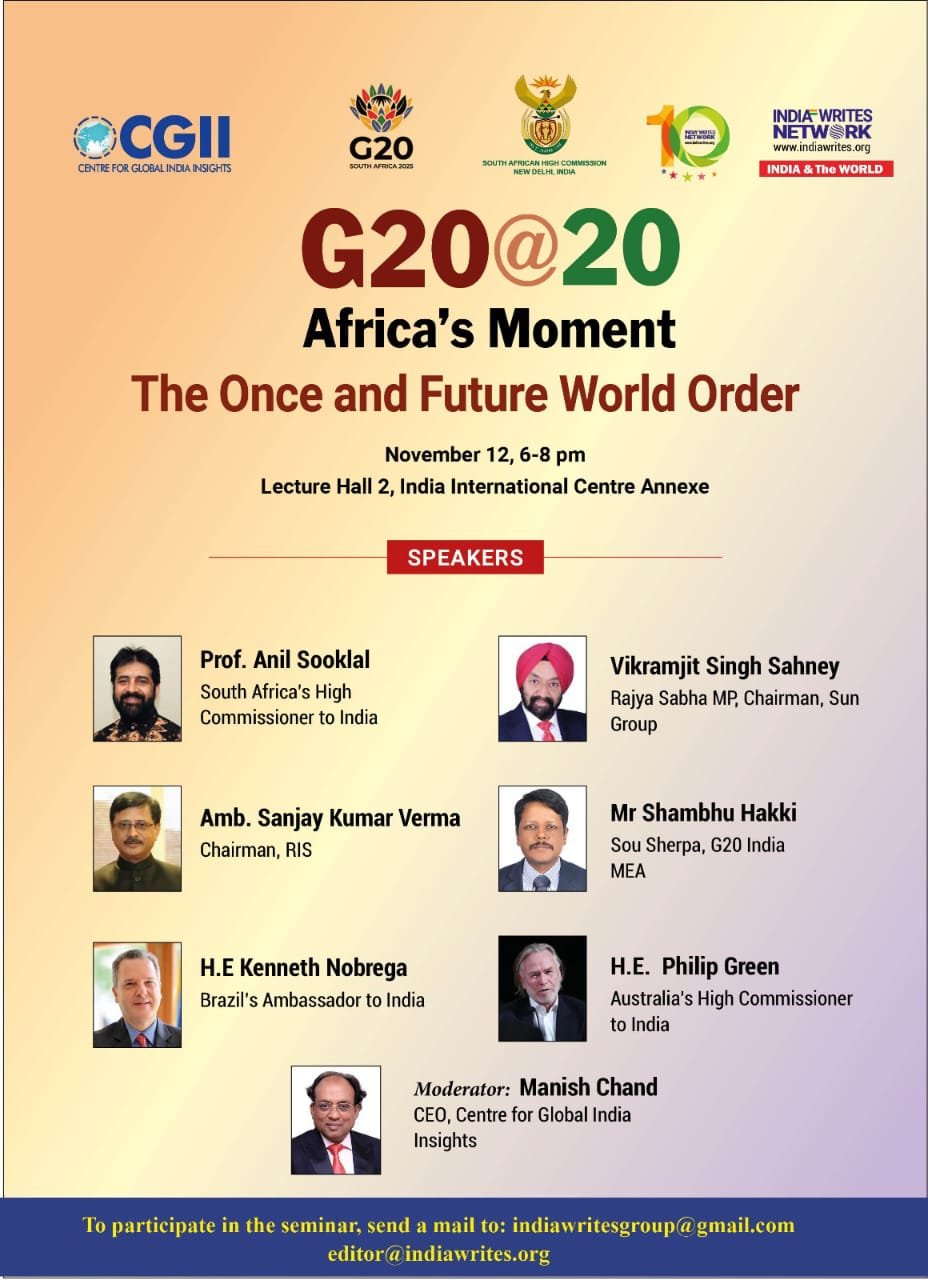
G20@20: Africa’s Moment – The Once and Future World Order
Speakers
Professor Anil Sooklal
Kenneth da Nobrega
Manish Chand
Ambassador Philip Green
Sanjay Kumar Verma
Shambhu Hakki
Vikramjit Singh Sahney
MPs, diplomats laud Operation Sindoor, call for national unity to combat Pakistan-sponsored terror
Speakers
Aparajita Sarangi
Brij Lal
Dr Amar Patnaik
Manish Chand
Priyanka Chaturvedi
Sujan Chinoy
Yashvardhan Kumar Sinha
BRICS summit in Rio to focus on Global South, local currency trade
Speakers
Dammu Ravi
Denis Alipov
Ina Hagniningtyas Krisnamurthi
Jyoti Vij
Kamel Zayed Kamel Galal
Kenneth da Nobrega
Manish Chand
Book
India’s G20 Legacy: Shaping a New World Order
Editor: Manish Chand
Pages: 206
Publisher: Pentagon Press LLP
Cover Price: INR 995
In Conversation
Sanctions create new opportunities, invest in Tatarstan: Taliya Minullina
In The Press
Can BRICS help reshape global order by strengthening emerging economies?
Rescuing G20 from North-South divide: Ubuntu Moment
The Sunday Guardian: India calls for strengthened BRICS cooperation
Daily Excelsior: Ahead BRICS summit in Rio, envoys call for greater focus on combating terrorism
Latest From CGII
From Voice to Impact: BRICS and Push for Global Governance Reform
India-US trade deal soon, says Rubio
Enhancing Indo-Pacific Diplomacy for India’s Rise
Diplomatic win for India: BRICS bridges Gulf divide, bats for Global South
Illuminating India’s BRICS moment
With Trump listening in, Iran urges PM Modi to end war with US
The Journal
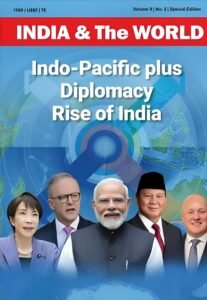
Special Edition on India’s Indo-Pacific plus Diplomacy
India’s G20 Journey – Scaling A New Summit