The Indian Ocean’s strategic relevance has increased significantly amid the ongoing West Asian crisis. The evolving confrontation between the United States, Iran, and Israel has created uncertainty, particularly through the threat of blockades affecting the Strait of Hormuz and surrounding sea lanes.
Bold divergence in regional perceptions reflects the complexity of managing maritime security collectively. Leaders participating in the conference expressed differing viewpoints shaped by national interests and geopolitical priorities. Oman’s Foreign Minister strongly criticized US and Israeli actions against Iran, while the UAE highlighted concerns regarding sovereignty violations linked to Iranian actions. These contrasting positions underscore the difficulty of forging unified responses within regional groupings such as the Indian Ocean Rim Association (IORA), Indian Ocean Naval Symposium (IONS), and other plurilateral frameworks.
India’s Strategic Perspective
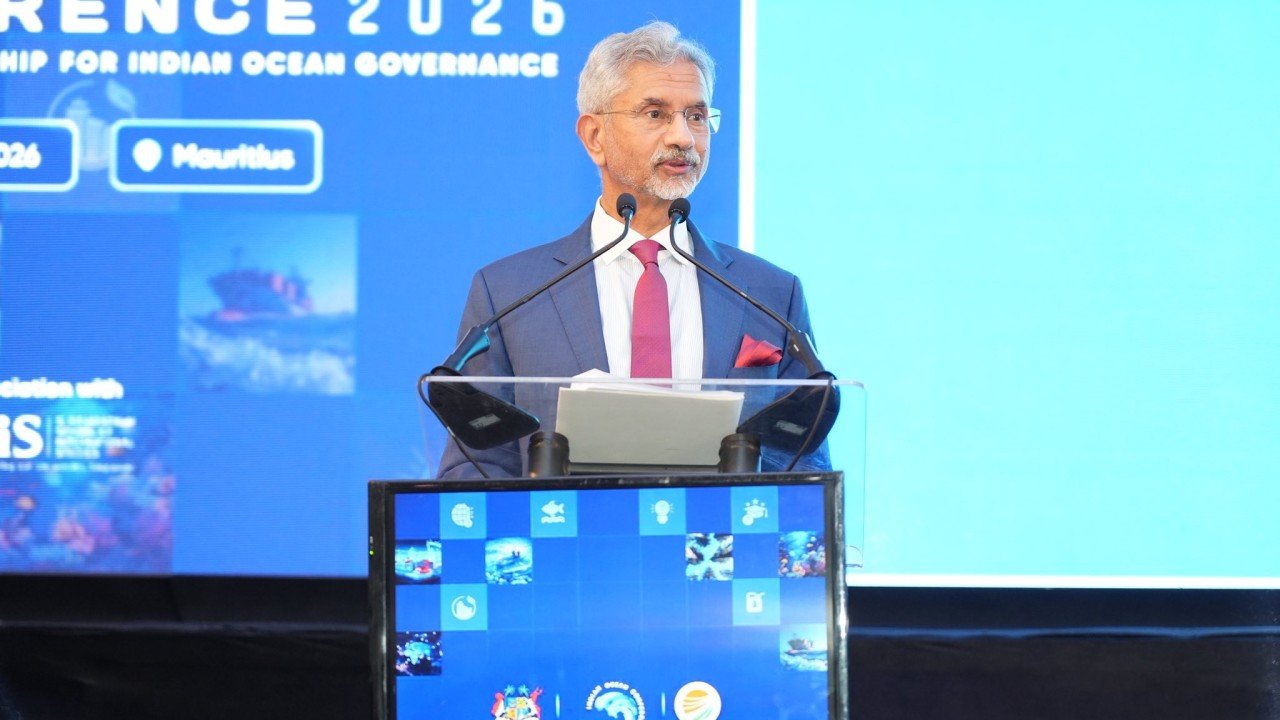
India’s External Affairs Minister Dr. S. Jaishankar emphasized the urgent need for collective resilience amid growing turbulence in West Asia. He highlighted how conflicts directly affect economic stability across sectors.
Energy scarcity, disrupted trade, and fertilizer shortages are not isolated events but systemic threats to livelihoods and food security. He also drew attention to both physical and conceptual choke points, ranging from sea lanes such as the Strait of Hormuz and Malacca Strait to emerging constraints in finance, technology, and knowledge networks. The growing number of Indo-Pacific strategies introduced by various nations further underscores the need to align national priorities to avoid containment-driven rivalries.
Maritime Security and Economic Stakes
The Indian Ocean remains central to global trade and energy movement. Nearly one-third of the world’s bulk cargo and two-thirds of global energy supplies transit through its waters. However, threats to maritime safety remain persistent.
Even as piracy has declined, it continues to impose annual costs exceeding $18 billion, demonstrating lingering vulnerabilities. Recent attacks on commercial shipping in the Red Sea and tensions in the Strait of Hormuz have disrupted energy supply chains and international trade flows. These developments highlight the fragile balance between maritime security and economic stability across the region.
Additionally, illegal resource exploitation, including unauthorized fishing and transnational crimes, continues to strain the maritime ecosystem. The region’s vulnerability to natural disasters further complicates preservation efforts, making ecological sustainability a pressing concern.
Regional Cooperation
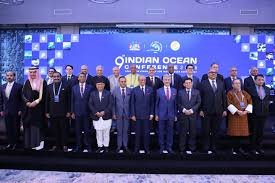
The conference underscored the importance of collaborative frameworks to address shared challenges. Participants emphasized bridging capability and capacity gaps among member states through enhanced cooperation and resource sharing.
Collective stewardship is no longer an option, it is an operational necessity for safeguarding the region’s future. India is set to play a pivotal role by hosting the 10th Indian Ocean Conference and assuming the chairmanship of IORA as the organization marks its 30th anniversary. This dual responsibility demands innovative financing models, policy alignment, and coordinated regional strategies.
A concentric-circle approach, combining short-, medium-, and long-term strategies, was suggested as a pragmatic pathway forward. Key priority areas include maritime domain awareness, humanitarian assistance and disaster relief (HADR), and adherence to international maritime conventions such as UNCLOS.
Models of Regional Collaboration
Existing regional mechanisms offer workable models for collective action. Mauritius and Seychelles have demonstrated effective management of large Exclusive Economic Zones (EEZs) through cooperative frameworks.
Shared responsibility models provide a blueprint for managing complex maritime ecosystems across diverse national interests. Similarly, the BIMSTEC framework distributes responsibilities across sectors such as trade, environment, connectivity, and security among member nations. ASEAN’s institutional architecture also offers lessons in balancing regional cooperation with national autonomy.
Technological integration, particularly through India’s space capabilities, digital public infrastructure, and maritime fusion centres, has been identified as a transformative enabler for strengthening regional capacities.
Small island states also face unique challenges, particularly with shipping registries, where nearly half of global vessels are registered in small nations, creating dilemmas associated with “flags of convenience.”
From Ocean Wealth to Ocean Health
A fundamental shift in mindset is essential to sustain maritime prosperity. The narrative must evolve from exploiting ocean resources toward preserving marine ecosystems and ensuring long-term sustainability.
The transition from ‘Ocean Wealth’ to ‘Ocean Health’ defines the future trajectory of maritime governance. Joint naval exercises such as AIKEYME, Dosti, and MILAN have played a crucial role in strengthening interoperability and trust among regional partners. These exercises enhance preparedness against shared threats and foster coordinated responses to emerging crises.
Moving forward, a comprehensive roadmap focused on blue economy development, defence cooperation, and maritime domain security will be essential. Such initiatives must be guided by the principles of Mutual Respect, Mutual Sensitivity, and Mutual Interests – the “Three Ms” essential for sustained resilience and shared prosperity.
A Shared Responsibility
The Indian Ocean’s future hinges on collective responsibility and institutional collaboration. No single nation, regardless of its capabilities, can secure maritime spaces independently.
The Indian Ocean must be treated as a global-commons, where responsibilities are shared as much as the benefits. Strengthening institutional networks, promoting transparency, and upholding international law remain essential for ensuring maritime security and sustainable development. As geopolitical competition intensifies, cooperative stewardship will determine whether the Indian Ocean evolves into a zone of rivalry or a platform for shared prosperity.






Indian Ocean at Strategic Crossroads
The Indian Ocean’s strategic relevance has increased significantly amid the ongoing West Asian crisis. The evolving confrontation between the United States, Iran, and Israel has created uncertainty, particularly through the threat of blockades affecting the Strait of Hormuz and surrounding sea lanes.
Bold divergence in regional perceptions reflects the complexity of managing maritime security collectively. Leaders participating in the conference expressed differing viewpoints shaped by national interests and geopolitical priorities. Oman’s Foreign Minister strongly criticized US and Israeli actions against Iran, while the UAE highlighted concerns regarding sovereignty violations linked to Iranian actions. These contrasting positions underscore the difficulty of forging unified responses within regional groupings such as the Indian Ocean Rim Association (IORA), Indian Ocean Naval Symposium (IONS), and other plurilateral frameworks.
India’s Strategic Perspective
India’s External Affairs Minister Dr. S. Jaishankar emphasized the urgent need for collective resilience amid growing turbulence in West Asia. He highlighted how conflicts directly affect economic stability across sectors.
Energy scarcity, disrupted trade, and fertilizer shortages are not isolated events but systemic threats to livelihoods and food security. He also drew attention to both physical and conceptual choke points, ranging from sea lanes such as the Strait of Hormuz and Malacca Strait to emerging constraints in finance, technology, and knowledge networks. The growing number of Indo-Pacific strategies introduced by various nations further underscores the need to align national priorities to avoid containment-driven rivalries.
Maritime Security and Economic Stakes
The Indian Ocean remains central to global trade and energy movement. Nearly one-third of the world’s bulk cargo and two-thirds of global energy supplies transit through its waters. However, threats to maritime safety remain persistent.
Even as piracy has declined, it continues to impose annual costs exceeding $18 billion, demonstrating lingering vulnerabilities. Recent attacks on commercial shipping in the Red Sea and tensions in the Strait of Hormuz have disrupted energy supply chains and international trade flows. These developments highlight the fragile balance between maritime security and economic stability across the region.
Additionally, illegal resource exploitation, including unauthorized fishing and transnational crimes, continues to strain the maritime ecosystem. The region’s vulnerability to natural disasters further complicates preservation efforts, making ecological sustainability a pressing concern.
Regional Cooperation
The conference underscored the importance of collaborative frameworks to address shared challenges. Participants emphasized bridging capability and capacity gaps among member states through enhanced cooperation and resource sharing.
Collective stewardship is no longer an option, it is an operational necessity for safeguarding the region’s future. India is set to play a pivotal role by hosting the 10th Indian Ocean Conference and assuming the chairmanship of IORA as the organization marks its 30th anniversary. This dual responsibility demands innovative financing models, policy alignment, and coordinated regional strategies.
A concentric-circle approach, combining short-, medium-, and long-term strategies, was suggested as a pragmatic pathway forward. Key priority areas include maritime domain awareness, humanitarian assistance and disaster relief (HADR), and adherence to international maritime conventions such as UNCLOS.
Models of Regional Collaboration
Existing regional mechanisms offer workable models for collective action. Mauritius and Seychelles have demonstrated effective management of large Exclusive Economic Zones (EEZs) through cooperative frameworks.
Shared responsibility models provide a blueprint for managing complex maritime ecosystems across diverse national interests. Similarly, the BIMSTEC framework distributes responsibilities across sectors such as trade, environment, connectivity, and security among member nations. ASEAN’s institutional architecture also offers lessons in balancing regional cooperation with national autonomy.
Technological integration, particularly through India’s space capabilities, digital public infrastructure, and maritime fusion centres, has been identified as a transformative enabler for strengthening regional capacities.
Small island states also face unique challenges, particularly with shipping registries, where nearly half of global vessels are registered in small nations, creating dilemmas associated with “flags of convenience.”
From Ocean Wealth to Ocean Health
A fundamental shift in mindset is essential to sustain maritime prosperity. The narrative must evolve from exploiting ocean resources toward preserving marine ecosystems and ensuring long-term sustainability.
The transition from ‘Ocean Wealth’ to ‘Ocean Health’ defines the future trajectory of maritime governance. Joint naval exercises such as AIKEYME, Dosti, and MILAN have played a crucial role in strengthening interoperability and trust among regional partners. These exercises enhance preparedness against shared threats and foster coordinated responses to emerging crises.
Moving forward, a comprehensive roadmap focused on blue economy development, defence cooperation, and maritime domain security will be essential. Such initiatives must be guided by the principles of Mutual Respect, Mutual Sensitivity, and Mutual Interests – the “Three Ms” essential for sustained resilience and shared prosperity.
A Shared Responsibility
The Indian Ocean’s future hinges on collective responsibility and institutional collaboration. No single nation, regardless of its capabilities, can secure maritime spaces independently.
The Indian Ocean must be treated as a global-commons, where responsibilities are shared as much as the benefits. Strengthening institutional networks, promoting transparency, and upholding international law remain essential for ensuring maritime security and sustainable development. As geopolitical competition intensifies, cooperative stewardship will determine whether the Indian Ocean evolves into a zone of rivalry or a platform for shared prosperity.
Anil Trigunayat
Related Posts
Diplomatic win for India: BRICS bridges Gulf divide, bats for Global South
Illuminating India’s BRICS moment
With Trump listening in, Iran urges PM Modi to end war with US
India Russia ‘dosti’ in Bishkek: Focus on end of Ukraine war, balanced trade
Uncovering Pakistan: Modi rallies SCO against states that use terror as policy
Modi’s SCO agenda: Shaping a region free of terror, widening arc of prosperity
Latest Events
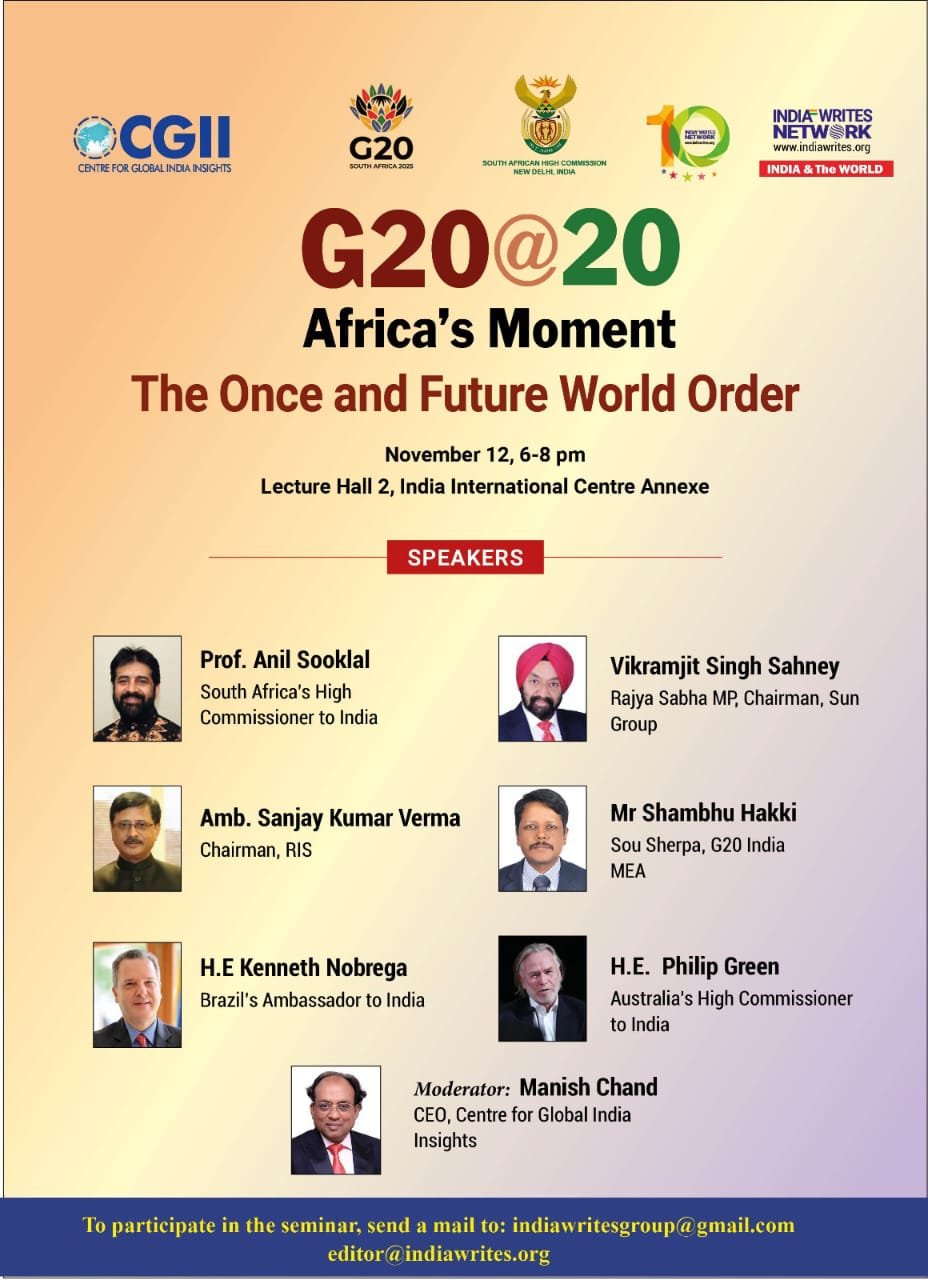
G20@20: Africa’s Moment – The Once and Future World Order
Speakers
Professor Anil Sooklal
Kenneth da Nobrega
Manish Chand
Ambassador Philip Green
Sanjay Kumar Verma
Shambhu Hakki
Vikramjit Singh Sahney
MPs, diplomats laud Operation Sindoor, call for national unity to combat Pakistan-sponsored terror
Speakers
Aparajita Sarangi
Brij Lal
Dr Amar Patnaik
Manish Chand
Priyanka Chaturvedi
Sujan Chinoy
Yashvardhan Kumar Sinha
BRICS summit in Rio to focus on Global South, local currency trade
Speakers
Dammu Ravi
Denis Alipov
Ina Hagniningtyas Krisnamurthi
Jyoti Vij
Kamel Zayed Kamel Galal
Kenneth da Nobrega
Manish Chand
Book
India’s G20 Legacy: Shaping a New World Order
Editor: Manish Chand
Pages: 206
Publisher: Pentagon Press LLP
Cover Price: INR 995
In Conversation
India’s BRICS Chairship Critical for Global South: South Africa’s Envoy
In The Press
Rescuing G20 from North-South divide: Ubuntu Moment
The Sunday Guardian: India calls for strengthened BRICS cooperation
Daily Excelsior: Ahead BRICS summit in Rio, envoys call for greater focus on combating terrorism
Rediff: BRICS Summit 2024: Focus on National Currencies
Latest From CGII
Diplomatic win for India: BRICS bridges Gulf divide, bats for Global South
Illuminating India’s BRICS moment
With Trump listening in, Iran urges PM Modi to end war with US
India Russia ‘dosti’ in Bishkek: Focus on end of Ukraine war, balanced trade
Uncovering Pakistan: Modi rallies SCO against states that use terror as policy
Modi’s SCO agenda: Shaping a region free of terror, widening arc of prosperity
The Journal
Special Edition on India’s Indo-Pacific plus Diplomacy
India’s G20 Journey – Scaling A New Summit