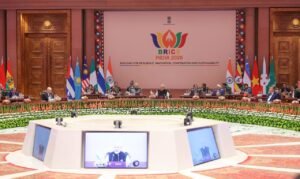
The 18th BRICS summit in New Delhi on September 12-13, 2026, successfully concluded with an exhaustive Delhi Declaration that included 140 outcomes on a wide range of issues. Nobody doubted India’s ability to pull off a Declaration, that went down to the wire, given its years of negotiating skills in consensus building in multilateral negotiations, as was evident during its G20 Presidency in September 2023. However, the true success of a summit is measured in terms of the level of the leaders’ participation whose presence signals their commitment to the grouping and a feeling of camaraderie and friendship that they generate propels the grouping forward. From this point of view, the 18th New Delhi BRICS summit was a resounding success.
Challenges
The expanded BRICS, in its third year, creates much heft on the global stage with its parameters rivalling major plurilateral and regional groupings such as G7 and Quad.
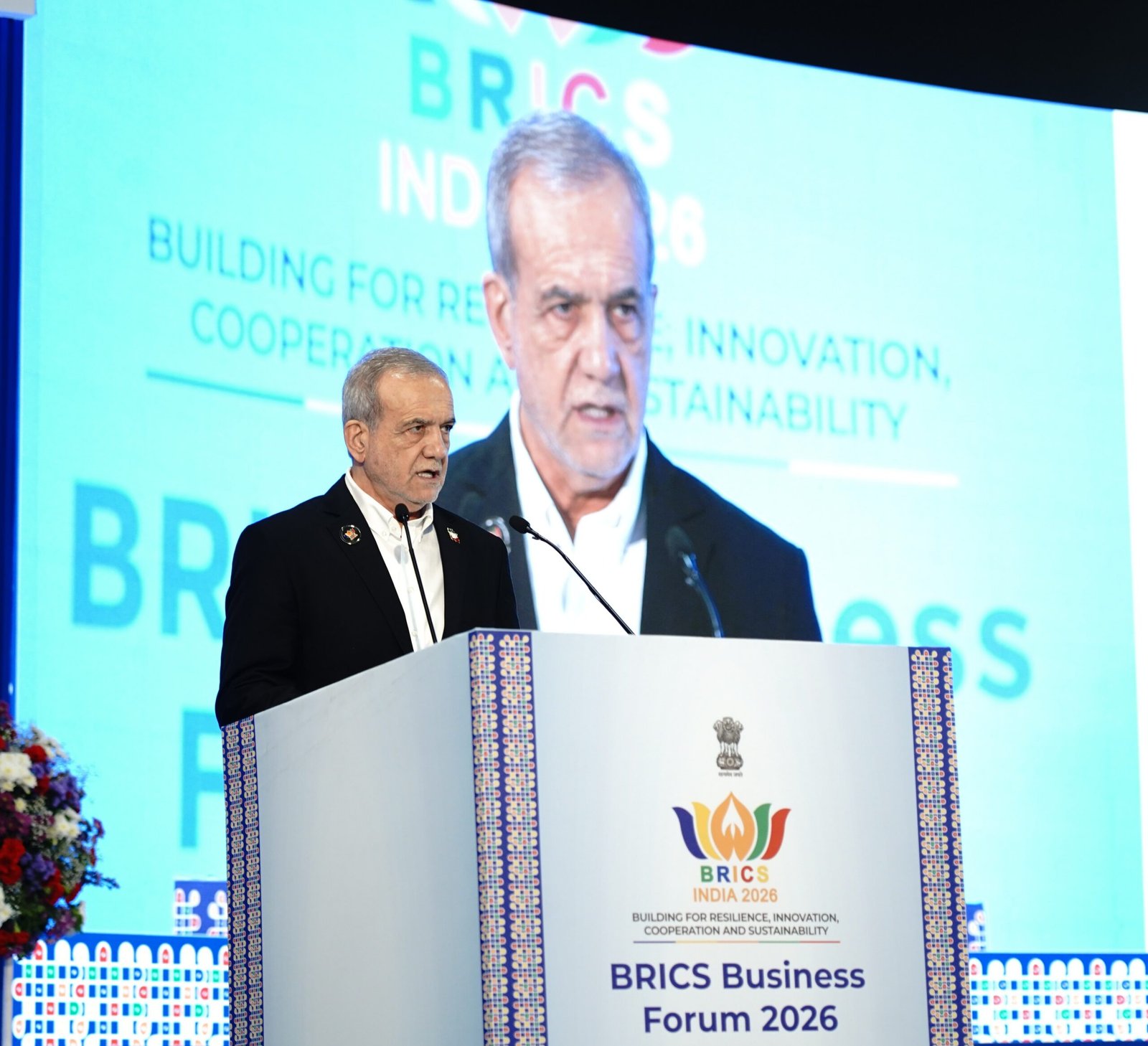
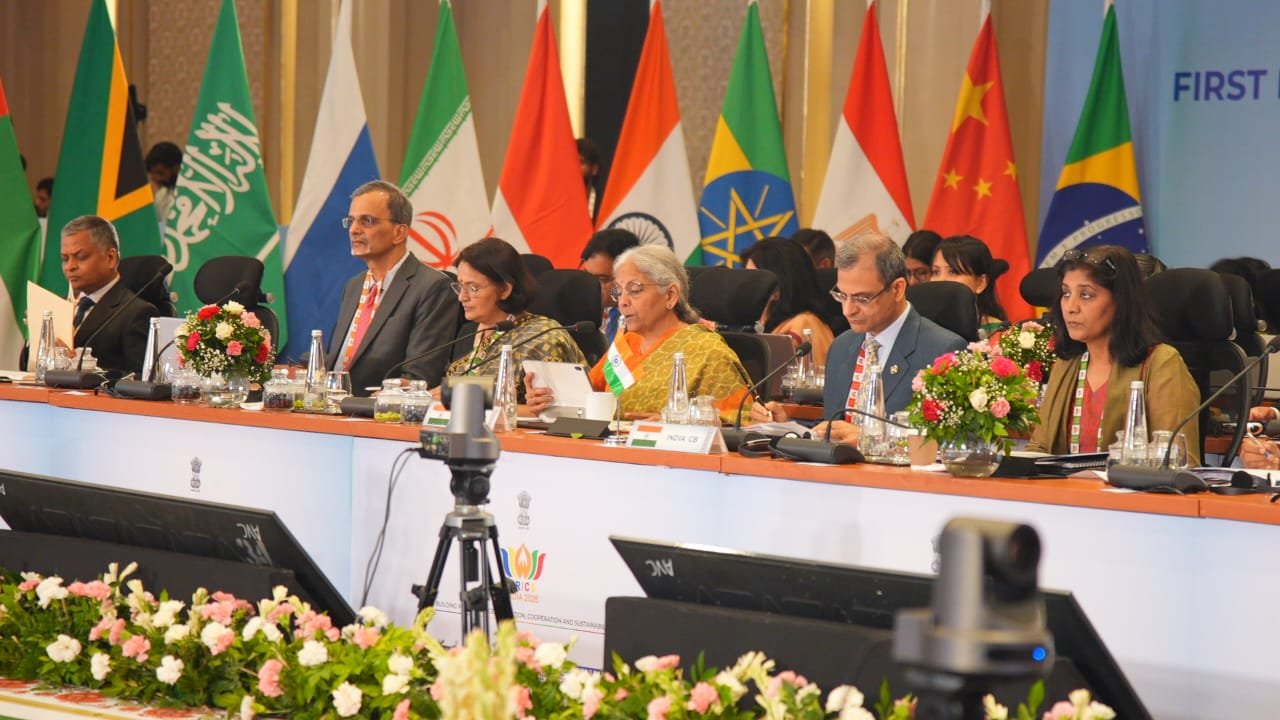
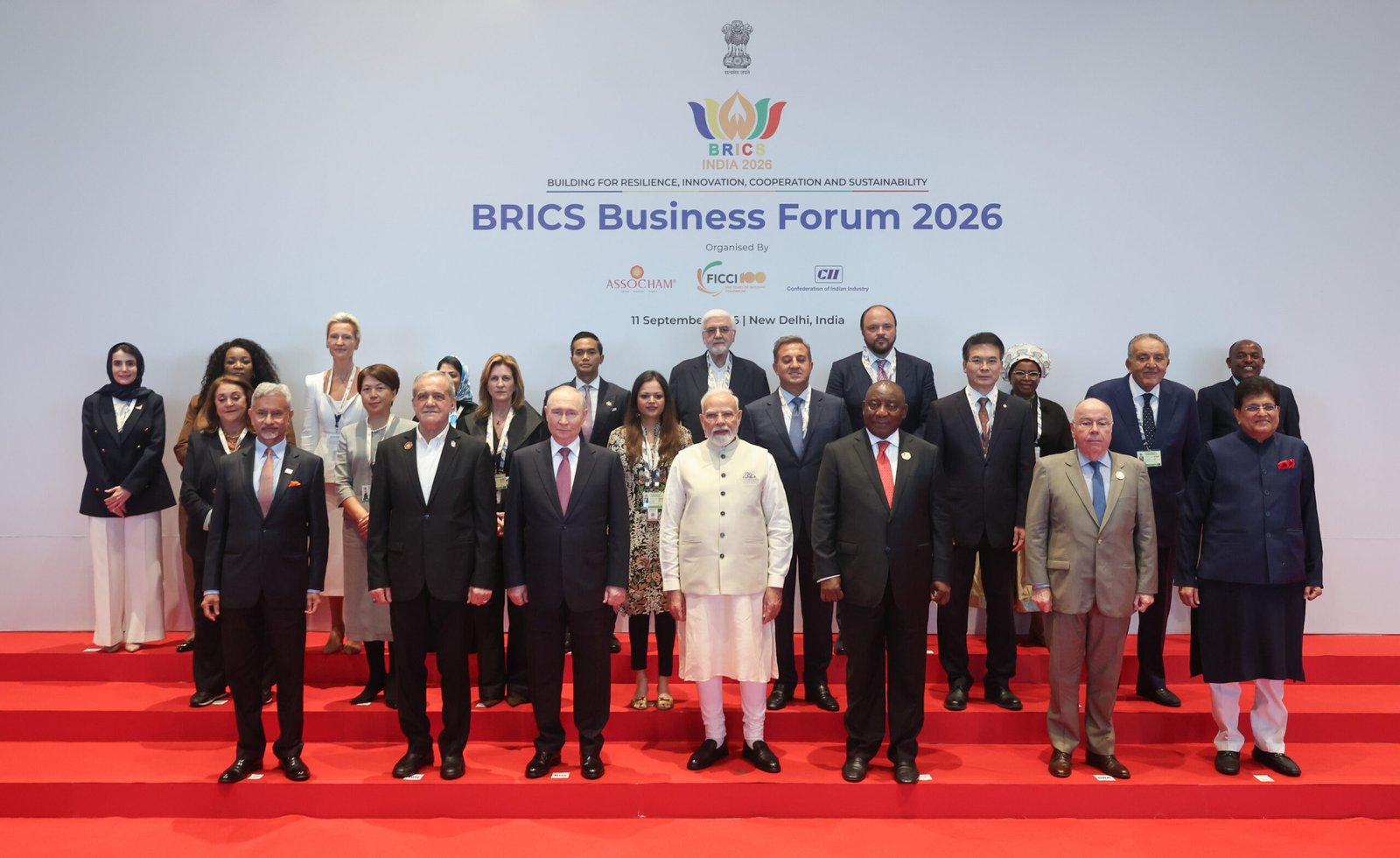
Its 11 permanent members (including Saudi Arabia) and 10 partner countries represent diverse regions of the world. While its geographical spread gives it strength and credibility it also means finding common ground on contentions geopolitical issues will be that much more challenging. Often bilateral political issues tend to take centrestage in the negotiations (India-China, Egypt-Ethiopia, Iran-UAE, and Iran-Saudi Arabia), which had caused formidable obstacles to meaningful outcomes. The ongoing geopolitical conflicts added another layer of complexity; in both Russia-Ukraine conflict and the West Asian crisis, some of the BRICS members are direct parties to conflicts which makes it unsettling for other members to endorse their positions. Given this background, it is indeed commendable that India managed to pull off a visionary declaration.
Enhancing Economic Connect
More than anything, the biggest attraction of the New Delhi BRICS summit is the promise of the economic potential it projected. It is also, perhaps, the reason as to why about 30 more countries are aspiring to join the grouping. Notably, significant consensus on economic issues was captured by the declaration: it reaffirmed commitment to SDGs 2030; exhorted revitalisation of multilateral trading system i.e WTO; sought reform of the global economic governance, particularly Multilateral Development Banks (MDGs) to reflect contemporary realities; condemned coercive economic sanctions – both direct and indirect – with consequential economic disruption for developing countries. It envisaged cross-border investment flows up to 1$ trillion during iBRICS Summit that was held on the sidelines. About 500 Institutional Investors, finance ministers and business leaders who participated in the event discussed ways to manage massive pools of sovereign capital for bankable projects across BRICS member states and partner countries.
De-risking Supply Chains
On trade, the focus was on ways to de-risk from supply chains concentration with an aim to prevent weaponisation of dependence. Resilience through restructuring of Global Value Chains (GVCs) with gradual dilution of reliance on traditional western hubs was a counter point. Moving critical links of industrial value chains in semi-conductors assembling, EV battery manufacturing, and pharmaceuticals closer home was advocated. Emphasis was laid on lowering cross-border regulatory frictions, automation of customs procedures, and use of local currencies to keep supply chains moving seamlessly across the expanded BRICS+ network. Of particular interest is the promotion of digital tools for facilitating cross-border financial and payment interoperability of Central Bank Digital Currencies (CBDCs). Efforts at technical integration of national payment networks such as India’s UPI, Brazil’s Pix China’s CIPS under unified platforms such a ‘BRICS Pay” and mBridge platforms advanced.
Digital Solutions
‘BRICS Pay’ is a decentralised digital payment ecosystem, developed by the BRICS Business Council to help link national retail and wholesale payment systems using local currencies, mobil app, and QR codes. mBridge is a multi-central bank digital currency platform that facilitate large scale instantaneous cross-border wholesale settlements and foreign exchange transactions using digital sovereign currencies. (CBDCs). Trading directly in national currencies, rather than through third party intermediaries, keeps transaction costs low as well as mitigate foreign exchange risks. However, the real challenge ahead is achieving regulatory compliance, coherence, maintaining strict adherence to local Anti-Money Laundering (AML) and Know-Your-Customer (KYC) frameworks. This is still work in progress and, hopefully, greater technical level interactions amongst BRICS Central Banks will help to close gaps and clear frictions. Trend towards settlement in national currencies for trade and investments is picking up in the Global South as many are realising the potential for economic cooperation uninterrupted even without hard currency requirement. India concluded about 35 MoUs with various countries so far, while China’s numbers are much higher. Digital payment platforms only accelerate the process as ease of transactions improves.
De-dollarisation?
However, BRICS’ effort at finding alternative payment mechanisms, focused on settlement in national currencies, is not aimed at de-dollarisation. It is highly misunderstood and misconstrued. These attempts are primarily meant to circumvent sanctions and trade restrictions imposed from outside. Currently, 5 BRICS countries (2 permanent members Russia and Iran +3 partner countries Belarus, Cuba and Uzbekistan) are under sanctions and others threatened with secondary sanctions. The recent US Congressional approval for imposition of tariff hike up to 100% on countries buying Russian oil will have serious consequences for not just for countries like India and China but for global energy markets that may trigger inflation worldwide.
BRICS’s alternative payment solutions may marginally reduce dependence on the US dollar but cannot eclipse it. It should be reckoned that the dollar is the undisputed anchor of global trade and financial architecture: it commands an overwhelming 59.10% share of total international commercial transactions value; up to 81.16% in global trade finance through Letters of Credit and Bank Guarantees take place; 90% of global invoices are raised in dollars; up to 57.13% foreign exchange reserves are held in dollars by Central Banks globally. From this it can be inferred that there is no one single currency that can replace dollar in the foreseeable future. The dominant perception is that the US financial system offers unmatched depth, open capital accounts, and legal protection.
The idea of a BRICS physical currency is farfetched too. The variation in economic depth and structural divergences in the grouping make harmonisation of both fiscal and monetary policies across BRICS challenging. The euro experiment was spread over years with small incremental pragmatic steps taken towards fiscal discipline. Also, its relative uniform living standards helped smoothen economic integration, and in contrast that salutary trait is missing BRICS. Balance of payment crises, hard currency shortages, mounting debt, widening deficit that most BRICS members suffer from make them, by instinct, seek fiscal flexibility and currency sovereignty. Internal discussions indicate an attempt at establishing a BRICS benchmark currency for valuation and invoicing of their commercial transactions. It remains to be seen what progress can be achieved on this front since overcoming members’ suspicions and misgivings on Renminbi becoming a fait acompli benchmark currency is a tall order. It requires technical-level discussions, involving central banks, to attain greater clarity on the proposal. For the time being, a step-by-step approach towards integration of payment gateways is the way forward.
Trilateral Cooperation
Potential for greater economic cooperation through BRICS’ is a big attraction, and the reason for several countries queuing up to join in. At the bilateral level, there has been significant economic cooperation through trade, investments, collaborations, capacity building amongst members countries. The expanded BRICS infuses new dynamism into the grouping. For example, its members are energy producers (hydrocarbons) while all members are energy consumers. India and China are pioneers in renewable energies with successful production in GWs. In agricultural domain, Brazil, India, China and Indonesia are global leaders, producing surplus food grains and commercial crops. Several of them are endowed with vast natural resources, including critical minerals. While bilateral economic cooperation is expected to deepen in the grouping, cooperation under the matrix of trilateral cooperation can be even more effective in being able to scale up projects in the Global South. A collaborative approach to economic activities that combines each other’s strengths can widen the scope of projects in diverse areas. India’s low-cost Digital Public Infrastructure solutions have proven to have transformative effect on economics and empowerment of common man. BRICS can serve as an effective medium for popularising India-driven solutions in the Global South, customised to local needs.
New Development Bank
Easy access to capital is critical for financing projects. BRICS’ New Development Bank (NDB) has been in the forefront in supporting projects in the group. Its non-prescriptive approach, unlike MDBs’ emphasis on policy corrections aimed at seeking structural changes, is alluring. In recent times, NDB has begun to disburse loans in local currency primarily aimed at tackling sanctions, but it makes repayments easy for borrowers by way of deficit management. China and India are the biggest beneficiaries of NDB loans, mostly for infrastructure, including green energy projects. However, NDB lending capacity should expand to able to meet aspirations of new members; the current $50 billion subscription capital and authorised capital formation of $100 billion is conservative. It should ideally increase up to 10 times for supporting projects in the Global South where India’s successful models such as PM Gati Shakti, solar energy parks, roof top solar, wind energy, hydro power, DPI, health care and vocational education can find expression.
As China assumes the BRICS Chairship next year, it is hoped that it will impart greater momentum to economic cooperation within BRICS, building upon the successful BRICS summit in New Delhi.
This article has been published in special BRICS edition of India and the World magazine. To subscribe to the magazine, please write to editor@indiawrites.org




Mapping new pathways for enhancing intra-BRICS trade and investment
The 18th BRICS summit in New Delhi on September 12-13, 2026, successfully concluded with an exhaustive Delhi Declaration that included 140 outcomes on a wide range of issues. Nobody doubted India’s ability to pull off a Declaration, that went down to the wire, given its years of negotiating skills in consensus building in multilateral negotiations, as was evident during its G20 Presidency in September 2023. However, the true success of a summit is measured in terms of the level of the leaders’ participation whose presence signals their commitment to the grouping and a feeling of camaraderie and friendship that they generate propels the grouping forward. From this point of view, the 18th New Delhi BRICS summit was a resounding success.
Challenges
The expanded BRICS, in its third year, creates much heft on the global stage with its parameters rivalling major plurilateral and regional groupings such as G7 and Quad.
Its 11 permanent members (including Saudi Arabia) and 10 partner countries represent diverse regions of the world. While its geographical spread gives it strength and credibility it also means finding common ground on contentions geopolitical issues will be that much more challenging. Often bilateral political issues tend to take centrestage in the negotiations (India-China, Egypt-Ethiopia, Iran-UAE, and Iran-Saudi Arabia), which had caused formidable obstacles to meaningful outcomes. The ongoing geopolitical conflicts added another layer of complexity; in both Russia-Ukraine conflict and the West Asian crisis, some of the BRICS members are direct parties to conflicts which makes it unsettling for other members to endorse their positions. Given this background, it is indeed commendable that India managed to pull off a visionary declaration.
Enhancing Economic Connect
More than anything, the biggest attraction of the New Delhi BRICS summit is the promise of the economic potential it projected. It is also, perhaps, the reason as to why about 30 more countries are aspiring to join the grouping. Notably, significant consensus on economic issues was captured by the declaration: it reaffirmed commitment to SDGs 2030; exhorted revitalisation of multilateral trading system i.e WTO; sought reform of the global economic governance, particularly Multilateral Development Banks (MDGs) to reflect contemporary realities; condemned coercive economic sanctions – both direct and indirect – with consequential economic disruption for developing countries. It envisaged cross-border investment flows up to 1$ trillion during iBRICS Summit that was held on the sidelines. About 500 Institutional Investors, finance ministers and business leaders who participated in the event discussed ways to manage massive pools of sovereign capital for bankable projects across BRICS member states and partner countries.
De-risking Supply Chains
On trade, the focus was on ways to de-risk from supply chains concentration with an aim to prevent weaponisation of dependence. Resilience through restructuring of Global Value Chains (GVCs) with gradual dilution of reliance on traditional western hubs was a counter point. Moving critical links of industrial value chains in semi-conductors assembling, EV battery manufacturing, and pharmaceuticals closer home was advocated. Emphasis was laid on lowering cross-border regulatory frictions, automation of customs procedures, and use of local currencies to keep supply chains moving seamlessly across the expanded BRICS+ network. Of particular interest is the promotion of digital tools for facilitating cross-border financial and payment interoperability of Central Bank Digital Currencies (CBDCs). Efforts at technical integration of national payment networks such as India’s UPI, Brazil’s Pix China’s CIPS under unified platforms such a ‘BRICS Pay” and mBridge platforms advanced.
Digital Solutions
‘BRICS Pay’ is a decentralised digital payment ecosystem, developed by the BRICS Business Council to help link national retail and wholesale payment systems using local currencies, mobil app, and QR codes. mBridge is a multi-central bank digital currency platform that facilitate large scale instantaneous cross-border wholesale settlements and foreign exchange transactions using digital sovereign currencies. (CBDCs). Trading directly in national currencies, rather than through third party intermediaries, keeps transaction costs low as well as mitigate foreign exchange risks. However, the real challenge ahead is achieving regulatory compliance, coherence, maintaining strict adherence to local Anti-Money Laundering (AML) and Know-Your-Customer (KYC) frameworks. This is still work in progress and, hopefully, greater technical level interactions amongst BRICS Central Banks will help to close gaps and clear frictions. Trend towards settlement in national currencies for trade and investments is picking up in the Global South as many are realising the potential for economic cooperation uninterrupted even without hard currency requirement. India concluded about 35 MoUs with various countries so far, while China’s numbers are much higher. Digital payment platforms only accelerate the process as ease of transactions improves.
De-dollarisation?
However, BRICS’ effort at finding alternative payment mechanisms, focused on settlement in national currencies, is not aimed at de-dollarisation. It is highly misunderstood and misconstrued. These attempts are primarily meant to circumvent sanctions and trade restrictions imposed from outside. Currently, 5 BRICS countries (2 permanent members Russia and Iran +3 partner countries Belarus, Cuba and Uzbekistan) are under sanctions and others threatened with secondary sanctions. The recent US Congressional approval for imposition of tariff hike up to 100% on countries buying Russian oil will have serious consequences for not just for countries like India and China but for global energy markets that may trigger inflation worldwide.
BRICS’s alternative payment solutions may marginally reduce dependence on the US dollar but cannot eclipse it. It should be reckoned that the dollar is the undisputed anchor of global trade and financial architecture: it commands an overwhelming 59.10% share of total international commercial transactions value; up to 81.16% in global trade finance through Letters of Credit and Bank Guarantees take place; 90% of global invoices are raised in dollars; up to 57.13% foreign exchange reserves are held in dollars by Central Banks globally. From this it can be inferred that there is no one single currency that can replace dollar in the foreseeable future. The dominant perception is that the US financial system offers unmatched depth, open capital accounts, and legal protection.
The idea of a BRICS physical currency is farfetched too. The variation in economic depth and structural divergences in the grouping make harmonisation of both fiscal and monetary policies across BRICS challenging. The euro experiment was spread over years with small incremental pragmatic steps taken towards fiscal discipline. Also, its relative uniform living standards helped smoothen economic integration, and in contrast that salutary trait is missing BRICS. Balance of payment crises, hard currency shortages, mounting debt, widening deficit that most BRICS members suffer from make them, by instinct, seek fiscal flexibility and currency sovereignty. Internal discussions indicate an attempt at establishing a BRICS benchmark currency for valuation and invoicing of their commercial transactions. It remains to be seen what progress can be achieved on this front since overcoming members’ suspicions and misgivings on Renminbi becoming a fait acompli benchmark currency is a tall order. It requires technical-level discussions, involving central banks, to attain greater clarity on the proposal. For the time being, a step-by-step approach towards integration of payment gateways is the way forward.
Trilateral Cooperation
Potential for greater economic cooperation through BRICS’ is a big attraction, and the reason for several countries queuing up to join in. At the bilateral level, there has been significant economic cooperation through trade, investments, collaborations, capacity building amongst members countries. The expanded BRICS infuses new dynamism into the grouping. For example, its members are energy producers (hydrocarbons) while all members are energy consumers. India and China are pioneers in renewable energies with successful production in GWs. In agricultural domain, Brazil, India, China and Indonesia are global leaders, producing surplus food grains and commercial crops. Several of them are endowed with vast natural resources, including critical minerals. While bilateral economic cooperation is expected to deepen in the grouping, cooperation under the matrix of trilateral cooperation can be even more effective in being able to scale up projects in the Global South. A collaborative approach to economic activities that combines each other’s strengths can widen the scope of projects in diverse areas. India’s low-cost Digital Public Infrastructure solutions have proven to have transformative effect on economics and empowerment of common man. BRICS can serve as an effective medium for popularising India-driven solutions in the Global South, customised to local needs.
New Development Bank
Easy access to capital is critical for financing projects. BRICS’ New Development Bank (NDB) has been in the forefront in supporting projects in the group. Its non-prescriptive approach, unlike MDBs’ emphasis on policy corrections aimed at seeking structural changes, is alluring. In recent times, NDB has begun to disburse loans in local currency primarily aimed at tackling sanctions, but it makes repayments easy for borrowers by way of deficit management. China and India are the biggest beneficiaries of NDB loans, mostly for infrastructure, including green energy projects. However, NDB lending capacity should expand to able to meet aspirations of new members; the current $50 billion subscription capital and authorised capital formation of $100 billion is conservative. It should ideally increase up to 10 times for supporting projects in the Global South where India’s successful models such as PM Gati Shakti, solar energy parks, roof top solar, wind energy, hydro power, DPI, health care and vocational education can find expression.
As China assumes the BRICS Chairship next year, it is hoped that it will impart greater momentum to economic cooperation within BRICS, building upon the successful BRICS summit in New Delhi.
This article has been published in special BRICS edition of India and the World magazine. To subscribe to the magazine, please write to editor@indiawrites.org
Dammu Ravi
Related Posts
BRICS and Search for Peace in West Asia
India at BRICS: Building Bridges in a Fragmented World
India redefining BRICS’ Role in Promoting Tech and Innovation
BRICS: Building a Vibrant Community of People
From Voice to Impact: BRICS and Push for Global Governance Reform
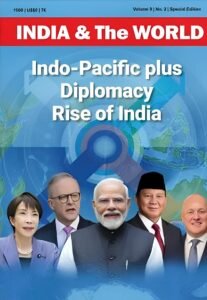
Enhancing Indo-Pacific Diplomacy for India’s Rise
Latest Events
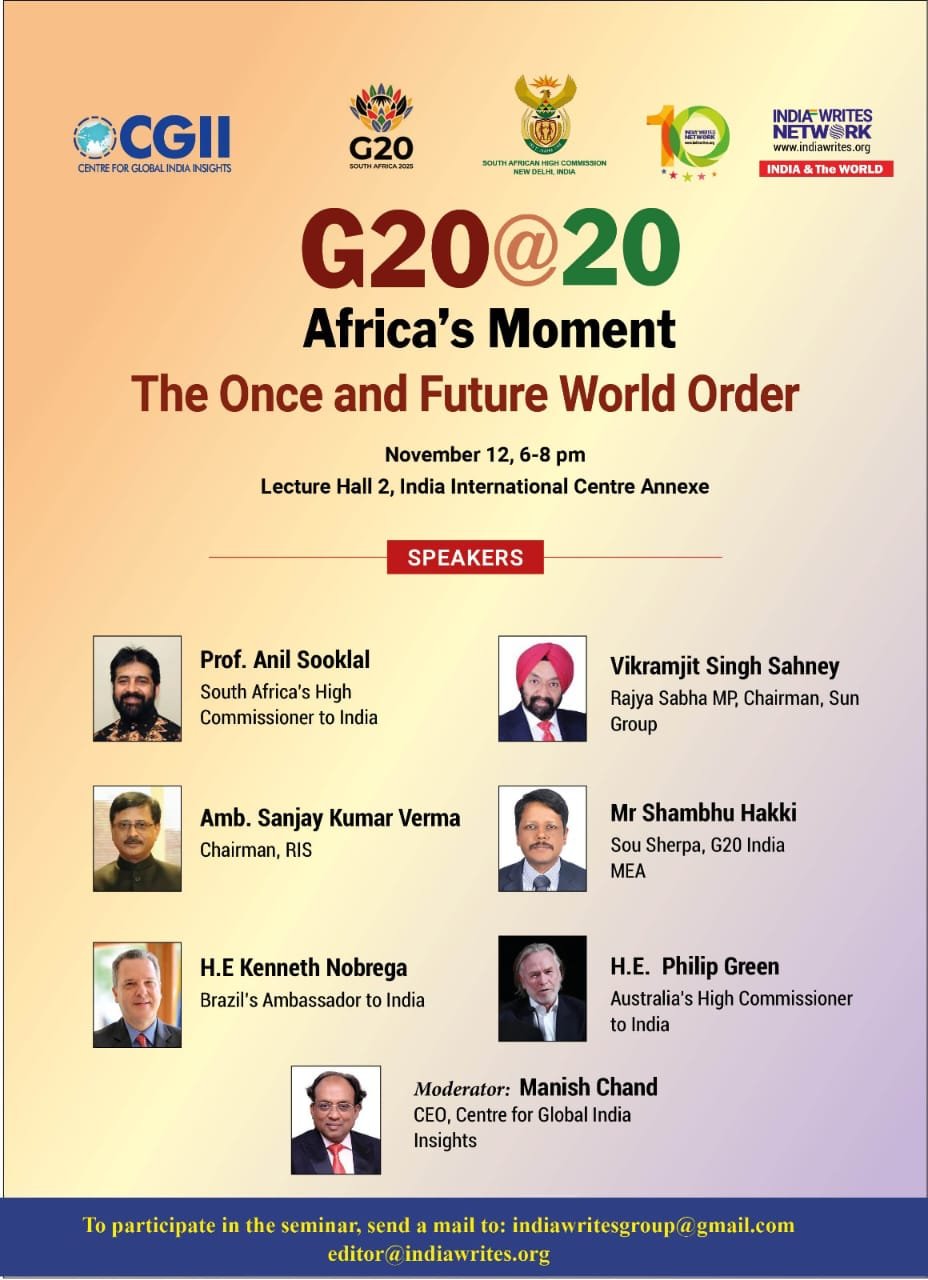
G20@20: Africa’s Moment – The Once and Future World Order
Speakers
Professor Anil Sooklal
Kenneth da Nobrega
Manish Chand
Ambassador Philip Green
Sanjay Kumar Verma
Shambhu Hakki
Vikramjit Singh Sahney
MPs, diplomats laud Operation Sindoor, call for national unity to combat Pakistan-sponsored terror
Speakers
Aparajita Sarangi
Brij Lal
Dr Amar Patnaik
Manish Chand
Priyanka Chaturvedi
Sujan Chinoy
Yashvardhan Kumar Sinha
BRICS summit in Rio to focus on Global South, local currency trade
Speakers
Dammu Ravi
Denis Alipov
Ina Hagniningtyas Krisnamurthi
Jyoti Vij
Kamel Zayed Kamel Galal
Kenneth da Nobrega
Manish Chand
Book
India’s G20 Legacy: Shaping a New World Order
Editor: Manish Chand
Pages: 206
Publisher: Pentagon Press LLP
Cover Price: INR 995
In Conversation
Sanctions create new opportunities, invest in Tatarstan: Taliya Minullina
In The Press
Can BRICS help reshape global order by strengthening emerging economies?
Rescuing G20 from North-South divide: Ubuntu Moment
The Sunday Guardian: India calls for strengthened BRICS cooperation
Daily Excelsior: Ahead BRICS summit in Rio, envoys call for greater focus on combating terrorism
Latest From CGII
BRICS and Search for Peace in West Asia
India at BRICS: Building Bridges in a Fragmented World
India redefining BRICS’ Role in Promoting Tech and Innovation
BRICS: Building a Vibrant Community of People
From Voice to Impact: BRICS and Push for Global Governance Reform
India-US trade deal soon, says Rubio
The Journal
Special Edition on India’s Indo-Pacific plus Diplomacy
India’s G20 Journey – Scaling A New Summit