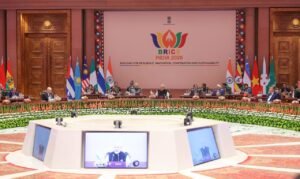
Can BRICS evolve from a forum for political and economic cooperation into a useful platform for promoting peace? It is not a security alliance and has neither coercive power nor permanent mediation machinery. Yet its expanded membership gives it an unusual diplomatic asset: countries with sharply different strategic alignments – India, China, Russia, Iran, the United Arab Emirates and Egypt among them – now sit around the same table. In a fragmented international order, such diversity can complicate consensus, yet it can also create a forum in which adversaries continue to engage rather than allowing communication to break down. The New Delhi Declaration gave this possibility greater substance by placing preventive diplomacy, mediation and peaceful dispute settlement on the grouping’s collective agenda.
New Delhi offered an early test. In May 2026, BRICS foreign ministers failed to agree on a joint communique as divisions over the widening West Asian conflict surfaced. Iran sought stronger language against the military campaign directed at it, while the UAE rejected Tehran’s accusations and condemned Iranian attacks on its territory. India was left to issue a Chair’s Statement.
Four months later, the leaders adopted a common declaration calling for restraint, protection of civilians and infrastructure, respect for sovereignty and territorial integrity, and a longer-term understanding through dialogue and diplomacy. The summit also provided space for direct high-level Iran-UAE contact. This was not formal mediation, but it demonstrated that BRICS could help contain differences and keep diplomatic channels open.
Palestine: An Existing Consensus, Reframed
Palestine posed a different diplomatic challenge. BRICS did not need to build a position from scratch. The 2025 Rio Declaration had already endorsed Palestinian statehood, a two-state solution based on the 1967 borders with East Jerusalem as the Palestinian capital, full UN membership, opposition to forced displacement, and continued support for UNRWA. New Delhi largely preserved this framework while adapting it to the post-October 2025 environment.
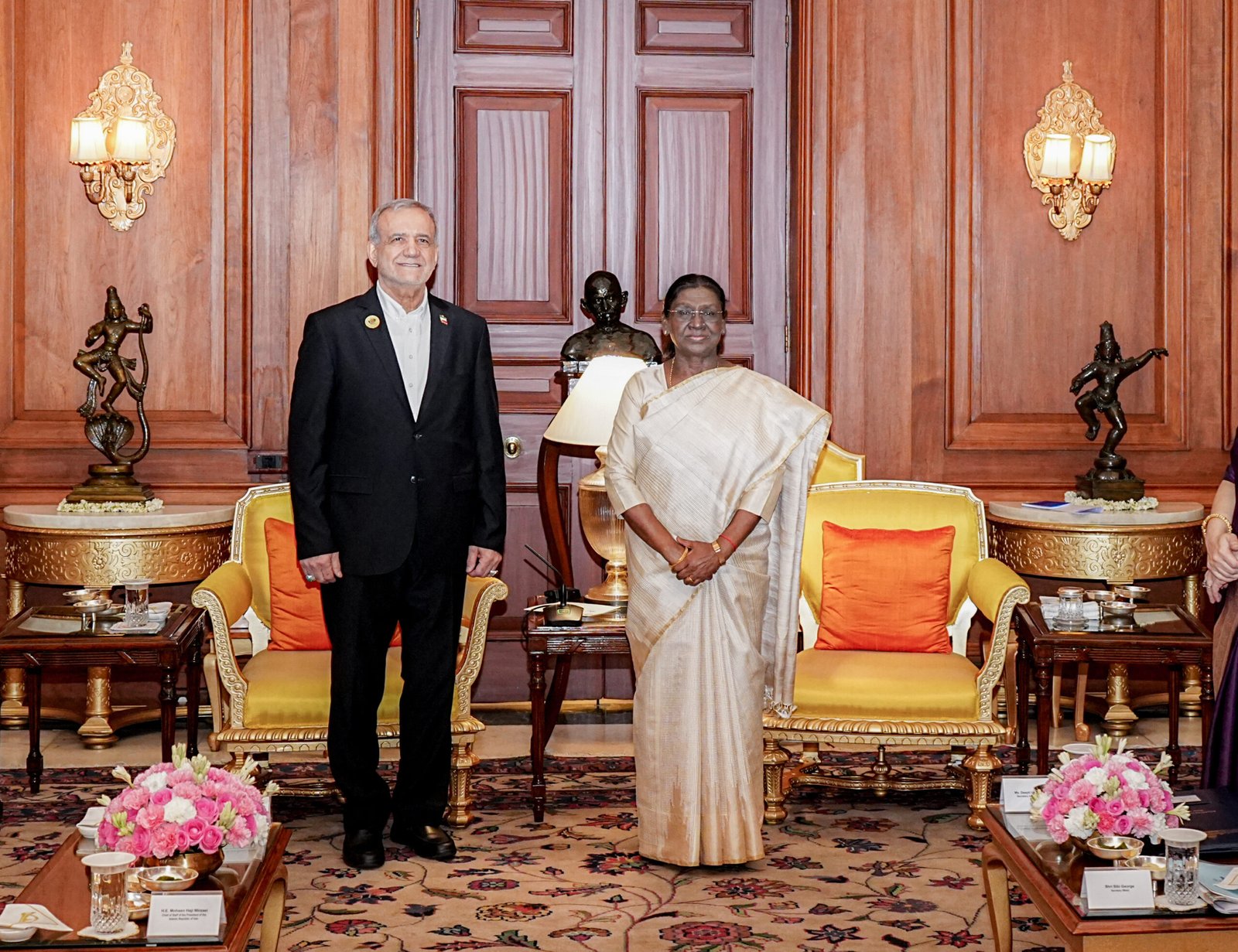
The 2026 Declaration focused on maintaining the Gaza ceasefire, ensuring unhindered humanitarian access, preventing displacement and demographic change, and preserving the political basis for a future Palestinian state. It also reaffirmed Palestinian self-determination and UN membership, defended UNRWA’s mandate, and rejected unilateral attempts to alter the status of occupied Jerusalem. Its significance lay less in a dramatic policy shift than in the breadth of consensus. BRICS members have very different relations with Israel, Iran, the Arab states, and the United States, yet they sustained a common political framework on Palestine.
There was, however, some recalibration. Rio had explicitly referred to Israeli withdrawal from Gaza and other occupied areas, the release of hostages and detainees held contrary to international law, and Palestinian Authority-centred reconstruction. New Delhi did not repeat all these formulations. Instead, it focused on the existing ceasefire, humanitarian access, opposition to displacement, and the requirements of a viable two-state settlement. This illustrates the nature of BRICS consensus diplomacy: it can preserve broad principles while adjusting operational language to changing circumstances and the sensitivities of an enlarged membership.
For India, the achievement was to prevent the sharper Iran-UAE confrontation from unravelling the area where the grouping already had substantial common ground. On Palestine, BRICS demonstrated that it could aggregate diplomatic support for statehood, territorial integrity, humanitarian access and a negotiated settlement. What it has not yet shown is the ability to bring the parties themselves into a negotiating process. That would require engagement with Israel and other actors outside BRICS, as well as coordination with the United Nations and established regional intermediaries.
India and Iran-UAE Divide
The more difficult challenge was the rupture between Iran and the UAE. Both had joined BRICS in 2024, yet by May 2026 their confrontation had escalated to the point of derailing consensus at the foreign-minister level. For India, avoiding a repeat at the leaders’ summit became an important test of its chairship.
India’s approach was one of sustained engagement rather than a single dramatic intervention. New Delhi maintained political channels with both Tehran and Abu Dhabi and used bilateral meetings before and during the summit to reiterate the importance of dialogue, de-escalation, the protection of civilians, and freedom of navigation and commerce. The final consensus appears to have emerged from intensive, multi-level consultations involving the Indian chair, the two principal parties, and other influential BRICS members.
The compromise is evident in the Declaration itself. It acknowledges differing national positions, calls for maximum restraint and respect for sovereignty and territorial integrity, emphasises civilian protection, and urges diplomacy towards a durable regional understanding. It also expresses concern about attacks on peaceful nuclear facilities under IAEA safeguards and stresses the continuity of trade, energy and supply chains. Crucially, it avoids assigning responsibility for the wider war. That ambiguity served as a diplomatic instrument: it allowed Iran and the UAE to retain incompatible national narratives while accepting common principles.
The most tangible outcome emerged on the summit sidelines, when Iranian President Masoud Pezeshkian and Abu Dhabi Crown Prince Sheikh Khaled bin Mohamed bin Zayed Al Nahyan met to discuss de-escalation and regional stability. No settlement followed, but the encounter mattered. It showed how a multilateral forum can create political space for direct contact when bilateral relations are strained.
India’s role should therefore be described accurately. It did not mediate a peace agreement, and the eventual convergence was not India’s work alone. Its contribution was bridge-building and facilitation: maintaining access to both sides, seeking formulations that neither side had to reject, and using the chairship to keep them within the same political process.
A Larger Peace Role for BRICS?
New Delhi may thus have raised a broader question about the future of BRICS. The Declaration gives conflict prevention and consensual mediation a clear place on the grouping’s agenda. Its heterogeneous membership could offer a comparative advantage. India has working relationships across the Gulf, with Iran and Israel, and with both Western and non-Western powers. China has deep regional economic interests and experience in supporting regional rapprochement. Egypt has long experience in Palestinian and Arab-Israeli diplomacy. The UAE is connected to multiple strategic camps, while Iran is now part of BRICS. Brazil and South Africa bring additional traditions of multilateral diplomacy.
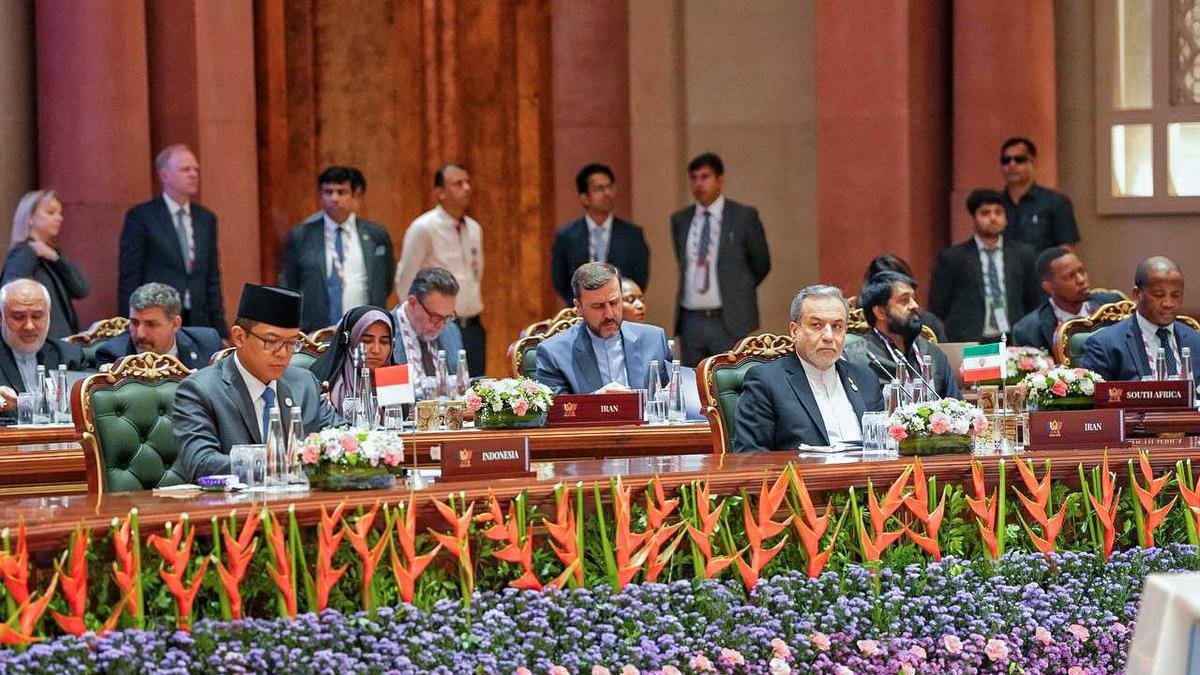
West Asia is an obvious testing ground because its conflicts increasingly overlap: Palestine, the Israel-Iran confrontation, Gulf security, Yemen, maritime routes, and energy security are interconnected. BRICS cannot resolve these disputes simply by issuing declarations, but it can provide supplementary diplomatic space for adversaries and their partners to communicate.
Its limitations are equally clear. BRICS has no standing peace and security council, mediation secretariat, peacekeeping mechanism or enforcement capacity. Decisions depend on consensus, which can reduce agreements to the lowest common denominator. Moreover, essential parties to many conflicts remain outside the grouping. In West Asia, key players such as Israel and the United States remain outside BRICS, while established regional mediators such as Qatar and Türkiye — and, on Iran-related issues, Oman — have diplomatic access, negotiating channels and practical experience that BRICS as an institution currently lacks.
The most realistic near-term role is therefore not to replace existing mediators but to complement them. BRICS could provide discreet venues for dialogue, support backchannels, test compromise formulations, create small conflict-specific contact groups where the parties consent, and reinforce settlements negotiated elsewhere. Over time, it could also link diplomacy with humanitarian coordination, reconstruction and development finance.
Moderator Before Mediator
The New Delhi Summit does not make BRICS a global mediator. It does, however, suggest a useful intermediate role. On Palestine, the grouping maintained a broad political consensus across a diverse membership. On the Iran-UAE divide, it helped move from diplomatic breakdown in May to a common leaders’ declaration and renewed high-level contact in September. These are different capabilities: aggregating consensus where agreement exists and facilitating dialogue where it does not.
For the foreseeable future, BRICS may be more effective as a diplomatic moderator and facilitator than as a conventional mediator. Its value lies in keeping rival states engaged in the same political conversation and creating room for compromise before formal mediation becomes possible. If future chairships can preserve that heterogeneity while developing credible, consent-based mechanisms for preventive diplomacy, New Delhi may come to be seen as an early step in BRICS’s evolution from a forum that comments on conflicts to one that can sometimes help manage them.
This article has been published in special BRICS edition of India and the World magazine. To subscribe to the magazine, please write to editor@indiawrites.org



BRICS and Search for Peace in West Asia
Can BRICS evolve from a forum for political and economic cooperation into a useful platform for promoting peace? It is not a security alliance and has neither coercive power nor permanent mediation machinery. Yet its expanded membership gives it an unusual diplomatic asset: countries with sharply different strategic alignments – India, China, Russia, Iran, the United Arab Emirates and Egypt among them – now sit around the same table. In a fragmented international order, such diversity can complicate consensus, yet it can also create a forum in which adversaries continue to engage rather than allowing communication to break down. The New Delhi Declaration gave this possibility greater substance by placing preventive diplomacy, mediation and peaceful dispute settlement on the grouping’s collective agenda.
New Delhi offered an early test. In May 2026, BRICS foreign ministers failed to agree on a joint communique as divisions over the widening West Asian conflict surfaced. Iran sought stronger language against the military campaign directed at it, while the UAE rejected Tehran’s accusations and condemned Iranian attacks on its territory. India was left to issue a Chair’s Statement.
Palestine: An Existing Consensus, Reframed
Palestine posed a different diplomatic challenge. BRICS did not need to build a position from scratch. The 2025 Rio Declaration had already endorsed Palestinian statehood, a two-state solution based on the 1967 borders with East Jerusalem as the Palestinian capital, full UN membership, opposition to forced displacement, and continued support for UNRWA. New Delhi largely preserved this framework while adapting it to the post-October 2025 environment.
The 2026 Declaration focused on maintaining the Gaza ceasefire, ensuring unhindered humanitarian access, preventing displacement and demographic change, and preserving the political basis for a future Palestinian state. It also reaffirmed Palestinian self-determination and UN membership, defended UNRWA’s mandate, and rejected unilateral attempts to alter the status of occupied Jerusalem. Its significance lay less in a dramatic policy shift than in the breadth of consensus. BRICS members have very different relations with Israel, Iran, the Arab states, and the United States, yet they sustained a common political framework on Palestine.
There was, however, some recalibration. Rio had explicitly referred to Israeli withdrawal from Gaza and other occupied areas, the release of hostages and detainees held contrary to international law, and Palestinian Authority-centred reconstruction. New Delhi did not repeat all these formulations. Instead, it focused on the existing ceasefire, humanitarian access, opposition to displacement, and the requirements of a viable two-state settlement. This illustrates the nature of BRICS consensus diplomacy: it can preserve broad principles while adjusting operational language to changing circumstances and the sensitivities of an enlarged membership.
For India, the achievement was to prevent the sharper Iran-UAE confrontation from unravelling the area where the grouping already had substantial common ground. On Palestine, BRICS demonstrated that it could aggregate diplomatic support for statehood, territorial integrity, humanitarian access and a negotiated settlement. What it has not yet shown is the ability to bring the parties themselves into a negotiating process. That would require engagement with Israel and other actors outside BRICS, as well as coordination with the United Nations and established regional intermediaries.
India and Iran-UAE Divide
The more difficult challenge was the rupture between Iran and the UAE. Both had joined BRICS in 2024, yet by May 2026 their confrontation had escalated to the point of derailing consensus at the foreign-minister level. For India, avoiding a repeat at the leaders’ summit became an important test of its chairship.
India’s approach was one of sustained engagement rather than a single dramatic intervention. New Delhi maintained political channels with both Tehran and Abu Dhabi and used bilateral meetings before and during the summit to reiterate the importance of dialogue, de-escalation, the protection of civilians, and freedom of navigation and commerce. The final consensus appears to have emerged from intensive, multi-level consultations involving the Indian chair, the two principal parties, and other influential BRICS members.
The compromise is evident in the Declaration itself. It acknowledges differing national positions, calls for maximum restraint and respect for sovereignty and territorial integrity, emphasises civilian protection, and urges diplomacy towards a durable regional understanding. It also expresses concern about attacks on peaceful nuclear facilities under IAEA safeguards and stresses the continuity of trade, energy and supply chains. Crucially, it avoids assigning responsibility for the wider war. That ambiguity served as a diplomatic instrument: it allowed Iran and the UAE to retain incompatible national narratives while accepting common principles.
The most tangible outcome emerged on the summit sidelines, when Iranian President Masoud Pezeshkian and Abu Dhabi Crown Prince Sheikh Khaled bin Mohamed bin Zayed Al Nahyan met to discuss de-escalation and regional stability. No settlement followed, but the encounter mattered. It showed how a multilateral forum can create political space for direct contact when bilateral relations are strained.
India’s role should therefore be described accurately. It did not mediate a peace agreement, and the eventual convergence was not India’s work alone. Its contribution was bridge-building and facilitation: maintaining access to both sides, seeking formulations that neither side had to reject, and using the chairship to keep them within the same political process.
A Larger Peace Role for BRICS?
New Delhi may thus have raised a broader question about the future of BRICS. The Declaration gives conflict prevention and consensual mediation a clear place on the grouping’s agenda. Its heterogeneous membership could offer a comparative advantage. India has working relationships across the Gulf, with Iran and Israel, and with both Western and non-Western powers. China has deep regional economic interests and experience in supporting regional rapprochement. Egypt has long experience in Palestinian and Arab-Israeli diplomacy. The UAE is connected to multiple strategic camps, while Iran is now part of BRICS. Brazil and South Africa bring additional traditions of multilateral diplomacy.
West Asia is an obvious testing ground because its conflicts increasingly overlap: Palestine, the Israel-Iran confrontation, Gulf security, Yemen, maritime routes, and energy security are interconnected. BRICS cannot resolve these disputes simply by issuing declarations, but it can provide supplementary diplomatic space for adversaries and their partners to communicate.
Its limitations are equally clear. BRICS has no standing peace and security council, mediation secretariat, peacekeeping mechanism or enforcement capacity. Decisions depend on consensus, which can reduce agreements to the lowest common denominator. Moreover, essential parties to many conflicts remain outside the grouping. In West Asia, key players such as Israel and the United States remain outside BRICS, while established regional mediators such as Qatar and Türkiye — and, on Iran-related issues, Oman — have diplomatic access, negotiating channels and practical experience that BRICS as an institution currently lacks.
The most realistic near-term role is therefore not to replace existing mediators but to complement them. BRICS could provide discreet venues for dialogue, support backchannels, test compromise formulations, create small conflict-specific contact groups where the parties consent, and reinforce settlements negotiated elsewhere. Over time, it could also link diplomacy with humanitarian coordination, reconstruction and development finance.
Moderator Before Mediator
The New Delhi Summit does not make BRICS a global mediator. It does, however, suggest a useful intermediate role. On Palestine, the grouping maintained a broad political consensus across a diverse membership. On the Iran-UAE divide, it helped move from diplomatic breakdown in May to a common leaders’ declaration and renewed high-level contact in September. These are different capabilities: aggregating consensus where agreement exists and facilitating dialogue where it does not.
For the foreseeable future, BRICS may be more effective as a diplomatic moderator and facilitator than as a conventional mediator. Its value lies in keeping rival states engaged in the same political conversation and creating room for compromise before formal mediation becomes possible. If future chairships can preserve that heterogeneity while developing credible, consent-based mechanisms for preventive diplomacy, New Delhi may come to be seen as an early step in BRICS’s evolution from a forum that comments on conflicts to one that can sometimes help manage them.
This article has been published in special BRICS edition of India and the World magazine. To subscribe to the magazine, please write to editor@indiawrites.org
Ausaf Sayeed
Related Posts
Mapping new pathways for enhancing intra-BRICS trade and investment
India at BRICS: Building Bridges in a Fragmented World
India redefining BRICS’ Role in Promoting Tech and Innovation
BRICS: Building a Vibrant Community of People
From Voice to Impact: BRICS and Push for Global Governance Reform
Enhancing Indo-Pacific Diplomacy for India’s Rise
Latest Events
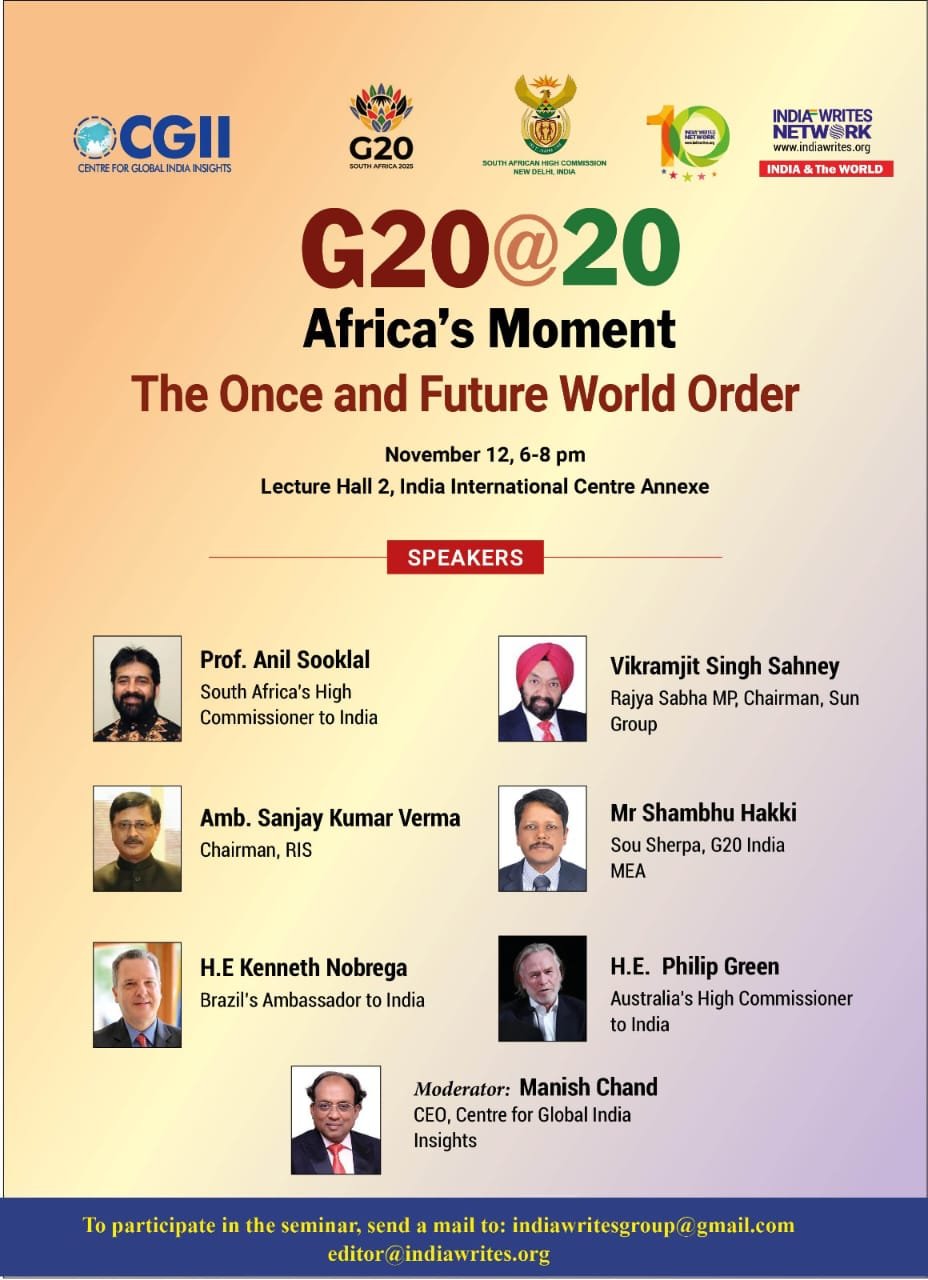
G20@20: Africa’s Moment – The Once and Future World Order
Speakers
Professor Anil Sooklal
Kenneth da Nobrega
Manish Chand
Ambassador Philip Green
Sanjay Kumar Verma
Shambhu Hakki
Vikramjit Singh Sahney
MPs, diplomats laud Operation Sindoor, call for national unity to combat Pakistan-sponsored terror
Speakers
Aparajita Sarangi
Brij Lal
Dr Amar Patnaik
Manish Chand
Priyanka Chaturvedi
Sujan Chinoy
Yashvardhan Kumar Sinha
BRICS summit in Rio to focus on Global South, local currency trade
Speakers
Dammu Ravi
Denis Alipov
Ina Hagniningtyas Krisnamurthi
Jyoti Vij
Kamel Zayed Kamel Galal
Kenneth da Nobrega
Manish Chand
Book
India’s G20 Legacy: Shaping a New World Order
Editor: Manish Chand
Pages: 206
Publisher: Pentagon Press LLP
Cover Price: INR 995
In Conversation
Sanctions create new opportunities, invest in Tatarstan: Taliya Minullina
In The Press
Can BRICS help reshape global order by strengthening emerging economies?
Rescuing G20 from North-South divide: Ubuntu Moment
The Sunday Guardian: India calls for strengthened BRICS cooperation
Daily Excelsior: Ahead BRICS summit in Rio, envoys call for greater focus on combating terrorism
Latest From CGII
Mapping new pathways for enhancing intra-BRICS trade and investment
India at BRICS: Building Bridges in a Fragmented World
India redefining BRICS’ Role in Promoting Tech and Innovation
BRICS: Building a Vibrant Community of People
From Voice to Impact: BRICS and Push for Global Governance Reform
India-US trade deal soon, says Rubio
The Journal
Special Edition on India’s Indo-Pacific plus Diplomacy
India’s G20 Journey – Scaling A New Summit