Ahead of the BIMSTEC summit and Prime Minister Narendra Modi’s visit to Thailand next week, BIMSTEC Secretary General Indra Mani Pandey has stressed on intensifying counter-terror cooperation and underlined that the grouping will acquire more economic and strategic heft with the adoption of the Bangkok Vision 2030. In an online conference organised by Centre for Global India Insights (CGII), a think tank focused on global affairs and India Writes Network, Mr Pandey highlighted ongoing initiatives to bolster security cooperation, including counter-terrorism, among BIMSTEC member states. “We have robust cooperation in security sector. There is greater focus on dealing with the shared challenge of counterterrorism, and issues like drug trafficking, and human trafficking in the region,” said Mr Pandey. “A convention on counterterrorism and drug trafficking is already in force. Member states have been working together in implementing that convention and there are mechanisms in place for them to work together,” he said. 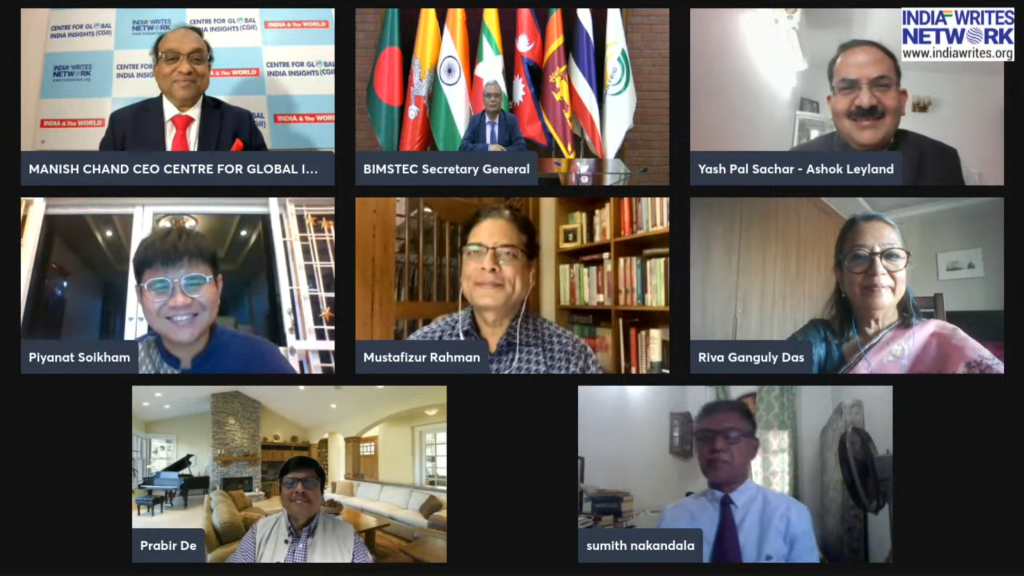 The conference, titled “Bolstering BIMSTEC: Mapping the Next Steps,” was held ahead of Prime Minister Narendra Modi’s visit to Bangkok to attend BIMSTEC summit and featured eminent diplomats and experts from India, Thailand Sri Lanka and Bangladesh. Diplomats from other BIMSTEC countries also attended the conference. Besides BIMSTEC Secretary General Pandey, Sumith Nakandala, First Secretary General, BIMSTEC Secretariat; Amb. (Retd.) Riva Ganguly Das, India’s Former High Commissioner to Bangladesh; Prof Mustafizur Rahman, Distinguished Fellow, Centre for Policy Dialogue (CPD), Dhaka; Dr. Piyanat Soikham, Director, India Studies Centre, Ubon Ratchathani University, Thailand; Prabir De, Professor, RIS; and Yash Pal Sachar, Vice-President, Ashok Leyland participated in the panel discussion. The conference was moderated by Manish Chand, CEO, Centre for Global India Insights.
“Our leaders will adopt a joint declaration. They will also adopt a BIMSTEC Bangkok Vision 2030. This is for the first time that BIMSTEC will adopt its own vision document,” said Mr Pandey. “There will be signing of agreement on maritime transport cooperation in the presence of our leaders. A number of other MoU will be signed for partnerships between BIMSTEC Secretariat and its external partners,” he said.
The BIMSTEC chief also underlined the importance of the grouping for promoting South-South Cooperation. “The best way to engage in South-South Cooperation, in my view, is through mini-laterals and regional organizations like BIMSTEC. BIMSTEC continues to enjoy full political support of all its members,” he said.
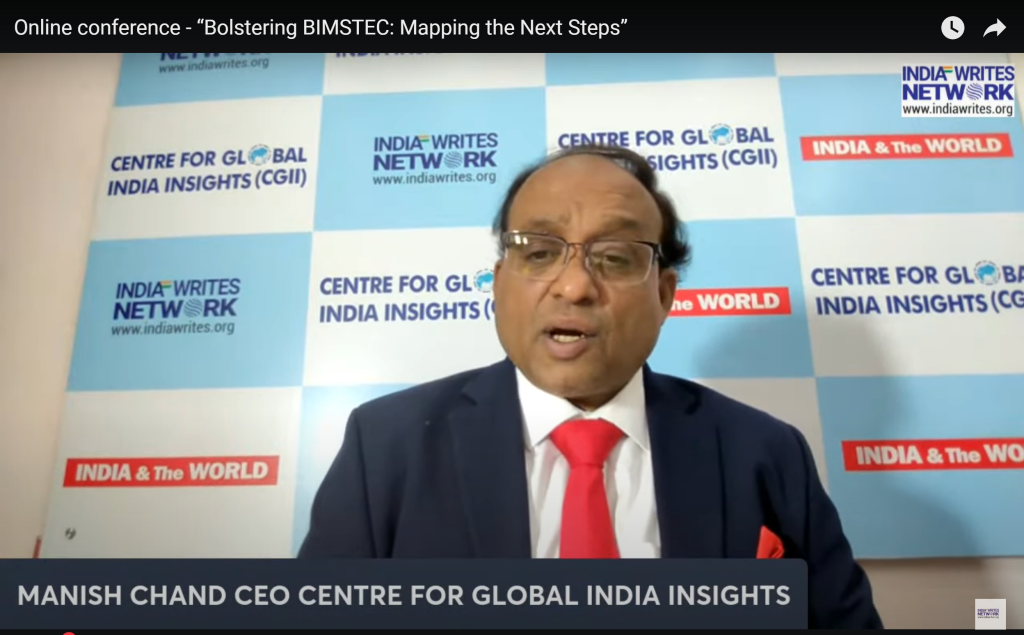 “In In this age of competing nationalisms, crises and conflicts, BIMSTEC can emerge as a catalyst for accelerating regional integration,” said Mr Chand, CEO, CGII, while placing the importance of BIMSTEC in a changing reginal and international landscape. “There is a lot of optimism and confidence about the future of the grouping. Enhancing people-to-people contacts and cultural linkages will impart a greater popular resonance to the group- grouping,” he said. In the changed geopolitical context, BIMSTEC can become the preferred platform for accelerating regional integration and interlinking South Asia and Southeast Asia, he said.
Partnering with ASEAN, IORA Alluding to ongoing efforts by BIMSTEC to forge partnerships with international and regional organizations, Mr Pandey said that the seven-nation grouping will sign an MOU with Indian Ocean Rim Association at the summit in Bangkok. “We are in close conversation with ASEAN. It’s an organization which is keen to work together with BIMSTEC because two members of ASEAN are members of BIMSTEC, Thailand and Myanmar. And there is a lot that we can learn from experience of ASEAN,” he said. Don’t Compare BIMSTEC & SAARC Eminent panellists at the conference also cautioned against comparing and looking at BIMSTEC through the prism of other regional groupings such as SAARC and ASEAN. “It is not fair to BIMSTEC, to look at BIMSTEC in the context of SAARC or any other organization because BIMSTEC has its own rationale, its own agenda, its own role, its own history,” said Mr Pandey. “It has its own challenges and opportunities as a regional organization. We were born 27 years ago. At that time, SAARC was fully functional and at the same time, the need was felt to have an organization which will focus on technical and economic cooperation bringing together countries from South Asia and Southeast Asia.”
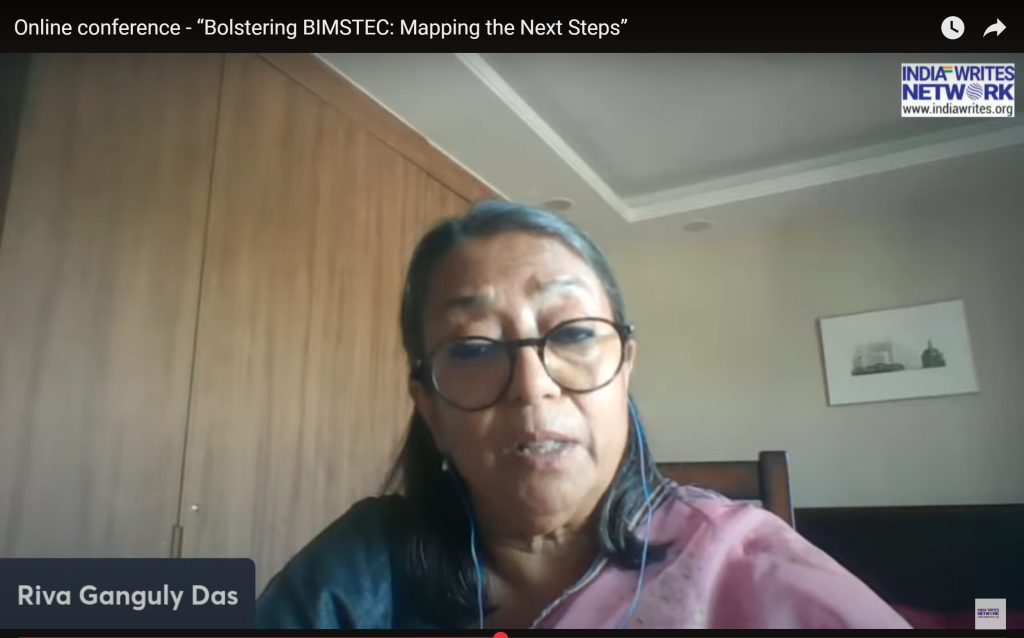 “SAARC is regional, confined to South Asia, whereas BIMSTEC has the advantage of linking two crucial regions — South Asia and Southeast Asia,” said Amb. (Retd.) Riva Ganguly Das, former secretary (East) in India’s Ministry of External Affairs. “There is often a power asymmetry in SAARC, leading to suspicion among smaller countries, but BIMSTEC does not face this issue to the same extent because both India and Thailand provide balance,” she said.
In a similar vein, Amb. Sumith Nakandala, BIMSTEC’s first Secretary General, said: “Comparisons between BIMSTEC and other regional organizations, like ASEAN, are not valid. We have our own history, our own challenges, and our own trajectory.” Amb. Ganguly also highlighted BIMSTEC’s role in enhancing security and counter-terror cooperation in the region. “Security is a critical sector for BIMSTEC, particularly in dealing with terrorism, transnational crimes, and non-traditional security threats.” Prabir De, professor, RIS, highlighted the pivotal role of BIMSTEC, in accelerating connectivity and distinguished BIMSTEC’s approach from China’s Belt and Road Initiative. “It is not a top-down, it’s a bottom-up kind of thing. Belt and Road Initiatives follow a bottom-up approach,” said Prof. De, while cautioning against debt trap associated with many BRI projects.



BIMSTEC to intensify counter-terror cooperation, forge ties with ASEAN, IORA
Ahead of the BIMSTEC summit and Prime Minister Narendra Modi’s visit to Thailand next week, BIMSTEC Secretary General Indra Mani Pandey has stressed on intensifying counter-terror cooperation and underlined that the grouping will acquire more economic and strategic heft with the adoption of the Bangkok Vision 2030. In an online conference organised by Centre for Global India Insights (CGII), a think tank focused on global affairs and India Writes Network, Mr Pandey highlighted ongoing initiatives to bolster security cooperation, including counter-terrorism, among BIMSTEC member states. “We have robust cooperation in security sector. There is greater focus on dealing with the shared challenge of counterterrorism, and issues like drug trafficking, and human trafficking in the region,” said Mr Pandey. “A convention on counterterrorism and drug trafficking is already in force. Member states have been working together in implementing that convention and there are mechanisms in place for them to work together,” he said. The conference, titled “Bolstering BIMSTEC: Mapping the Next Steps,” was held ahead of Prime Minister Narendra Modi’s visit to Bangkok to attend BIMSTEC summit and featured eminent diplomats and experts from India, Thailand Sri Lanka and Bangladesh. Diplomats from other BIMSTEC countries also attended the conference. Besides BIMSTEC Secretary General Pandey, Sumith Nakandala, First Secretary General, BIMSTEC Secretariat; Amb. (Retd.) Riva Ganguly Das, India’s Former High Commissioner to Bangladesh; Prof Mustafizur Rahman, Distinguished Fellow, Centre for Policy Dialogue (CPD), Dhaka; Dr. Piyanat Soikham, Director, India Studies Centre, Ubon Ratchathani University, Thailand; Prabir De, Professor, RIS; and Yash Pal Sachar, Vice-President, Ashok Leyland participated in the panel discussion. The conference was moderated by Manish Chand, CEO, Centre for Global India Insights.
The BIMSTEC chief also underlined the importance of the grouping for promoting South-South Cooperation. “The best way to engage in South-South Cooperation, in my view, is through mini-laterals and regional organizations like BIMSTEC. BIMSTEC continues to enjoy full political support of all its members,” he said.
Partnering with ASEAN, IORA Alluding to ongoing efforts by BIMSTEC to forge partnerships with international and regional organizations, Mr Pandey said that the seven-nation grouping will sign an MOU with Indian Ocean Rim Association at the summit in Bangkok. “We are in close conversation with ASEAN. It’s an organization which is keen to work together with BIMSTEC because two members of ASEAN are members of BIMSTEC, Thailand and Myanmar. And there is a lot that we can learn from experience of ASEAN,” he said. Don’t Compare BIMSTEC & SAARC Eminent panellists at the conference also cautioned against comparing and looking at BIMSTEC through the prism of other regional groupings such as SAARC and ASEAN. “It is not fair to BIMSTEC, to look at BIMSTEC in the context of SAARC or any other organization because BIMSTEC has its own rationale, its own agenda, its own role, its own history,” said Mr Pandey. “It has its own challenges and opportunities as a regional organization. We were born 27 years ago. At that time, SAARC was fully functional and at the same time, the need was felt to have an organization which will focus on technical and economic cooperation bringing together countries from South Asia and Southeast Asia.”
In a similar vein, Amb. Sumith Nakandala, BIMSTEC’s first Secretary General, said: “Comparisons between BIMSTEC and other regional organizations, like ASEAN, are not valid. We have our own history, our own challenges, and our own trajectory.” Amb. Ganguly also highlighted BIMSTEC’s role in enhancing security and counter-terror cooperation in the region. “Security is a critical sector for BIMSTEC, particularly in dealing with terrorism, transnational crimes, and non-traditional security threats.” Prabir De, professor, RIS, highlighted the pivotal role of BIMSTEC, in accelerating connectivity and distinguished BIMSTEC’s approach from China’s Belt and Road Initiative. “It is not a top-down, it’s a bottom-up kind of thing. Belt and Road Initiatives follow a bottom-up approach,” said Prof. De, while cautioning against debt trap associated with many BRI projects.
CGII Network
Related Posts
Diplomatic win for India: BRICS bridges Gulf divide, bats for Global South
Illuminating India’s BRICS moment
With Trump listening in, Iran urges PM Modi to end war with US
India Russia ‘dosti’ in Bishkek: Focus on end of Ukraine war, balanced trade
Uncovering Pakistan: Modi rallies SCO against states that use terror as policy
Modi’s SCO agenda: Shaping a region free of terror, widening arc of prosperity
Latest Events
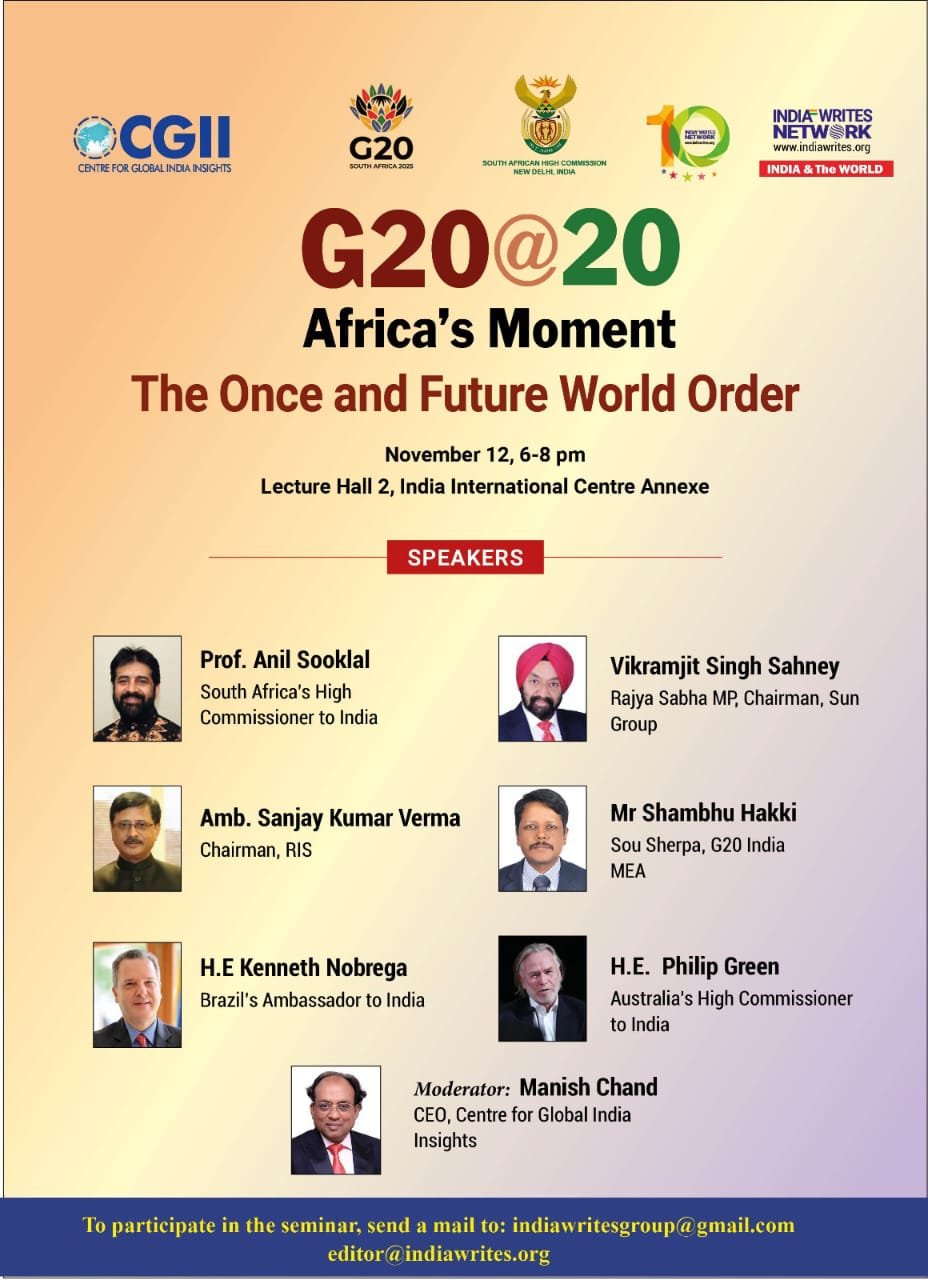
G20@20: Africa’s Moment – The Once and Future World Order
Speakers
Professor Anil Sooklal
Kenneth da Nobrega
Manish Chand
Ambassador Philip Green
Sanjay Kumar Verma
Shambhu Hakki
Vikramjit Singh Sahney
MPs, diplomats laud Operation Sindoor, call for national unity to combat Pakistan-sponsored terror
Speakers
Aparajita Sarangi
Brij Lal
Dr Amar Patnaik
Manish Chand
Priyanka Chaturvedi
Sujan Chinoy
Yashvardhan Kumar Sinha
BRICS summit in Rio to focus on Global South, local currency trade
Speakers
Dammu Ravi
Denis Alipov
Ina Hagniningtyas Krisnamurthi
Jyoti Vij
Kamel Zayed Kamel Galal
Kenneth da Nobrega
Manish Chand
Book
India’s G20 Legacy: Shaping a New World Order
Editor: Manish Chand
Pages: 206
Publisher: Pentagon Press LLP
Cover Price: INR 995
In Conversation
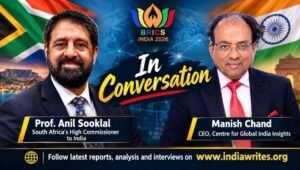
India’s BRICS Chairship Critical for Global South: South Africa’s Envoy
In The Press
Rescuing G20 from North-South divide: Ubuntu Moment
The Sunday Guardian: India calls for strengthened BRICS cooperation
Daily Excelsior: Ahead BRICS summit in Rio, envoys call for greater focus on combating terrorism
Rediff: BRICS Summit 2024: Focus on National Currencies
Latest From CGII
Diplomatic win for India: BRICS bridges Gulf divide, bats for Global South
Illuminating India’s BRICS moment
With Trump listening in, Iran urges PM Modi to end war with US
India Russia ‘dosti’ in Bishkek: Focus on end of Ukraine war, balanced trade
Uncovering Pakistan: Modi rallies SCO against states that use terror as policy
Modi’s SCO agenda: Shaping a region free of terror, widening arc of prosperity
The Journal
Special Edition on India’s Indo-Pacific plus Diplomacy
India’s G20 Journey – Scaling A New Summit