In a spirit of solidarity and oneness, the BRICS countries signed onto the New Delhi Declaration on September 12, with PM Modi unveiling the joint document on Day 1 of the summit. Accelerating reforms of global governance and enhancing international peace and security through diplomacy and dialogue were two major highlights of the New Delhi Declaration, reflecting the aspirations of the Global South.
Prior to the summit, differences over the war in West Asia looked difficult to bridge. Iran and the UAE were locked in verbal duelling over this contentious issue, with Iran demanding strong condemnation of the US-Iran-Israel war in West Asia and the UAE demanding denunciation of Iran over strikes on neighbouring Gulf states.
In the end, India’s deft diplomacy persuaded the two rivals to agree to a more nuanced formulation which expresses collective concern over the continued escalation of tensions in Middle East/West Asia and resolution of issues through dialogue and diplomacy. The New Delhi Declaration avoids name-calling and asks parties to exercise maximum restraint, as well as avoid actions that could further aggravate the situation. The Declaration calls for ensuring the protection of civilians and civilian infrastructure in and stresses respect for the sovereignty and territorial integrity of the States.
The summit meeting was attended by the leaders of eight member countries, including Russian President Vladimir Putin, Chinese President Xi Jinping, Iranian President Masoud Pezeshkian, and the leaders of Indonesia, Ethiopia, Egypt, and South Africa. Brazil and the UAE sent their foreign ministers to the Delhi summit.
Accelerating UNSC reforms
Espousing interests of the Global South, the New Delhi Declaration made a vigorous call for accelerating reform of global governance institutions, including the UN Security Council.
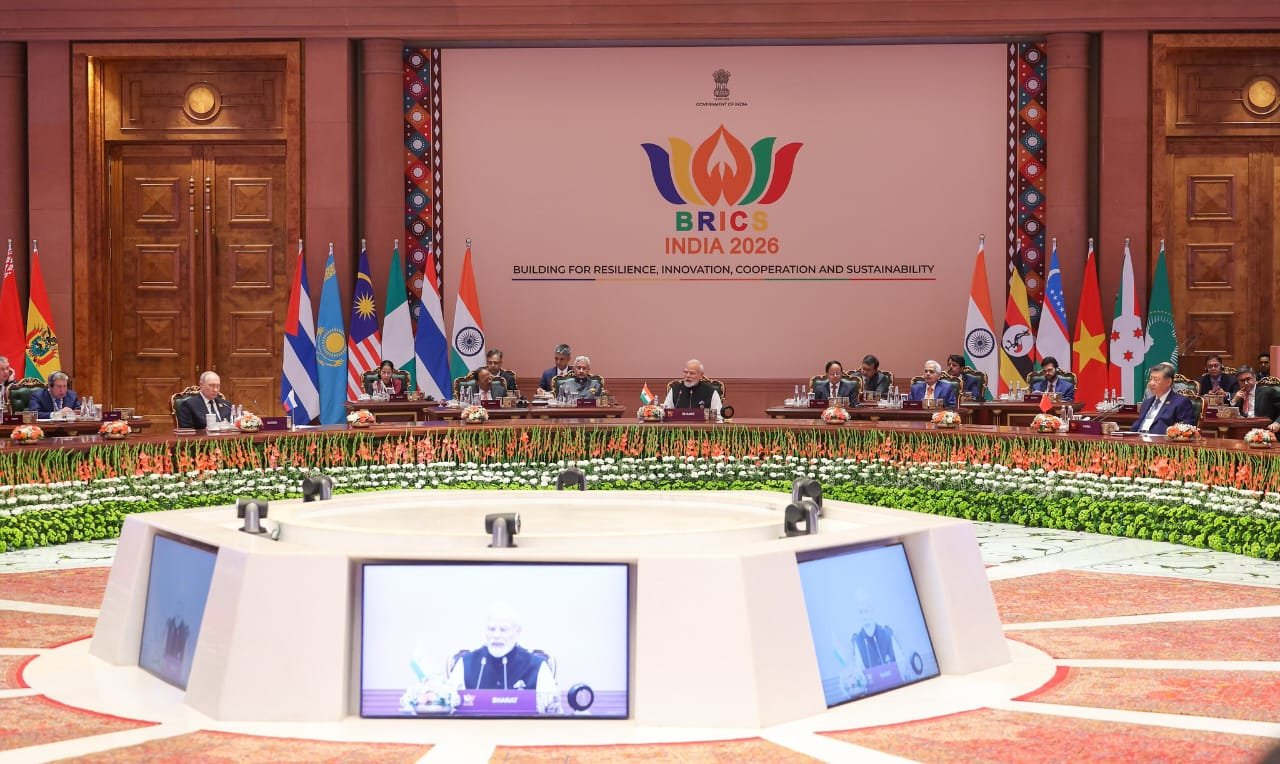
In this regard, PM Modi’s remarks in the opening session called for formulating a BRICS Reform Roadmap by the next Summit. “I would like to say that reform of the UN Security Council can no longer be delayed. The text-based negotiations on this issue must be linked to a clearly defined timeline and concrete outcomes,” said PM Modi.
“We must work to transform the Global South from rule-takers into rule-shapers. Through BRICS, we can provide young diplomats and policymakers from the countries of the Global South with negotiation skills, practical training, and legal expertise,” said PM Modi.
PM Modi’s clarion call for fast-tracking reform and expansion of the UN Security Council struck a chord with the leaders of BRICS countries. “The leaders reiterated support for comprehensive reform of the United Nations, including its Security Council, with greater representation of developing countries, and for reform of the international financial architecture to give developing countries a stronger voice,” Sudhakar Dalela, India’s BRICS sherpa and Secretary (Economic Relations) in India’s Ministry of External Affairs, said at the end-of-the summit briefing.
People-centric Outcomes
What elevated the Delhi summit beyond declaratory rhetoric was the laser-sharp focus on time-bound implementation of the people-centric outcomes, making BRICS a solutions-centric platform. The summit culminated in a host of transformational initiatives such as the BRICS Centers of Excellence on agro-ecology, the BRICS Network on Digital Agriculture, and the BRICS Mission for Healthy Lifestyle. Initiatives to promote technology, research, and entrepreneurship will help create an innovation ecosystem focused on emerging economies and developing countries. In this regard, the BRICS Science and Research Repository, and the BRICS Startup Innovation Fund and Incubator Network and BRICS Digital Public Infrastructure cooperation would be game-changers.
Above all, the Delhi summit sent a powerful message across that the Global South has acquired an unstoppable momentum, and it’s only by carrying the Global South along that the world can address pressing global challenges, ranging from food and energy security to green growth and sustainable development. Moving beyond divisive rhetoric of Global North versus Global South, the Delhi summit successfully steered away from anti-West postures to focus on people-centric outcomes in the spirit of humanity first.
The BRICS summit in Delhi has enhanced India’s international stature as a bridge-builder and a voice of inclusion in a divisive world wracked by geopolitical conflicts and contestations. “The New Delhi Declaration reflects India’s commitment to a more inclusive, representative, and balanced international system, while ensuring that the voice and aspirations of the Global South receive the attention they deserve,” said Harsh Vardhan Shringla, India’s former foreign secretary who served as Chief Coordinator for India’s G20 presidency.
“India’s BRICS diplomacy has shown that leadership is not merely about influence, but about bringing diverse nations together around shared priorities—development, peace, resilience, innovation and sustainable growth,” he said.
(Manish Chand is CEO, Centre for Global India Insights and Editor-in-Chief, India Writes Network. He is the editor, “India’s G0 Legacy: Shaping a New World Order.”)



Diplomatic win for India: BRICS bridges Gulf divide, bats for Global South
Prior to the summit, differences over the war in West Asia looked difficult to bridge. Iran and the UAE were locked in verbal duelling over this contentious issue, with Iran demanding strong condemnation of the US-Iran-Israel war in West Asia and the UAE demanding denunciation of Iran over strikes on neighbouring Gulf states.
The summit meeting was attended by the leaders of eight member countries, including Russian President Vladimir Putin, Chinese President Xi Jinping, Iranian President Masoud Pezeshkian, and the leaders of Indonesia, Ethiopia, Egypt, and South Africa. Brazil and the UAE sent their foreign ministers to the Delhi summit.
Accelerating UNSC reforms
Espousing interests of the Global South, the New Delhi Declaration made a vigorous call for accelerating reform of global governance institutions, including the UN Security Council.
In this regard, PM Modi’s remarks in the opening session called for formulating a BRICS Reform Roadmap by the next Summit. “I would like to say that reform of the UN Security Council can no longer be delayed. The text-based negotiations on this issue must be linked to a clearly defined timeline and concrete outcomes,” said PM Modi.
PM Modi’s clarion call for fast-tracking reform and expansion of the UN Security Council struck a chord with the leaders of BRICS countries. “The leaders reiterated support for comprehensive reform of the United Nations, including its Security Council, with greater representation of developing countries, and for reform of the international financial architecture to give developing countries a stronger voice,” Sudhakar Dalela, India’s BRICS sherpa and Secretary (Economic Relations) in India’s Ministry of External Affairs, said at the end-of-the summit briefing.
People-centric Outcomes
What elevated the Delhi summit beyond declaratory rhetoric was the laser-sharp focus on time-bound implementation of the people-centric outcomes, making BRICS a solutions-centric platform. The summit culminated in a host of transformational initiatives such as the BRICS Centers of Excellence on agro-ecology, the BRICS Network on Digital Agriculture, and the BRICS Mission for Healthy Lifestyle. Initiatives to promote technology, research, and entrepreneurship will help create an innovation ecosystem focused on emerging economies and developing countries. In this regard, the BRICS Science and Research Repository, and the BRICS Startup Innovation Fund and Incubator Network and BRICS Digital Public Infrastructure cooperation would be game-changers.
Above all, the Delhi summit sent a powerful message across that the Global South has acquired an unstoppable momentum, and it’s only by carrying the Global South along that the world can address pressing global challenges, ranging from food and energy security to green growth and sustainable development. Moving beyond divisive rhetoric of Global North versus Global South, the Delhi summit successfully steered away from anti-West postures to focus on people-centric outcomes in the spirit of humanity first.
“India’s BRICS diplomacy has shown that leadership is not merely about influence, but about bringing diverse nations together around shared priorities—development, peace, resilience, innovation and sustainable growth,” he said.
(Manish Chand is CEO, Centre for Global India Insights and Editor-in-Chief, India Writes Network. He is the editor, “India’s G0 Legacy: Shaping a New World Order.”)
Manish Chand
Related Posts
Illuminating India’s BRICS moment
With Trump listening in, Iran urges PM Modi to end war with US
India Russia ‘dosti’ in Bishkek: Focus on end of Ukraine war, balanced trade
Uncovering Pakistan: Modi rallies SCO against states that use terror as policy
Modi’s SCO agenda: Shaping a region free of terror, widening arc of prosperity
India and Japan: Co-anchoring Indo-Pacific
Latest Events
G20@20: Africa’s Moment – The Once and Future World Order
Speakers
Professor Anil Sooklal
Kenneth da Nobrega
Manish Chand
Ambassador Philip Green
Sanjay Kumar Verma
Shambhu Hakki
Vikramjit Singh Sahney
MPs, diplomats laud Operation Sindoor, call for national unity to combat Pakistan-sponsored terror
Speakers
Aparajita Sarangi
Brij Lal
Dr Amar Patnaik
Manish Chand
Priyanka Chaturvedi
Sujan Chinoy
Yashvardhan Kumar Sinha
BRICS summit in Rio to focus on Global South, local currency trade
Speakers
Dammu Ravi
Denis Alipov
Ina Hagniningtyas Krisnamurthi
Jyoti Vij
Kamel Zayed Kamel Galal
Kenneth da Nobrega
Manish Chand
Book
India’s G20 Legacy: Shaping a New World Order
Editor: Manish Chand
Pages: 206
Publisher: Pentagon Press LLP
Cover Price: INR 995
In Conversation
India’s BRICS Chairship Critical for Global South: South Africa’s Envoy
In The Press
Rescuing G20 from North-South divide: Ubuntu Moment
The Sunday Guardian: India calls for strengthened BRICS cooperation
Daily Excelsior: Ahead BRICS summit in Rio, envoys call for greater focus on combating terrorism
Rediff: BRICS Summit 2024: Focus on National Currencies
Latest From CGII
Illuminating India’s BRICS moment
With Trump listening in, Iran urges PM Modi to end war with US
India Russia ‘dosti’ in Bishkek: Focus on end of Ukraine war, balanced trade
Uncovering Pakistan: Modi rallies SCO against states that use terror as policy
Modi’s SCO agenda: Shaping a region free of terror, widening arc of prosperity
India and Japan: Co-anchoring Indo-Pacific
The Journal
Special Edition on India’s Indo-Pacific plus Diplomacy
India’s G20 Journey – Scaling A New Summit