From Strategic Autonomy to Strategic Convergence
India and France share a rare commonality in foreign policy philosophy — strategic autonomy. Both seek multipolarity rather than rigid bloc politics, a convergence that has shaped cooperation across defence, nuclear energy, Indo-Pacific security, space, and emerging technologies. This shared worldview was explicitly articulated by Prime Minister Narendra Modi, who emphasized that “India and France stand together for strategic autonomy, technological sovereignty, and a human-centric approach to global challenges,” capturing the philosophical convergence that now anchors the relationship. For India, France remains one of the few Western powers that has consistently respected its independent decision-making, whether in defence procurement or geopolitical positioning.
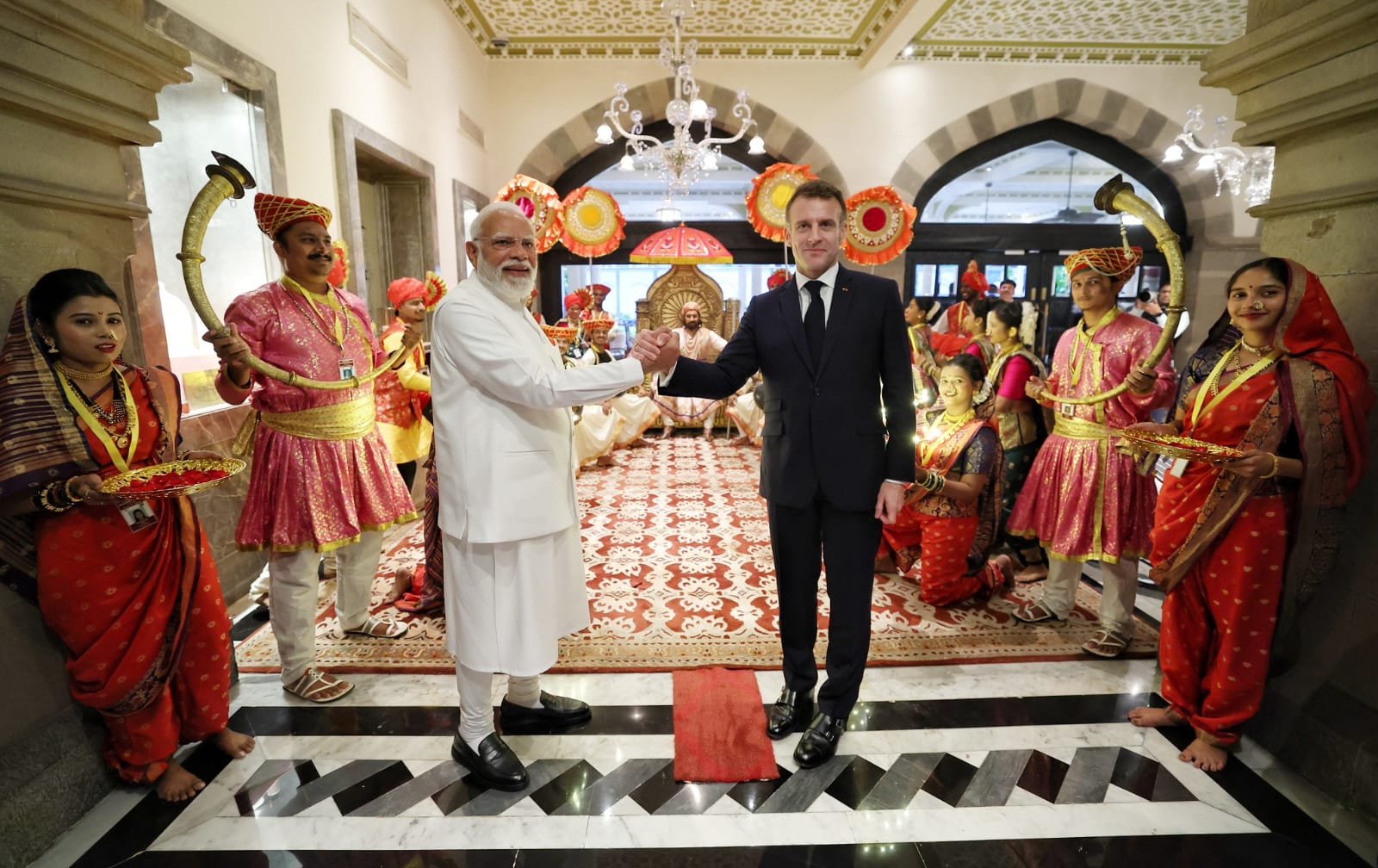
In Mumbai, discussions spanned a wide strategic canvas, signalling the maturation of bilateral ties. A central focus was advancing defence co-production and high-end technology transfer, moving from procurement toward joint development and manufacturing. Maritime coordination in the Indo-Pacific featured prominently, reflecting shared concerns about regional stability and secure sea lanes. The leaders also emphasized cooperation on clean energy transitions like solar, green hydrogen, and climate financing, alongside growing collaboration in digital innovation and artificial intelligence. Trade and investment expansion, particularly in infrastructure, manufacturing, and technology, rounded out the agenda. Together, these priorities underscore a partnership that now extends well beyond arms deals into a comprehensive, multi-sector strategic framework.
Defence: The Backbone of the Relationship
Defence cooperation remains the central pillar of India–France relations, evolving from selective procurement into a partnership marked by trust, interoperability, and long-term intent. President Macron reaffirmed France’s commitment to long-term defence collaboration, stating that “France does not merely supply equipment to India; we build strategic capability together.” Landmark acquisitions such as the Rafale fighter jets and regular joint naval exercises like Varuna have built dense military-to-military linkages. France has distinguished itself as one of India’s most dependable defence partners through its willingness to share sensitive technologies and align with the “Make in India” vision. Looking ahead, cooperation is likely to expand into advanced jet engine development, deeper submarine collaboration, space-based defence capabilities, and cybersecurity and AI-enabled warfare platforms. In an era of politicized and fragile supply chains, France offers India critical diversification and strategic flexibility, reinforcing New Delhi’s pursuit of technological and operational autonomy.
The Indo-Pacific Equation
France is not merely a continental European actor but a resident Indo-Pacific power with overseas territories and permanent military deployments across the Indian and Pacific Oceans. This presence gives Paris enduring stakes in regional security and makes it a natural partner for India. Both countries support freedom of navigation, protection of sea lanes, and a rules-based maritime order, while seeking to counter-balance unilateral assertiveness without subscribing to rigid alliance structures.
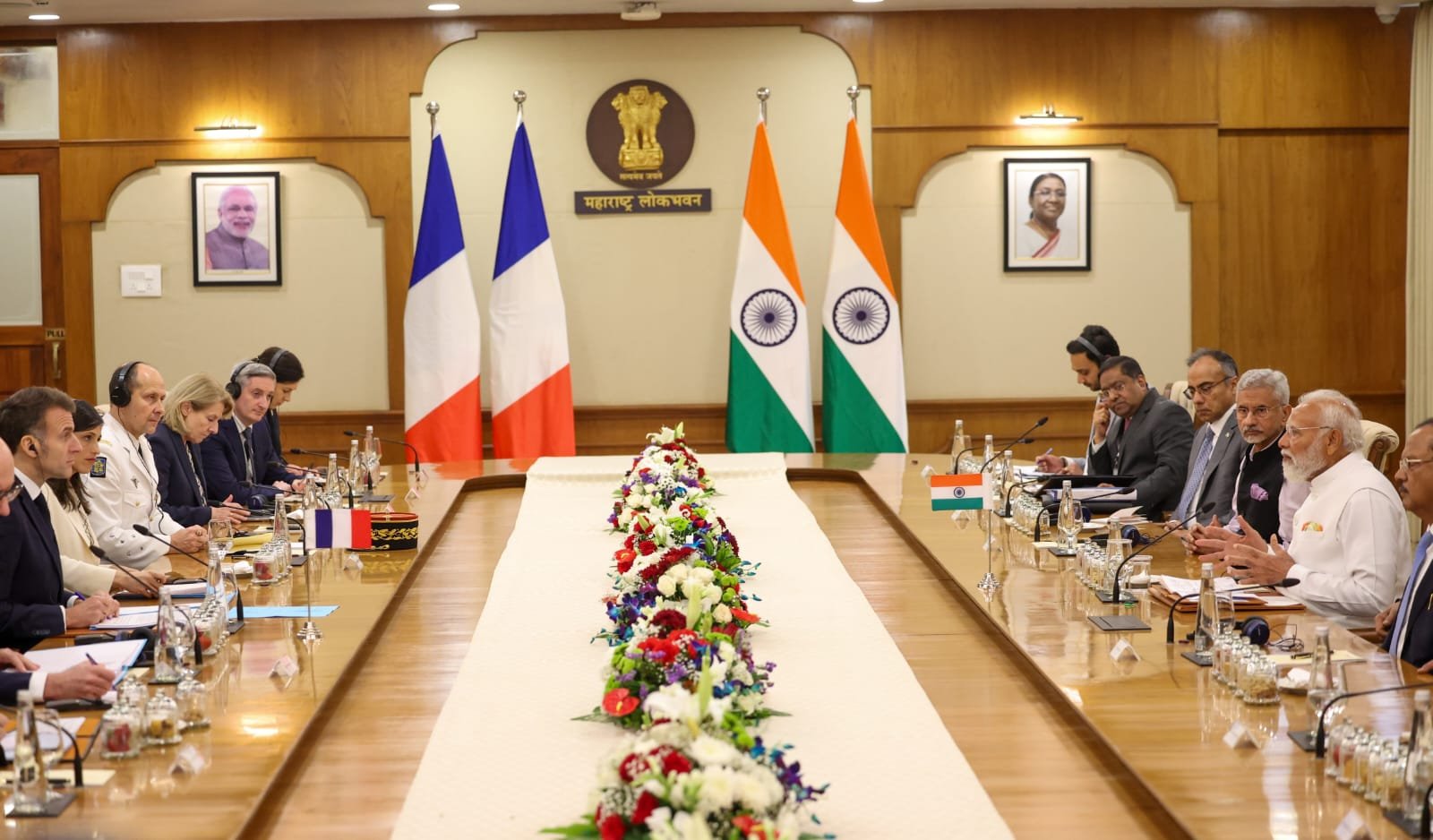
Macron’s outreach in Mumbai, India’s principal maritime and commercial hub, underscores the Indo-Pacific as a defining pillar of bilateral engagement. Practically, this could translate into deeper naval coordination, enhanced maritime domain awareness, and renewed momentum in frameworks such as the India–France–UAE trilateral mechanism, alongside expanded cooperation in the western Indian Ocean.
Economic and Technological Expansion
Choosing Mumbai highlighted the economic core of the relationship, which included trade, infrastructure and capital flows. France is among the leading European investors in India, with strong footprints in renewable energy, transport, aviation, urban infrastructure, and high-end consumer industries. The launch of the Indo-French Centre for AI in Health, the Indo-French Centre for Digital Science and Technology, and a National Centre of Excellence for Skilling in Aeronautics further exemplifies this futuristic arc of cooperation, demonstrating how strategic autonomy is now being operationalized through joint innovation ecosystems and advanced skill development. Momentum is likely in green hydrogen and solar energy partnerships, smart city and metro rail projects, semiconductors and supply chain resilience initiatives, and start-up ecosystem collaboration. As Europe seeks to de-risk from excessive dependence on China, India presents itself as a democratic and scalable alternative, with France well placed to act as a gateway for India’s deeper integration into European markets and industrial networks.
Climate and Civilizational Diplomacy
Macron and Modi have demonstrated shared leadership through initiatives such as the International Solar Alliance, positioning clean energy as both an environmental and developmental priority. Climate diplomacy thus remains a key platform of convergence, with both leaders advocating reformist multilateralism and a stronger voice for the Global South.
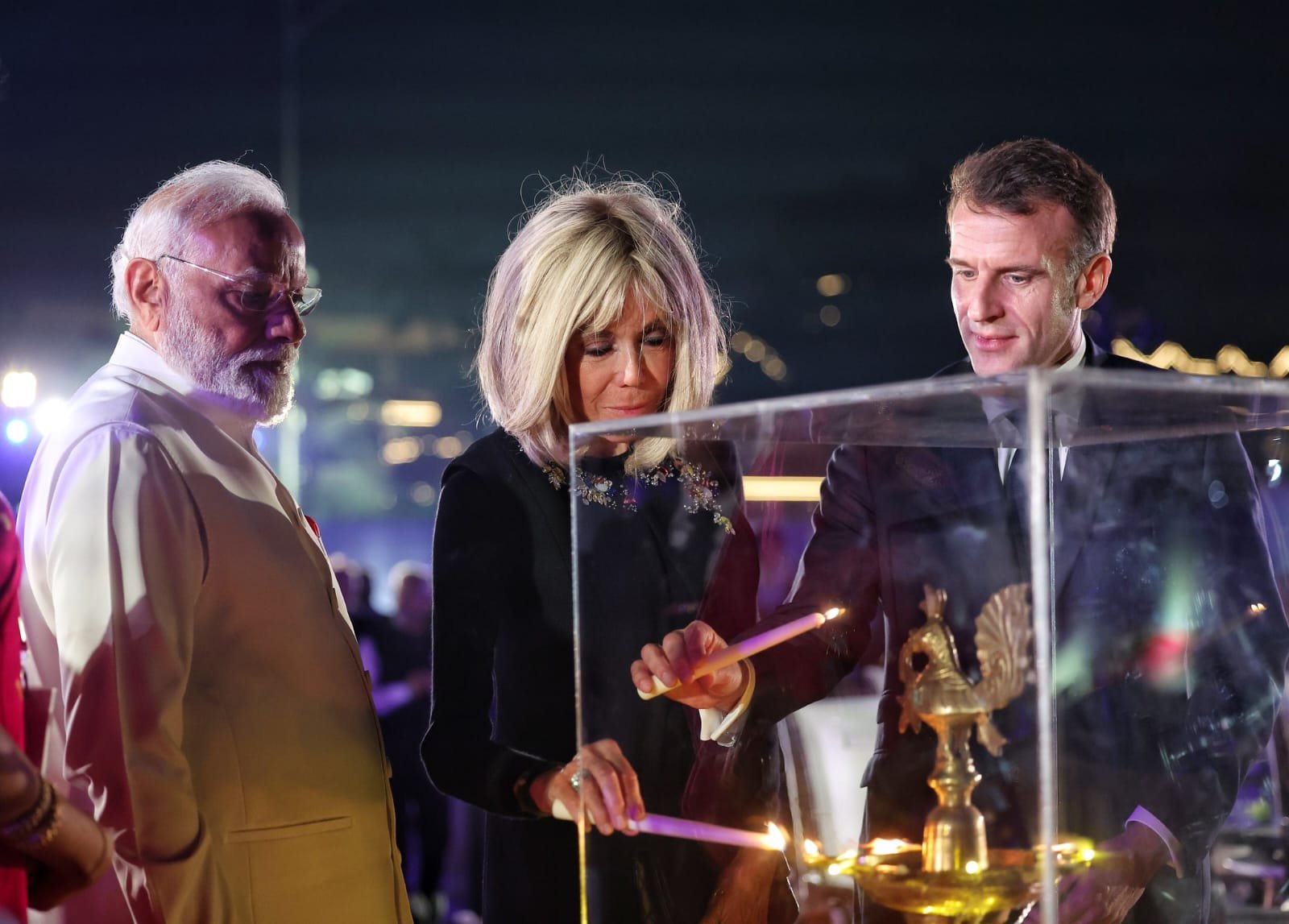
This policy alignment is reinforced by parallel political narratives emphasizing civilizational continuity, cultural confidence, and national renewal. Such ideological resonance strengthens personal rapport and adds a distinctive depth to the India–France partnership, anchoring it both strategically and at the leadership level.
What This Means for the Future
Macron’s Mumbai visit is less about symbolism and more about structural consolidation. In the coming years, the impact could manifest in five key ways:
- Deepened Defence Co-Production: Moving from buyer–seller to joint development.
- Indo-Pacific Coalition Building: France acting as India’s bridge to Europe in Asian maritime affairs.
- Technological Sovereignty: Joint investments in AI, space, and digital infrastructure.
- European Strategic Access: India leveraging France to strengthen ties with the EU.
- Multipolar Diplomacy: A stronger India–France axis in global governance reform debates.
In a world drifting toward polarized camps, the India–France partnership offers an alternative model, one built on autonomy, reciprocity, and strategic trust rather than alliance dependency.
A Partnership for a Multipolar Century
Taken together, the Emmanuel Macron–Narendra Modi engagement in Mumbai and President Macron’s forthcoming participation in the ongoing AI Summit in New Delhi underscore the maturation of a partnership that has travelled far from its formal inception as a strategic relationship in 1998 to become one of India’s most consequential Western alignments. Speaking in Mumbai, President Macron described India as “one of France’s most trusted strategic partners in shaping a multipolar, stable and rules-based world,” underlining Paris’s long-term commitment to New Delhi’s rise as a major power.
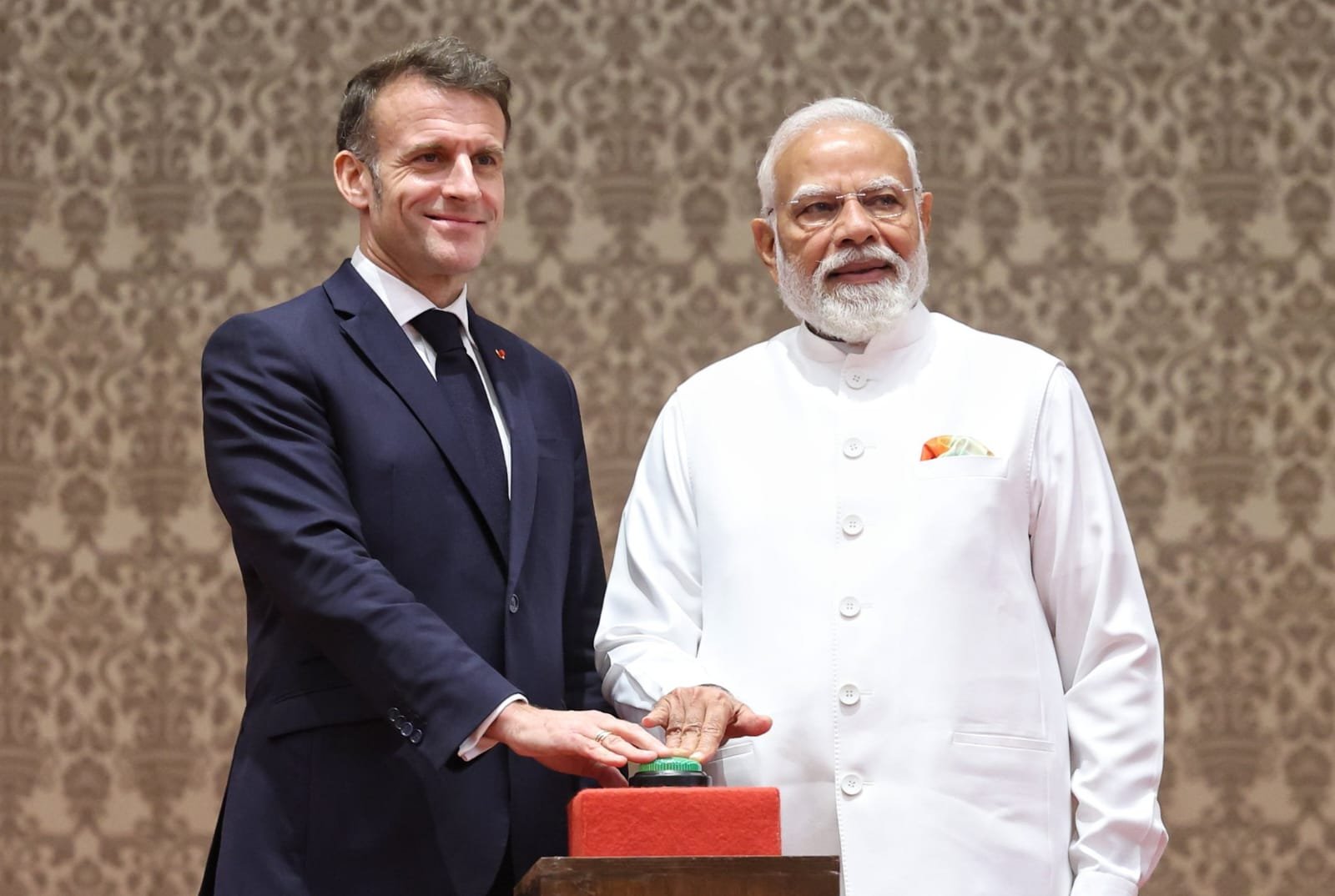
The convergence today extends beyond traditional defence and diplomatic cooperation into the shaping of global norms on emerging technologies, digital governance, and responsible innovation. If sustained with policy continuity and industrial depth, the India–France partnership is well placed to emerge as one of the defining bilateral relationships influencing the Indo-Pacific and the broader multipolar order in the twenty-first century. Ultimately, this moment signals more than symbolism: Paris and New Delhi are positioning themselves for a future in which strategic convergence, rather than inherited alliances, will determine the architecture of global power.



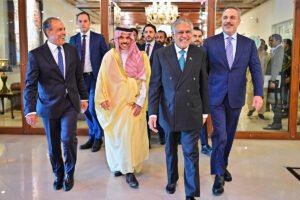
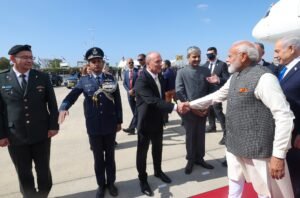

Macron in Mumbai : Shaping the Next Phase of India–France Ties
From Strategic Autonomy to Strategic Convergence
India and France share a rare commonality in foreign policy philosophy — strategic autonomy. Both seek multipolarity rather than rigid bloc politics, a convergence that has shaped cooperation across defence, nuclear energy, Indo-Pacific security, space, and emerging technologies. This shared worldview was explicitly articulated by Prime Minister Narendra Modi, who emphasized that “India and France stand together for strategic autonomy, technological sovereignty, and a human-centric approach to global challenges,” capturing the philosophical convergence that now anchors the relationship. For India, France remains one of the few Western powers that has consistently respected its independent decision-making, whether in defence procurement or geopolitical positioning.
In Mumbai, discussions spanned a wide strategic canvas, signalling the maturation of bilateral ties. A central focus was advancing defence co-production and high-end technology transfer, moving from procurement toward joint development and manufacturing. Maritime coordination in the Indo-Pacific featured prominently, reflecting shared concerns about regional stability and secure sea lanes. The leaders also emphasized cooperation on clean energy transitions like solar, green hydrogen, and climate financing, alongside growing collaboration in digital innovation and artificial intelligence. Trade and investment expansion, particularly in infrastructure, manufacturing, and technology, rounded out the agenda. Together, these priorities underscore a partnership that now extends well beyond arms deals into a comprehensive, multi-sector strategic framework.
Defence: The Backbone of the Relationship
Defence cooperation remains the central pillar of India–France relations, evolving from selective procurement into a partnership marked by trust, interoperability, and long-term intent. President Macron reaffirmed France’s commitment to long-term defence collaboration, stating that “France does not merely supply equipment to India; we build strategic capability together.” Landmark acquisitions such as the Rafale fighter jets and regular joint naval exercises like Varuna have built dense military-to-military linkages. France has distinguished itself as one of India’s most dependable defence partners through its willingness to share sensitive technologies and align with the “Make in India” vision. Looking ahead, cooperation is likely to expand into advanced jet engine development, deeper submarine collaboration, space-based defence capabilities, and cybersecurity and AI-enabled warfare platforms. In an era of politicized and fragile supply chains, France offers India critical diversification and strategic flexibility, reinforcing New Delhi’s pursuit of technological and operational autonomy.
The Indo-Pacific Equation
France is not merely a continental European actor but a resident Indo-Pacific power with overseas territories and permanent military deployments across the Indian and Pacific Oceans. This presence gives Paris enduring stakes in regional security and makes it a natural partner for India. Both countries support freedom of navigation, protection of sea lanes, and a rules-based maritime order, while seeking to counter-balance unilateral assertiveness without subscribing to rigid alliance structures.
Macron’s outreach in Mumbai, India’s principal maritime and commercial hub, underscores the Indo-Pacific as a defining pillar of bilateral engagement. Practically, this could translate into deeper naval coordination, enhanced maritime domain awareness, and renewed momentum in frameworks such as the India–France–UAE trilateral mechanism, alongside expanded cooperation in the western Indian Ocean.
Economic and Technological Expansion
Choosing Mumbai highlighted the economic core of the relationship, which included trade, infrastructure and capital flows. France is among the leading European investors in India, with strong footprints in renewable energy, transport, aviation, urban infrastructure, and high-end consumer industries. The launch of the Indo-French Centre for AI in Health, the Indo-French Centre for Digital Science and Technology, and a National Centre of Excellence for Skilling in Aeronautics further exemplifies this futuristic arc of cooperation, demonstrating how strategic autonomy is now being operationalized through joint innovation ecosystems and advanced skill development. Momentum is likely in green hydrogen and solar energy partnerships, smart city and metro rail projects, semiconductors and supply chain resilience initiatives, and start-up ecosystem collaboration. As Europe seeks to de-risk from excessive dependence on China, India presents itself as a democratic and scalable alternative, with France well placed to act as a gateway for India’s deeper integration into European markets and industrial networks.
Climate and Civilizational Diplomacy
Macron and Modi have demonstrated shared leadership through initiatives such as the International Solar Alliance, positioning clean energy as both an environmental and developmental priority. Climate diplomacy thus remains a key platform of convergence, with both leaders advocating reformist multilateralism and a stronger voice for the Global South.
This policy alignment is reinforced by parallel political narratives emphasizing civilizational continuity, cultural confidence, and national renewal. Such ideological resonance strengthens personal rapport and adds a distinctive depth to the India–France partnership, anchoring it both strategically and at the leadership level.
What This Means for the Future
Macron’s Mumbai visit is less about symbolism and more about structural consolidation. In the coming years, the impact could manifest in five key ways:
In a world drifting toward polarized camps, the India–France partnership offers an alternative model, one built on autonomy, reciprocity, and strategic trust rather than alliance dependency.
A Partnership for a Multipolar Century
Taken together, the Emmanuel Macron–Narendra Modi engagement in Mumbai and President Macron’s forthcoming participation in the ongoing AI Summit in New Delhi underscore the maturation of a partnership that has travelled far from its formal inception as a strategic relationship in 1998 to become one of India’s most consequential Western alignments. Speaking in Mumbai, President Macron described India as “one of France’s most trusted strategic partners in shaping a multipolar, stable and rules-based world,” underlining Paris’s long-term commitment to New Delhi’s rise as a major power.
The convergence today extends beyond traditional defence and diplomatic cooperation into the shaping of global norms on emerging technologies, digital governance, and responsible innovation. If sustained with policy continuity and industrial depth, the India–France partnership is well placed to emerge as one of the defining bilateral relationships influencing the Indo-Pacific and the broader multipolar order in the twenty-first century. Ultimately, this moment signals more than symbolism: Paris and New Delhi are positioning themselves for a future in which strategic convergence, rather than inherited alliances, will determine the architecture of global power.
Portia Conrad
Related Posts
Eyewitness recalls: US-Israel-Iran war, up close and personal
Empathy and eros in Tel Aviv bunkers
Modi visit: India-Israel partnership enters a new era
Unravelling Modi’s Israel journey: What to expect
India and Indonesia: Advancing an Inclusive AI Future for the Global South
South-by-South: Focus on people-centric solutions at India AI summit
Latest Events
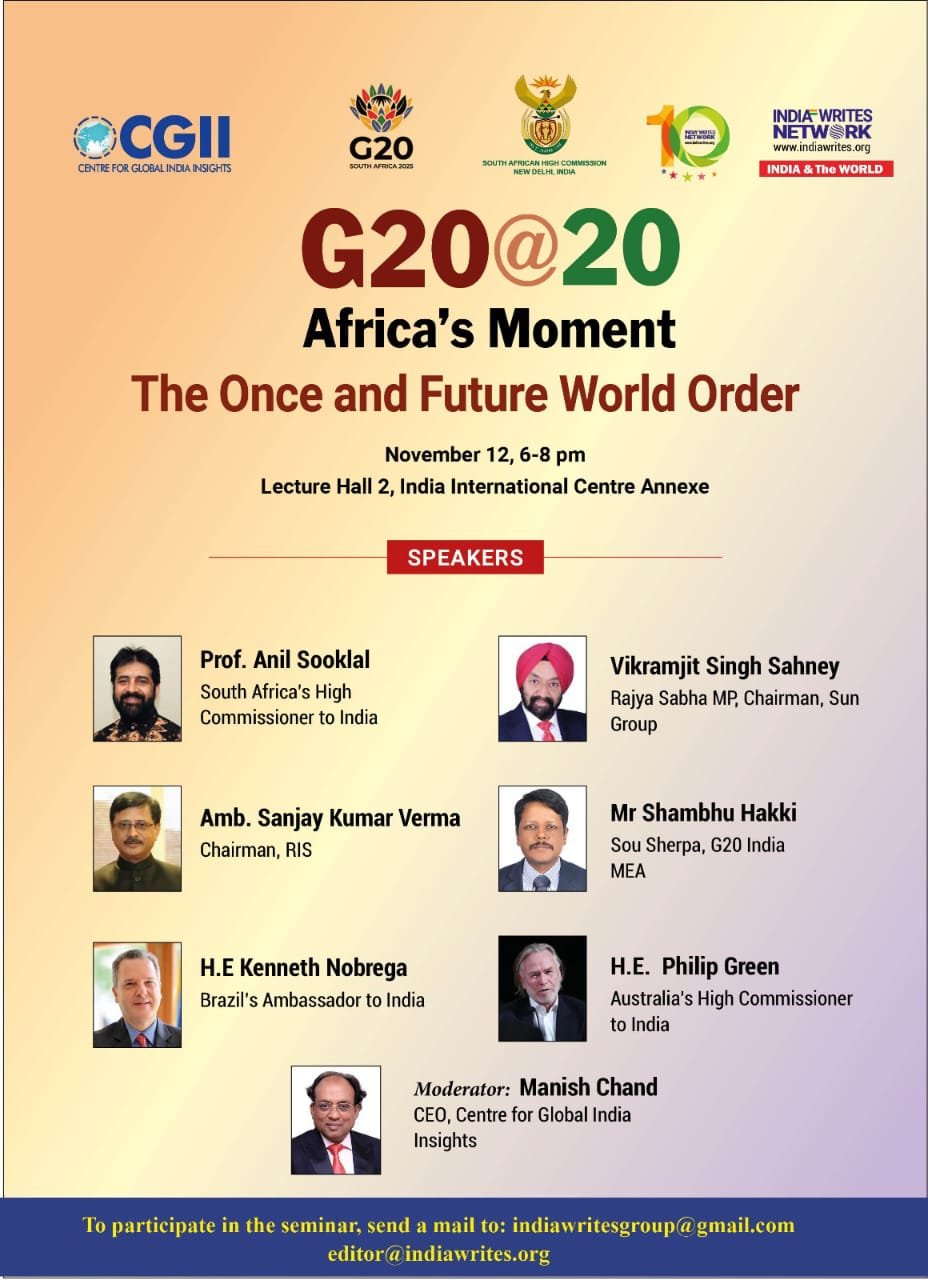
G20@20: Africa’s Moment – The Once and Future World Order
Speakers
Professor Anil Sooklal
Kenneth da Nobrega
Manish Chand
Ambassador Philip Green
sanjay Kumar Verma
Shambhu Hakki
Vikramjit Singh Sahney
MPs, diplomats laud Operation Sindoor, call for national unity to combat Pakistan-sponsored terror
Speakers
Aparajita Sarangi
Brij Lal
Dr Amar Patnaik
Manish Chand
Priyanka Chaturvedi
Sujan Chinoy
Yashvardhan Kumar Sinha
BRICS summit in Rio to focus on Global South, local currency trade
Speakers
Dammu Ravi
Denis Alipov
Ina Hagniningtyas Krisnamurthi
Jyoti Vij
Kamel Zayed Kamel Galal
Kenneth da Nobrega
Manish Chand
Book
India’s G20 Legacy: Shaping a New World Order
Editor: Manish Chand
Pages: 206
Publisher: Pentagon Press LLP
Cover Price: INR 995
In Conversation
Pakistan’s Mediation Role in US–Iran Conflict Raises Questions: Alok Bansal
In The Press
Rescuing G20 from North-South divide: Ubuntu Moment
The Sunday Guardian: India calls for strengthened BRICS cooperation
Daily Excelsior: Ahead BRICS summit in Rio, envoys call for greater focus on combating terrorism
Rediff: BRICS Summit 2024: Focus on National Currencies
Latest From CGII
Eyewitness recalls: US-Israel-Iran war, up close and personal
Empathy and eros in Tel Aviv bunkers
Modi visit: India-Israel partnership enters a new era
Unravelling Modi’s Israel journey: What to expect
India and Indonesia: Advancing an Inclusive AI Future for the Global South
South-by-South: Focus on people-centric solutions at India AI summit
The Journal
India’s G20 Journey – Scaling A New Summit
India’s G20 Moment: Hope, Healing and Harmony