By Akanshya Shah
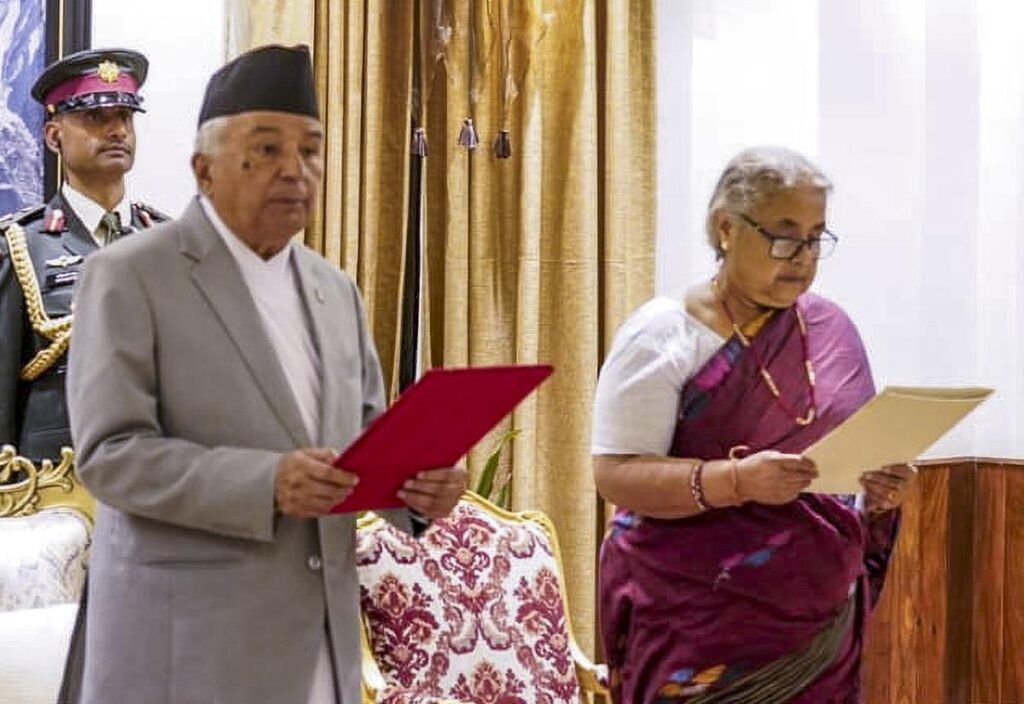
Two things are in focus — the actions of the interim government and the voices of the Gen Z representatives. While the government is trying to restore normalcy with utmost precaution, Gen Z, which now wants a kind of a watchdog role over the government’s functioning, is raising concerns about statements of political parties and attempts to derail their agenda.
The Interim Government of Sushila Karki has sprung into action with series of decisions to compensate the victims’ families, calculate the loss and damage of public property, identifying those involved in the massive theft and loot and also catching those who fled during the jail breaks. Om Prakash Aryal, a lawyer, is now in charge of home affairs, while former finance secretary Rameshwor Khanal is the new finance minister, and the former managing director of Nepal Electricity Authority Kulman Ghising has multiple portfolios: energy, physical planning and urban development. Ghising, who was earlier sacked by the former K. P. Sharma Oli government, holds much support amongst the Gen Z, who hail him for his hard work to lift the country out of power woes not so long ago. He was at loggerheads with the last government over his decision to recover dues worth billions of Nepali rupees from industrialists for using dedicated power supply lines in the past. The government had also accused Ghising of signing a bilateral energy deal with India in February without proper authorization.
PM Karki has clearly stated that the new government will have only 11 cabinet ministers with multiple responsibilities. Polls have been announced for March 5, 2026. Four additional ministers were inducted on September 22. Although the full cabinet is yet to take shape, the PM has declined including any representative of the political parties. In an interview to BBC Nepali on September 16, she said that President Ram Chandra Poudel had suggested the inclusion of political party representatives in the interim cabinet, which she clearly declined as “that would be against the spirit of the Gen Z protest.”
It is clearly challenging for her to navigate through this unprecedented time and ensure fair and free elections. The government has now formed a three-member committee to probe September 8-9 incidents and bring those responsible for arson and plunder to justice. The other one to investigate illegal amassing of property by politicians is yet to take shape.
Second, it has to initiate the reconstruction of the government buildings including secretariat, residences of Prime Minister and President, and the Supreme Court. Resource mobilization will be a huge challenge. Thirdly, it is imperative that the government will have to strengthen law and order in the country. The now disgruntled political parties could take to streets as they already feel that dissolving the parliament was unconstitutional. There are many other factions, including the royalists, who could raise demands through protests. A security mechanism that is well synchronized is a must.
Future Scenarios
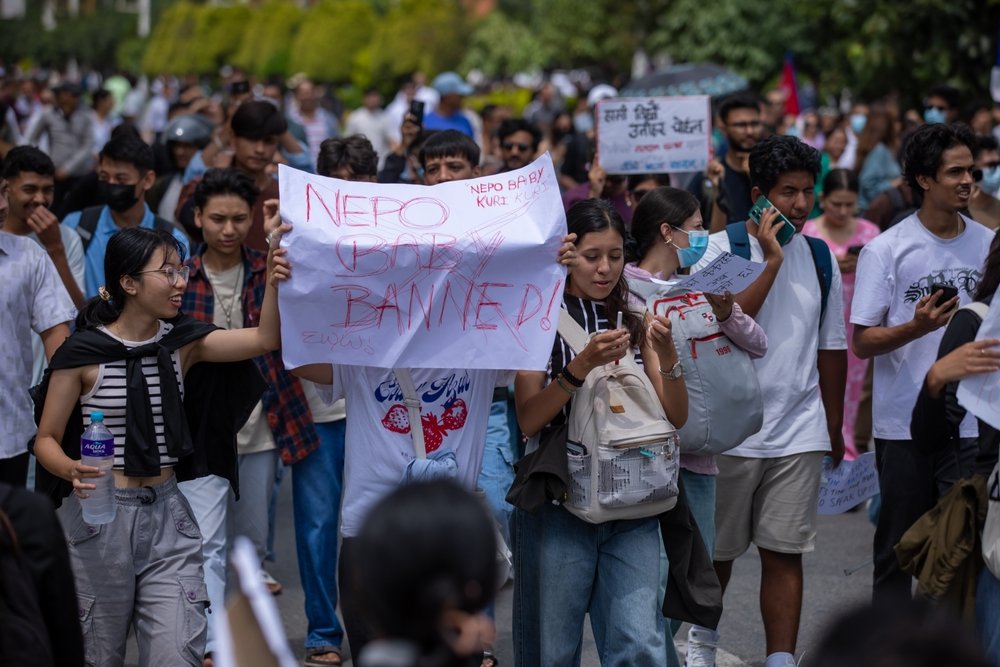
Going by the present discourse in Nepal, three likely scenarios may emerge in the immediate future. First, if the elections are held as stipulated, the next parliament under 2015 Constitution can initiate amendments as per the desire of the young generation. Main amendments will be around issues of federalism, secularism and election system. There are two types of voting mechanism in Nepal at present – first past the post and proportional representation. The proportional representation system has barred any one party from obtaining majority in the Lower House. The changes might be led by a new populist force supported by Gen Z in the polls. PM Karki seems to favour this course.
Second, if the poll is not held as planned, political groups may clash with Gen Z through huge street protests. The traditional parties are already threatening retaliation through regrouping and by organizing rallies. If the poll is delayed, political parties will push for an all-party government, which will take the Gen Z agenda to the backburner. On the other hand, various groups from Gen Z are echoing different opinions on the next course of action. While one group is speaking in favor of the 2015 Constitution, some others feel that the constitution should be disbanded and there should be direct election for prime minister. In this scenario, the interim government, whose term may be extended, will face deeper challenges to manage law and order. The president will have to declare emergency. But as per the 2015 Constitution, the use of emergency clause will have to be ratified by the parliament. Since the parliament has been dissolved, this seems unlikely, further bringing in a chaotic situation.
Third, in case the interim government fails to meet the election deadline even with extension of its term, Nepal will plunge into deeper conflict. It may be recalled that the ethnic and class conflicts are not a matter of past. Since the beginning of the constitution-making process, minority groups like dalits, janjatis, madhesis and women have been voicing concerns of discrimination. Many feel that the 2015 Constitution is not an inclusive one, with the minority rights diluted and vaguely designed. This will have larger implications on peace and stability of the country.
India Backs Peace & Stability
At present, many theories relating to the role of infiltrators and deep state actors are emerging in Nepal with particular focus on the role of the US in supporting groups that took to the protests. People are demanding in-depth investigation into large-scale violence that accompanied protests.
However, given the resource crunch and low morale of Nepal Police at present, Nepal needs support from friendly countries. India has already pledged support to the interim government and the upcoming polls. While speaking to PM Karki on September 18, PM Modi “reaffirmed India’s steadfast support for her efforts to restore peace and stability.” India could offer special package for the upcoming polls as well.
But the moot question is whether the interim government will be able to hold on to peace and the poll plan given the volatile situation confronting Nepal. Going by the past experience, almost all interim governments since the 1990 people’s movement have been successful ones in Nepal. From former PM Krishna Prasad Bhattarai’s interim government in 1991 to the former Chief Justice Khil Raj Regmi’s interim government, brought in to hold elections to the second Constituent Assembly, in 2013, all have met their mandates. But PM Karki is riding at a very tough time when popular aspirations have come to fore within two days of a revolution that saw 74 deaths so far and with many players from home and abroad active in Nepali politics. It is to be seen how she will navigate through this hard time.
(The author is Nepali journalist and researcher based in New Delhi)





Navigating Troubled Times: Can new Nepal government fulfil Gen Z aspirations?
By Akanshya Shah
The Interim Government of Sushila Karki has sprung into action with series of decisions to compensate the victims’ families, calculate the loss and damage of public property, identifying those involved in the massive theft and loot and also catching those who fled during the jail breaks. Om Prakash Aryal, a lawyer, is now in charge of home affairs, while former finance secretary Rameshwor Khanal is the new finance minister, and the former managing director of Nepal Electricity Authority Kulman Ghising has multiple portfolios: energy, physical planning and urban development. Ghising, who was earlier sacked by the former K. P. Sharma Oli government, holds much support amongst the Gen Z, who hail him for his hard work to lift the country out of power woes not so long ago. He was at loggerheads with the last government over his decision to recover dues worth billions of Nepali rupees from industrialists for using dedicated power supply lines in the past. The government had also accused Ghising of signing a bilateral energy deal with India in February without proper authorization.
PM Karki has clearly stated that the new government will have only 11 cabinet ministers with multiple responsibilities. Polls have been announced for March 5, 2026. Four additional ministers were inducted on September 22. Although the full cabinet is yet to take shape, the PM has declined including any representative of the political parties. In an interview to BBC Nepali on September 16, she said that President Ram Chandra Poudel had suggested the inclusion of political party representatives in the interim cabinet, which she clearly declined as “that would be against the spirit of the Gen Z protest.”
Second, it has to initiate the reconstruction of the government buildings including secretariat, residences of Prime Minister and President, and the Supreme Court. Resource mobilization will be a huge challenge. Thirdly, it is imperative that the government will have to strengthen law and order in the country. The now disgruntled political parties could take to streets as they already feel that dissolving the parliament was unconstitutional. There are many other factions, including the royalists, who could raise demands through protests. A security mechanism that is well synchronized is a must.
Future Scenarios
Going by the present discourse in Nepal, three likely scenarios may emerge in the immediate future. First, if the elections are held as stipulated, the next parliament under 2015 Constitution can initiate amendments as per the desire of the young generation. Main amendments will be around issues of federalism, secularism and election system. There are two types of voting mechanism in Nepal at present – first past the post and proportional representation. The proportional representation system has barred any one party from obtaining majority in the Lower House. The changes might be led by a new populist force supported by Gen Z in the polls. PM Karki seems to favour this course.
Second, if the poll is not held as planned, political groups may clash with Gen Z through huge street protests. The traditional parties are already threatening retaliation through regrouping and by organizing rallies. If the poll is delayed, political parties will push for an all-party government, which will take the Gen Z agenda to the backburner. On the other hand, various groups from Gen Z are echoing different opinions on the next course of action. While one group is speaking in favor of the 2015 Constitution, some others feel that the constitution should be disbanded and there should be direct election for prime minister. In this scenario, the interim government, whose term may be extended, will face deeper challenges to manage law and order. The president will have to declare emergency. But as per the 2015 Constitution, the use of emergency clause will have to be ratified by the parliament. Since the parliament has been dissolved, this seems unlikely, further bringing in a chaotic situation.
Third, in case the interim government fails to meet the election deadline even with extension of its term, Nepal will plunge into deeper conflict. It may be recalled that the ethnic and class conflicts are not a matter of past. Since the beginning of the constitution-making process, minority groups like dalits, janjatis, madhesis and women have been voicing concerns of discrimination. Many feel that the 2015 Constitution is not an inclusive one, with the minority rights diluted and vaguely designed. This will have larger implications on peace and stability of the country.
India Backs Peace & Stability
At present, many theories relating to the role of infiltrators and deep state actors are emerging in Nepal with particular focus on the role of the US in supporting groups that took to the protests. People are demanding in-depth investigation into large-scale violence that accompanied protests.
But the moot question is whether the interim government will be able to hold on to peace and the poll plan given the volatile situation confronting Nepal. Going by the past experience, almost all interim governments since the 1990 people’s movement have been successful ones in Nepal. From former PM Krishna Prasad Bhattarai’s interim government in 1991 to the former Chief Justice Khil Raj Regmi’s interim government, brought in to hold elections to the second Constituent Assembly, in 2013, all have met their mandates. But PM Karki is riding at a very tough time when popular aspirations have come to fore within two days of a revolution that saw 74 deaths so far and with many players from home and abroad active in Nepali politics. It is to be seen how she will navigate through this hard time.
(The author is Nepali journalist and researcher based in New Delhi)
Akanshya Shah
Related Posts
Empathy and eros in Tel Aviv bunkers
India backs diplomacy and dialogue to resolve U.S.-Israel-Iran conflict: Jaishankar
India, Israel have to work faster to defeat terrorists: Israel’s Ambassador
Modi visit: India-Israel partnership enters a new era
Unravelling Modi’s Israel journey: What to expect
India and Indonesia: Advancing an Inclusive AI Future for the Global South
Latest Events
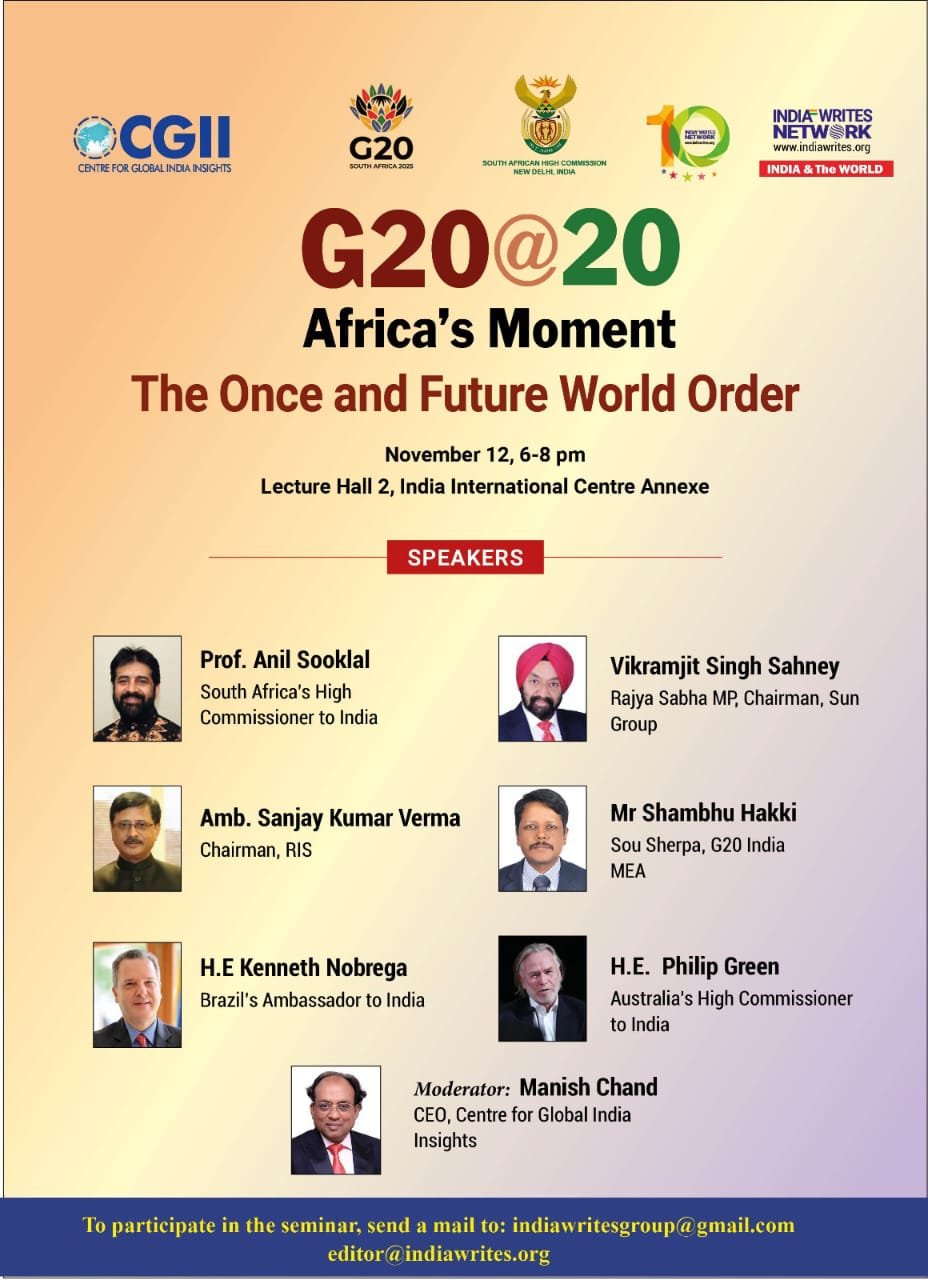
G20@20: Africa’s Moment – The Once and Future World Order
Speakers
Professor Anil Sooklal
Kenneth da Nobrega
Manish Chand
Ambassador Philip Green
sanjay Kumar Verma
Shambhu Hakki
Vikramjit Singh Sahney
MPs, diplomats laud Operation Sindoor, call for national unity to combat Pakistan-sponsored terror
Speakers
Aparajita Sarangi
Brij Lal
Dr Amar Patnaik
Manish Chand
Priyanka Chaturvedi
Sujan Chinoy
Yashvardhan Kumar Sinha
BRICS summit in Rio to focus on Global South, local currency trade
Speakers
Dammu Ravi
Denis Alipov
Ina Hagniningtyas Krisnamurthi
Jyoti Vij
Kamel Zayed Kamel Galal
Kenneth da Nobrega
Manish Chand
Book
India’s G20 Legacy: Shaping a New World Order
Editor: Manish Chand
Pages: 206
Publisher: Pentagon Press LLP
Cover Price: INR 995
In Conversation
India, Israel have to work faster to defeat terrorists: Israel’s Ambassador
In The Press
Rescuing G20 from North-South divide: Ubuntu Moment
The Sunday Guardian: India calls for strengthened BRICS cooperation
Daily Excelsior: Ahead BRICS summit in Rio, envoys call for greater focus on combating terrorism
Rediff: BRICS Summit 2024: Focus on National Currencies
Latest From CGII
Empathy and eros in Tel Aviv bunkers
Modi visit: India-Israel partnership enters a new era
Unravelling Modi’s Israel journey: What to expect
India and Indonesia: Advancing an Inclusive AI Future for the Global South
Macron in Mumbai : Shaping the Next Phase of India–France Ties
South-by-South: Focus on people-centric solutions at India AI summit
The Journal
India’s G20 Journey – Scaling A New Summit
India’s G20 Moment: Hope, Healing and Harmony