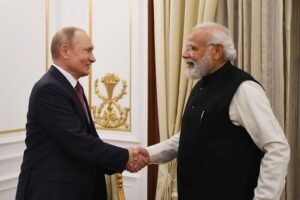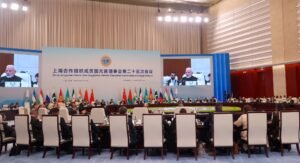




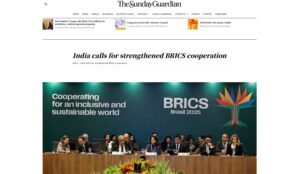

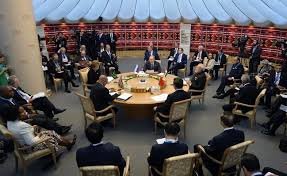
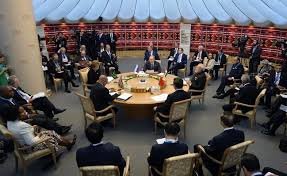
 Kazan, Russia. At a time when the world teeters on the brink of deepening divides—East vs West, North vs South—Indian Prime Minister Narendra Modi’s address at the 16th BRICS Summit illuminated a path of hope, unity, and forward momentum. His speech, delivered during the closed plenary session on October 23, 2024, set a tone of optimism and determination. Speaking as a founding member of BRICS, Modi’s message was clear: BRICS is not about division but about cooperation for the collective good of humanity, with the potential to be a driving force for global reform and inclusive development. With the world facing numerous crises—wars, economic instability, the growing threat of climate change, and the scourge of terrorism—Modi’s speech resonated as a call to action. He acknowledged these pressing global challenges while expressing confidence in BRICS’ ability to rise above them. “There are high expectations of BRICS,” he said. “I believe that as a diverse and inclusive platform, BRICS can play a positive role in all areas.” His words reflected the essence of the BRICS partnership—a grouping of nations with distinct ideologies and backgrounds, yet united by shared values of respect, cooperation, and progress. The Prime Minister’s address emphasised the vital role BRICS must play in reforming global institutions. He spoke of the need to overhaul the United Nations Security Council (UNSC), the World Trade Organization (WTO), and multilateral development banks to ensure that they are more representative and reflective of today’s geopolitical realities. “We must move forward in a time-bound manner,” he urged, pushing for urgent reforms that would make these institutions more inclusive and effective. Modi’s vision was clear: BRICS should not be seen as an organisation that aims to replace global institutions but rather as a force that seeks to reform them from within. In addition to institutional reforms, Modi stressed the need for a unified approach to combating terrorism. “There is no place for double standards,” he asserted, underscoring the necessity of a coordinated global effort to tackle terrorism and its financing. He also called for progress on the Comprehensive Convention on International Terrorism, a proposal that has been long pending at the United Nations. His remarks left no room for ambiguity—India remains committed to global security and expects a strong, unified stance from BRICS nations to counter this persistent threat. As BRICS continues to evolve and expand, with new countries joining its fold, Modi expressed India’s readiness to welcome these nations as partners. However, he stressed that all decisions should be taken by consensus, with respect for the vision of the founding members. “The guiding principles, standards, criteria, and procedures adopted during the Johannesburg Summit should be complied with by all members and partner countries,” he said, reiterating the importance of maintaining the integrity of the organization while allowing it to grow. He reflected on India’s recent leadership during the G20 and the Voice of Global South Summits, taking pride in India’s role in amplifying the voices of developing nations on the global stage. This, he noted, aligned seamlessly with BRICS’ objectives of fostering inclusive growth and cooperation. In the face of emerging challenges like cyber-attacks, misinformation, and the rapid rise of artificial intelligence, Modi called for global regulations to ensure cybersecurity and the responsible use of AI. “In this era of technology, new challenges have emerged such as cyber deepfake and disinformation,” he said. His call for safe and secure use of AI, as well as robust cyber regulations, highlighted the growing necessity for BRICS to take the lead in setting global standards for technology governance. Modi’s remarks also emphasized the importance of BRICS maintaining its image as an organization that fosters cooperation rather than competition. “We support dialogue and diplomacy, not war,” he said, reflecting India’s longstanding position of peace and collaborative solutions. His vision for BRICS was one of optimism and shared responsibility, where nations come together to address common problems while respecting each other’s sovereignty and perspectives. As BRICS continues to chart its future, Modi’s speech offered a roadmap for fostering cooperation, promoting reforms, and addressing global challenges together. His words carried a message of hope for the world, particularly for the nations of the Global South, whose voices he championed. He concluded with confidence in BRICS’ potential, saying the organization is “a source of inspiration for the world, fostering positive cooperation.” Modi’s speech encapsulated the essence of BRICS as a unique platform for dialogue, cooperation, and coordination, setting a powerful example of unity in diversity. As BRICS moves forward, Modi made it clear that India, as a founding member, will continue to fulfil its responsibilities, guiding the organisation in its journey to becoming a model for global cooperation. His address left no doubt that BRICS, under India’s leadership, will continue to be a force for global reform, unity, and progress.