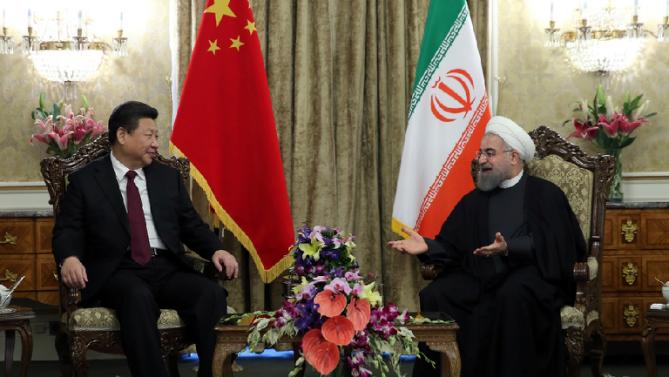
The Middle East has traditionally been viewed through the lens of the interests of the West in the region due to their presence and involvement in the region for years. China, on the other hand, was relatively less involved, but the last few years have seen a spike in Beijing’s activities in the region. The region is strategically important for the success of China’s ‘One Belt One Road’ initiative. The Middle East the geographical link between West and East. It produces around 60 per cent of the world’s energy reserves and is in urgent need of infrastructure development. China now views Middle East more as an opportunity rather than a conflict-ridden region. China’s President Xi Jinping visited Saudi Arabia, Iran and Egypt in the beginning of the year to increase Beijing’s engagement with the region. Prior to his three-nation visit, Mr Xi had described the Middle East as a “land of abundance” and emphasised that Chinese policy is about dialogue and development, as opposed to the use of force, as a solution to the Middle East’s problems. China’s approach to Middle East During Mr Xi’s visit to Saudi Arabia, the two countries had agreed to elevate their relationship to a strategic partnership. This signalled China’s intent to be more actively engaged in the region. In Iran, Mr Xi reiterated China’s support for the Shanghai Cooperation Organisation (SCO) membership. During Mr Xi’s visit China and Iran, signed 17 agreements. The two countries agreed to increase bilateral trade to $600 billion in the next 10 years. China and Iran also signed an accord to launch the Maritime Silk Road of the 21st century, which is one of the two routes of the “One Belt, One Road” inititative. With the lifting of sanctions on Iran, China is looking to tap Iran’s markets. China is also set to increase energy supply from Iran. The “One Belt, One Road” initiative involves 65 countries, 4.4 billion people, and about 40 percent of global GDP. The visit witnessed China enhancing its cooperation with Saudi Arabia, Egypt, and Iran under the “One Belt, One Road” development framework. China signed 52 agreements with the three countries in a range of sectors from infrastructure development to energy. China also shares a better rapport with Iran than the western countries. Iran’s supreme leader Ayatollah Ali Khamenei told Mr Xi that “Iranians never trusted the West…. That’s why Tehran seeks cooperation with more independent countries,” — a reference to countries like China that have not antagonised Iran. As a part of the agreements signed with the three countries, China has offered $55 billion in loans and investments to the Middle East. Mr Xi told the Arab League, “We are not setting up proxies or building a sphere of influence in the region.” This approach underlines China’s efforts to distinguish itself from other players in the region.