









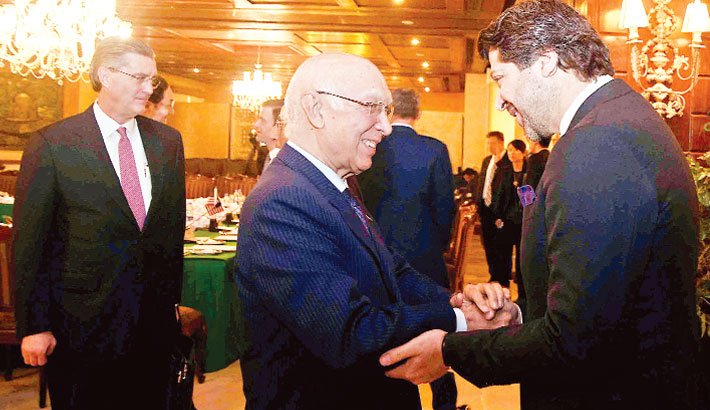
Amid continuing uncertainty over the fate of the Taliban reconciliation process, delegations from Afghanistan, Pakistan, China and the United States met in Islamabad on January 11 to revive the peace talks, a critical step towards ending bloodshed and stabilising the country. The quadrilateral initiative was taken before, but the talks were stalled due to the coincidental announcement of the death of their leader Mullah Mohammad Omar, the founder and the leader of Taliban two years back. The peace talks were aimed at formulating a road map to bring the Taliban to the negotiating table and convince them to give up violence. The process has been, however, complicated by rival agendas and power play among different factions of the Taliban, which has sharpened since the appointment of the militia’s new leader. Some factions of the Taliban are completely opposed to any dialogue while the others are still open to it. Sartaj Aziz, Pakistan Prime Minister Nawaz Sharif’s Foreign Affairs Advisor, laid down the agenda at the four-nation meet. “The primary objective of the reconciliation process is to create conditions to bring the Taliban groups to the negotiation table and offer them incentives that can persuade them to move away from using violence as tool for pursuing political goals.” The insurgent group was not present at the talks. The quadrilateral meeting came amid escalating Taliban insurgency and violence. In the past few months Taliban conquered the southern province of Helmand and briefly captured the northern city of Kunduz. In only 11 days of this year, the militia has managed to attack three times. Going by their past record, it can be expected that Taliban would continue to use violence as a leverage in the negotiation process. India is warily watching the Taliban reconciliation process, as the outcome of the peace talks will crucially impact New Delhi’s vital interests in the strategically located country. India has drawn red lines on the Taliban reconciliation process, which has also been endorsed by the international community. These include accommodating only those members of the Taliban who accept the new Afghan constitution, renounce violence and sever all ties with Al-Qaida. The success of the reconciliation process will depend on a Pakistan-Afghanistan détente, which has come under stress due to differences over Pakistan’s backing of some militant groups in Afghanistan. For India, curbing Taliban violence is a top priority as it has been at the receiving end. The recent attack on the Indian Consulate in Mazar-i-Sharif, which was allegedly masterminded by a Pakistan-based militant group, underscored the dangers posed by rising violence to India’s assets in that country. India has pledged $2 billion for multifarious reconstruction projects in Afghanistan. During his visit to Kabul on December 24-25, India’s Prime Minister Narendra Modi had exhorted all regional powers to come together and shape a peaceful, pluralistic and prosperous Afghanistan. “We know that Afghanistan’s success will require the cooperation and support of each of its neighbours. And, all of us in the region – India, Pakistan, Iran and others – must unite, in trust and cooperation, behind this common purpose and in recognition of our common destiny.”