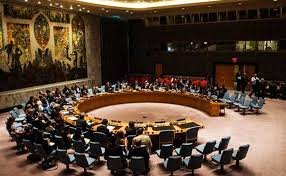
Making a compelling pitch for reforming the UN Security Council in tune with the shift of gravity of economic power to emerging economies, India has called for forging a consensus on the optimal size of the council to accommodate aspirations of the under-represented and unrepresented regions. Pointing out that the world’s population and the number of member countries has more than trebled since the inception of UN, India stressed that the council’s membership has not grown at a proportionate pace. India’s Permanent Representative Syed Akbaruddin voiced concerns at the opposition to making the Security Council more representative of the people in the 21st century by limiting its size. “The case for optimal size of the expanded Council needs to be built on contemporary realities, as well as the need to ensure that the under-represented and unrepresented regions, including the developing countries of Africa, Latin America and Caribbean and the vast majority of Asia and Pacific, find their due place in this long overdue expansion of the size of the Council,” India’s Permanent Representative Syed Akbaruddin said at a meeting on negotiating council reforms on February 22. The meeting marked the second session of the Inter-Governmental Negotiations (IGN), which was held with the negotiating text adopted last September. The negotiating text was approved through mutual consensus at the beginning of the 70th session of UNGA in September 2015 after decades of opposition from a group of nations opposed to expanding the security council. “In 1945, there was one Council member for every five Member-States and one permanent member for every ten members of the General Assembly. Today the membership of the UN has increased more than three times,” said Mr Akbaruddin. India has launched a major diplomatic outreach to fast-track reform and expansion of the UNSC. India has also lobbied for reforms in UNSC through the G4, which also includes Germany, Japan and Brazil. Mr Akbaruddin underlined areas of significant convergence between developing countries in an expanded Security Council. Some of India’s suggestions included ensuring a more transparent, efficient, effective and accountable functioning. He also stressed on equal and effective participation by elected members in the decision making process and better access for non-council members to the work of the Council. Speaking about the presidency in an expanded security council, he said that non-permanent members should be given a chance to hold the presidency at least once during their tenure. Mr Akbaruddin also emphasised that cooperation and coordination with regional and sub-regional organizations particularly with the African Union should be enhanced.