









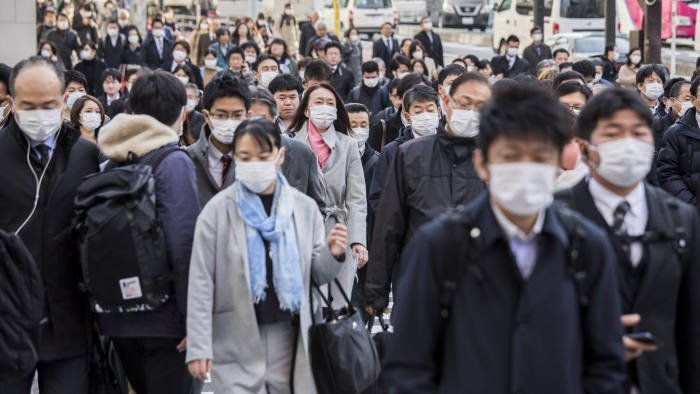
By Rushali Saha Different countries have responded to the pandemic differently, but Japan’s method and model stood out because the administration directly went against the WHO’s recommendation to “test, test, test.” Not only that, but Japan was among the few countries which insisted on not mandating a lockdown. Japan’s fight against the pandemic stresses on relying on their existing culture which emphasise instilling hygienic traits in kids from a young age, wearing face masks but experts are now suggesting Japan risks second wave as “hygiene fatigue” sets in. According to a report by the Centre for Infectious Disease Research and Policy at the University of Minnesota, the coronavirus pandemic is likely to last as long as two years which has renewed debates about whether a lockdown is the best way to handle the situation. Japan was among the first few countries outside China to report a case of Covid-19 with the first case being recorded on January 16. Subsequently, the number of cases increased after the Diamond Princess cruise ship, where roughly one in five people aboard became infected, while it was docked in Yokohama, Japan on February 21, but infections still remained low considering Japan’s proximity to China. While many have attributed the low numbers to the lack of testing, health officials in Japan came out and said that the reason for low tests was not to overwhelm hospital capacities as there have been no spike in pneumonia cases. Japans Prime Minister, Shinzo Abe, was against the idea of a lockdown from the start but with the steady rise in the rate of infections the administration was facing increasing criticism internationally and nationally. With the declaration of emergency on April 16, the governors of the prefectures have the power to close schools and businesses, but the authorities will not have the legal authority to order citizens to stay at home. PM Abe also announced the decision to expand testing, which was earlier restricted to those with extended visible symptoms or history of direct contact with those who have tested positive, with the availability of tests which produce results in 10-15 minutes becoming available. After a lot of vacillation on the question, The Tokyo Olympic Games have also been postponed to July 23 next year. Schools, university, cinema, live music venues and nightclubs have been asked to suspend operations but even in densely populated places like Tokyo, Japanese style “izakaya” pubs are operating, although they have been requested to shut down by 8pm. Soft lockdown In contrast to stringent lockdowns imposed in most countries, including India, where the enforcement is being ensured through fines or even imprisonment, Japan has relied more on peer pressure and their deep-rooted tradition of respect for authority. On April 27, Tokyo reported its lowest daily level of new coronavirus cases in more than three week which many see as indicating the country’s success in supressing the outbreak without compulsory social distancing and with limited testing. Many feel a lot has to do with Japanese greeting etiquette, which avoids handshake and basic hygiene education which is taught from an early age. Nevertheless, there is great uncertainty over the economic impact on the virus on the country as reports expect Japan to slip into deep recession as the virus has seriously affected business. The government has rolled out nearly $1 trillion stimulus package to soften the economic blow and Prime Minister Abe has come forward with a global call for policy coordination to fight “disruptions” in world financial markets. As the fears of this pandemic triggering a global recession grip the world, Japan is seeking to spearhead cooperation to support the weakening global economy. The geopolitical undercurrents of corona’s impact on Japan-China relations was evident with Japan offering $2.2 billion to help its companies move out of China and relocate production elsewhere as a part of the coronavirus stimulus. Scientists around the world are grappling with many unanswered questions about the disease, without full clarity on how it is being transmitted and different testing practices around the world. As Governments around the world are being pushed to choose between lockdowns, which effectively halt the economy temporarily but ensure effective social distancing, or the health of its citizens, Japan’s decisions are at best bold, at worst half-hearted. (Rushali Saha is Research Intern at India Writes Network)