





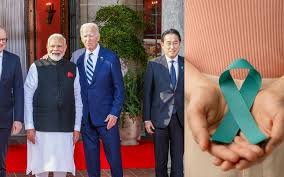
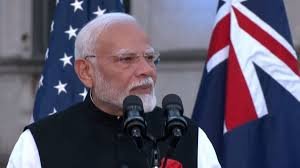
 In a significant move aimed at bolstering cancer prevention in the Indo-Pacific region, Prime Minister Narendra Modi joined the leaders of the Quad—US President Joe Biden, Australian Prime Minister Anthony Albanese, and Japanese Prime Minister Fumio Kishida—at the Quad Cancer Moonshot event in Wilmington, Delaware. During the event, Modi announced India’s contribution of $7.5 million toward cancer screening, diagnostics, and testing, marking a strong commitment to affordable and accessible healthcare. He emphasized India's efforts in developing a cervical cancer vaccine and deploying AI-driven treatment protocols, reflecting the country’s growing role in global health initiatives. “This reflects our shared determination to provide affordable, accessible, and quality healthcare,” Modi said, addressing the gathering. He also highlighted India's cervical cancer screening program, noting, "In cancer care, collaboration is essential for a cure. An integrated approach of prevention, screening, diagnosis, and treatment is necessary to reduce the burden of cancer." Modi’s remarks underscored India’s mass-scale efforts and its larger vision of "One Earth, One Health." India’s contribution to the Cancer Moonshot aligns with its broader vision of global health equity. Modi underscored India's ongoing screening program and the nation;s commitment to supplying 40 million doses of vaccines to Indo-Pacific countries under GAVI and Quad initiatives. “These 40 million vaccine doses will bring hope to millions of lives," Modi said. "When the Quad acts, it is not just for nations, it is for the people. This is the true essence of our human-centric approach.”
 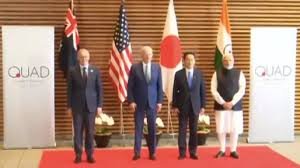 Quad Nations Unite for Cancer Prevention While India’s role took center stage, the contributions of the other Quad members were equally notable. US President Joe Biden emphasized the dire need for collaboration, announcing a program to train Indo-Pacific doctors in cervical cancer screening and vaccination. “Every year, 150,000 women die from cervical cancer in the Indo-Pacific. We can’t and will not let that continue,” Biden declared, highlighting the collective responsibility of the Quad nations to tackle the issue. The initiative will see US Navy doctors begin the training program next year, boosting regional healthcare infrastructure and expertise. Biden also announced a $150 million commitment from the Quad nations toward HPV screening and therapeutics. “We’re coming together to deliver more hope for our people. In practice, the Quad Cancer Moonshot means more collaboration between our hospitals, research centers, and cancer foundations,” he stated, reflecting the broad scope of the initiative, which will foster greater cooperation in research and healthcare delivery. Japanese Prime Minister Fumio Kishida echoed the sentiment of solidarity, reaffirming Japan’s ongoing support for deploying medical equipment and offering technical cooperation. “Regarding measures against cervical cancers, we have supported the deployment of medical equipment and facilities, and such endeavors will continue going forward,” Kishida said, also underscoring Japan's role in working with research institutions in the US, Australia, and India. This global effort, according to Kishida, is essential in reducing cancer mortality in the Indo-Pacific. Explainer: The Cancer Moonshot Program The Cancer Moonshot, originally launched by the US in 2016, aims to accelerate progress in cancer research and treatment. Spearheaded by President Biden, who lost his son Beau Biden to cancer, the initiative seeks to make a decade’s worth of advancements in five years. The program has attracted significant funding and partnerships, with 170 private companies, academic institutions, and nonprofits stepping up to support the mission. The initiative focuses on enhancing prevention, early detection, and treatment of various cancers, with cervical cancer emerging as a key priority in the Indo-Pacific region. Biden’s renewed push for the Cancer Moonshot reflects a global effort to leverage research, public- private partnerships, and policy reforms to combat the disease more effectively. India, through its collaboration with the Quad, stands to benefit greatly. As non- communicable diseases like cancer account for over 60% of deaths in India, the Cancer Moonshot provides an opportunity to align with global best practices in cancer care. Modi’s announcement of India contribution to the Indo-Pacific—supporting both preventive measures and digital health solutions—underscores India;s leadership in the healthcare space. Modi also noted that India is running “the world’s largest health insurance scheme” and establishing centers to provide “affordable medicines to everyone.”
 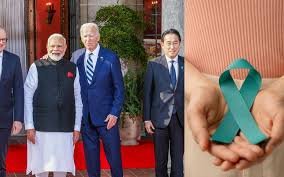 India’s Growing Role in Global Health India’s involvement in the Cancer Moonshot reflects its larger role in global healthcare. The US-India Cancer Dialogue, held in August 2024, focused on strengthening biomedical research cooperation and advancing AI-enabled innovations for cancer care. Modi’s announcements at the Wilmington event, including a pledge to offer technical assistance to Indo-Pacific nations through a $10 million contribution to the WHO’s Global Initiative on Digital Health, further position India as a key player in global health diplomacy. US Ambassador to India, Eric Garcetti, highlighted the strong US-India health partnership, stating, “This exchange embodies the strength of the bond between our two great nations, built on a foundation of shared values, mutual respect, and a common vision for a healthier future.” The collaboration between the two countries has also extended to other critical health areas, as seen during the COVID-19 pandemic when the Quad Vaccine initiative distributed millions of vaccine doses to Indo-Pacific nations. The Road Ahead: Collaborative Health Solutions The Cancer Moonshot not only exemplifies the Quad’s human-centric approach but also demonstrates the power of collaborative health solutions in addressing global challenges. As Modi noted, “These efforts will reduce the cancer burden and ensure hope for millions of people in the Indo-Pacific.” By integrating efforts across prevention, screening, diagnosis, and treatment, the Quad is creating a robust framework to reduce the cancer burden in the region. Australia and Japan, both significant players in the initiative, have committed to sharing expertise, technology, and resources to ensure the success of the program. For India, the Cancer Moonshot represents an opportunity to enhance its healthcare infrastructure while contributing to global cancer care solutions. Modi’s emphasis on the Quad’s approach, “acting not just for nations but for people,” sums up the human-centered goal of the Cancer Moonshots.