












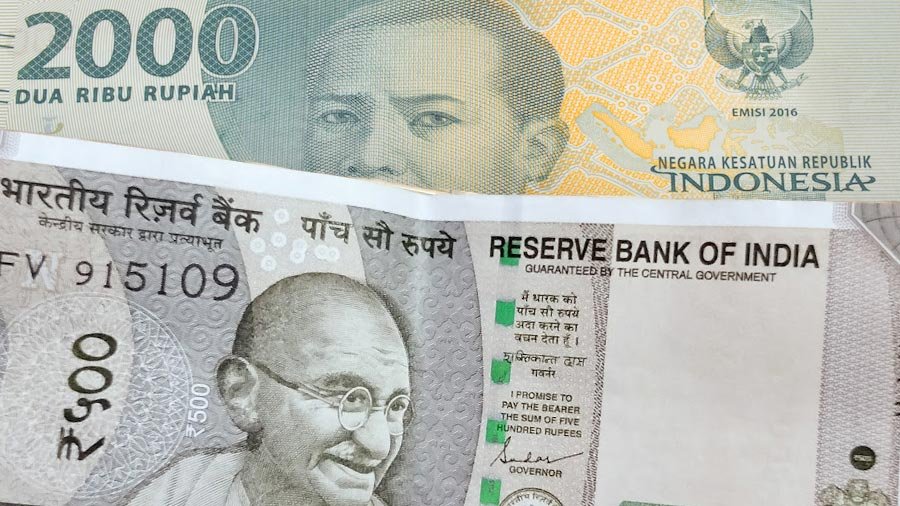
By Deepakshi Bhardwaj Whispers around de-dollarization are translating into policy in action with the internationalization of the Indian Rupee. In a game-changing move, India and Indonesia signed a Memorandum of Understanding (MoU) to promote using local currencies for bilateral transactions. The MoU, signed by the Reserve Bank of India Governor Shaktikanta Das and his counterpart Perry Warjiyo from Bank Indonesia, covers all current account transactions, permissible capital account transactions, and any other economic and financial transactions agreed upon by both countries. It enables exporters and importers to invoice and pay in their respective domestic currencies. This framework facilitates the development of an INR-IDR foreign exchange market. This MoU is a direct outcome of India’s strides as the president of the G20 last year, where India and Indonesia launched the “Economic and Financial Dialogue” (EFD Dialogue) to bring this goal to reality. This MoU underscores Indonesia’s efforts to diversify its dependency, in trade and investment, towards India against traditional partners like China, the US, and the EU. It also highlights India’s push towards multi-lateral and diverse financial arrangements to facilitate a more equitable geoeconomic landscape. But why is this an unprecedented milestone? This MoU is a significant step towards India’s efforts for the internationalization of its Rupee; to gain more stability and cushion its economy against dollar dependence and weaponization. India has expressed discontent with the frameworks of the international financial institutions, which are not working for the global south. This is the second MoU that cemented India’s position after signing one with the UAE last year. The use of local currencies will minimize transaction costs as there’s no need for currency conversion. The MoU is expected to facilitate greater cross-border investment and financial flows between India and Indonesia. By fostering an environment of trust and cooperation, the agreement will promote bilateral trade and investment opportunities, thereby contributing to economic growth and development in both countries. It also paves the way for the establishment of closer ties between financial institutions and regulatory bodies, fostering greater transparency and accountability in the financial sector. Furthermore, the MoU underscores the growing importance of regional cooperation in addressing common challenges and promoting sustainable development. As two prominent economies in the Asia-Pacific region, India and Indonesia have a shared interest in promoting financial inclusion, fostering innovation, and enhancing resilience to external shocks. The agreement provides a framework for joint initiatives and capacity-building efforts aimed at achieving these common objectives. With the recent elections in Indonesia bringing an economy-focused government to power, this pact can pave the way for taking India-Indonesia economic ties to the next level. Both economies have tremendous growth potential to offer to the world and a common goal to become developed nations as we approach 2050. This MoU allows them to be partners in this pursuit while building resilience to external economic shocks and avoiding roadblocks due to bad decision-making spillover of the US dollar.