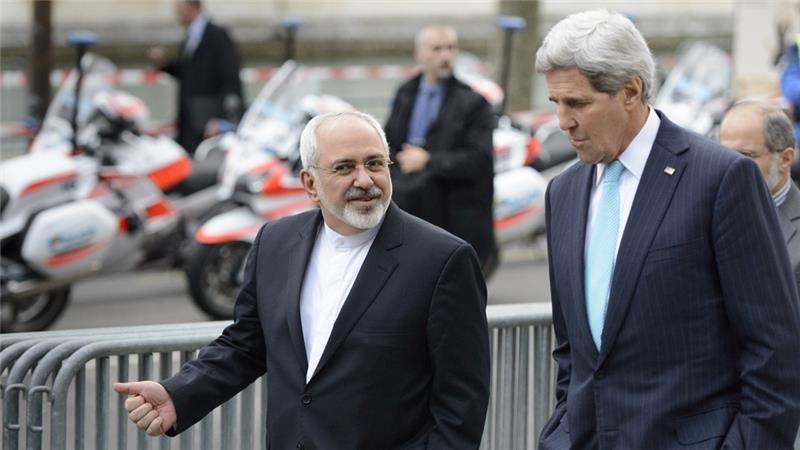
The lifting of sanctions against Iran has not only triggered waves of jubilation among Iranians but has also got a big thumbs-up from world leaders. US President Barack Obama, who played a pivotal role in forging the P5+1 deal with Iran in July last year struck a positive note after the sanctions were officially lifted against Iran on January 17, paving the way for economic rejuvenation of the West Asia’s leading power centre. For the US, as of now, the decades of tensions with Tehran have finally ended. Besides the release of American prisoners in Iran, the cherry on the cake is the quick resolution of the captured US sailors in the Persian Gulf a week before. Obama hailed the Iran nuclear deal and the lifting of sanctions as a triumph of diplomacy. “This is a good day because once again we are seeing what’s possible through strong American diplomacy,” Mr Obama said. “These things are a reminder of what we can achieve when we lead with strength and with wisdom.” He also underlined that the deal has effectively meant that Iran now would not “get its hands on a nuclear bomb” and the world would be more secure. Iranian President Hassan Rouhani lauded the nuclear deal as a “golden page” in Iran’s history and stressed that the agreement could be used as a template to resolve other regional issues. “The nuclear deal is an opportunity that we should use to develop the country, improve the welfare of the nation, and create stability and security in the region,” said Mr Rouhani. “In [implementing] the deal, all are happy except Zionists, warmongers, sowers of discord among Islamic nations and extremists in the US. The rest are happy.” The nuclear deal formally came into force on January 16 after thorough investigations by the International Atomic Energy Agency (IAEA) and its confirmation about Iran’s commitment to the Joint Comprehensive Plan of Action (JCPOA). Iran would be now able to enjoy better economic relations and attract investments from foreign countries, as the crippling economic sanctions applied by the US, UN and the EU would be lifted. In exchange Iran would scale back on its nuclear programmes. United Nations Secretary General Ban ki-Moon also hailed the agreement’s implementation. “This achievement demonstrates that international proliferation concerns are best addressed through dialogue and patient diplomacy,” said Mr Ban’s spokesman in a statement. “This is a significant milestone that reflects the good faith effort by all parties to fulfill their agreed commitments,” he added. Britain joined in the chorus, with Foreign Secretary Philip Hammond stressing that “Years of patient and persistent diplomacy, and difficult technical work, have borne fruit as we now implement the deal.” However, Israel, the arch-rival of Iran and a fierce opponent of the Iran nuclear deal, has predictably struck a dissenting note. He contended that Tehran would still be able to pursue acquiring nuclear weapons if it is left unchecked. “Even after signing the nuclear deal, Iran has not relinquished its ambition to obtain nuclear weapons, and continues to act to destabilise the Middle East and spread terror throughout the world while violating its international commitments,” said the Israeli leader. The IAEA, which has been monitoring Iran’s developments, clarified that it had installed a device at the Natanz plant to keep an eye on Iran’s uranium enrichment activities in real time, in order to verify that uranium enrichment levels were kept at up to 3.67% as agreed in the deal with world powers. While the deal has been largely welcomed in Iran, many Iranians remain suspicious of US’ motives as they feel that the US is capable of slapping sanctions again while Iran is in no position to work on its nuclear programme. Their fears are not without basis as Washington has applied fresh sanction on Iran linked to its ballistic missile programme. The US has added five Iranian nationals and a network of companies based in United Arab Emirates and China to the American blacklist. Reacting to it, the Iranian leader said that any new American sanctions would be “met by an appropriate response” The new sanctions came after the four American prisoners were released from Iran, which included Washington Post reporter Jason Rezaian, a Christian pastor Saeed Abedini, and former US marine Amir Hekmati and a fourth man called Nosratollah Khosravi-Roodsari.