









By Rushali Saha
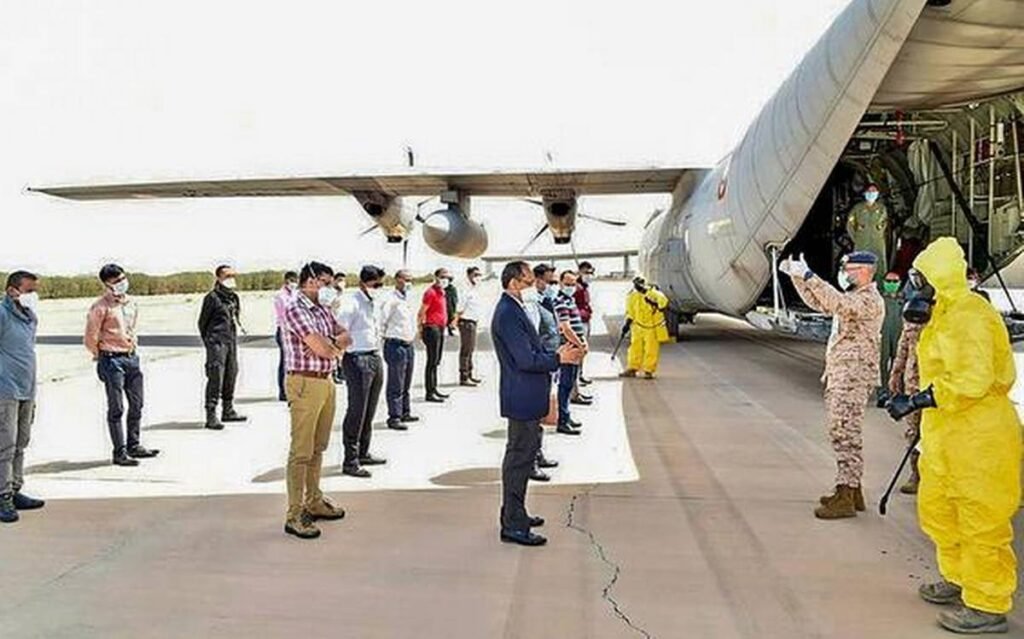
Signalling its commitment to the welfare of Indian diaspora, the Indian government is poised to launch large-scale evacuation of Indian workers in the Gulf countries which are struggling with the twin challenges of the oil slum and the coronavirus pandemic. The government’s recent decision to ask national carrier Air India and Indian Navy to be on standby for large-scale evacuation from Gulf countries shows that it has once again come forward and prioritised the health and security of its diaspora. The Gulf countries, home to over eight million-strong Indian community, send in around $40 billion in annual remittances.
Previously the Indian government had facilitated the return of distressed Indian workers from Gulf countries including those who have lost their jobs in the form of providing consular, logistical support as well as providing air tickets whenever required. This time round, the situation is, however, unprecedented as it comprises a public health emergency and India has banned all forms of travel till May 3.
GCC Diplomacy
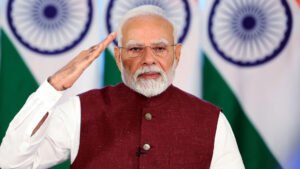
Diplomatic efforts were already being made to ensure the safety of Indian workers in the Gulf with PM Modi personally speaking to all six Gulf Cooperation Council leaders who reportedly assured the welfare of Indians living there. India’s diplomatic missions have established contact with community leaders in the region. The King of Bahrain assured Prime Minister Narendra Modi that personal attention to the welfare of the large Indian community was being given in his country.
PM Modi discussed the need for coordination and the drawing up of a strategy at the level of G20 group of developed and developing countries with Saudi Crown Prince Mohammed bin Salman in order to deal with the pandemic. The UAE offered to fly out stranded Indians who wish to return if they test negative for the virus.
Now in view of the evacuation plans, the government has asked Air India and Indian Navy to submit detailed evacuation plans. The navy in its plan mentioned that it can evacuate 1,500 Indians from the Gulf countries in three warships. Furthermore, India’s Ministry of External Affairs has also started consultations with the States and Union Territories for the necessary arrangements to start the process. Previously, Kerala’s Chief Minister Pinarayi Vijayan had sent a letter to PM Modi complaining of ‘inadequate isolation and quarantine facilities’ in the UAE for migrant workers. The states and UTs have a major role to play here since the responsibility of resettlement of the returnees rests with the state governments from where the emigrants have gone overseas. The question of whether the cost of the evacuation will be borne by the Indian nations there or the Central government is still being discussed and is a major concern since the majority of the Indians stranded there are low income labourers.
Reports suggest that Gulf States such as Beirut, Lebanon and Qatar have locked down districts with high concentration of migrants forcing them to remain in crowded, unsanitary dorms where practicing social distancing is almost impossible. Additionally, migrants are facing a deep sense of personal insecurity as the low wage workers are unable to contact their families due to restrictions on free internet calling.
Over the years, India has been establishing institutions to specifically deal with diaspora affairs and the question of diaspora is featuring more prominently in the country’s diplomatic outreach. In line with this policy, India responded early and efficiently and swiftly evacuated hundreds of its nationals from China in early February, which was lauded widely. However, in view of the fact that the India-Gulf region is the second largest migration corridor in the world and travel restrictions are already in place in both countries, the repatriation of these workers is a significant challenge. With this bold decision, India has shown that despite increasing domestic challenges within India as the number of cases rises, it will not cease to prioritise the needs of its diaspora abroad.
(Rushali Saha is Research Intern at India Writes Network)