

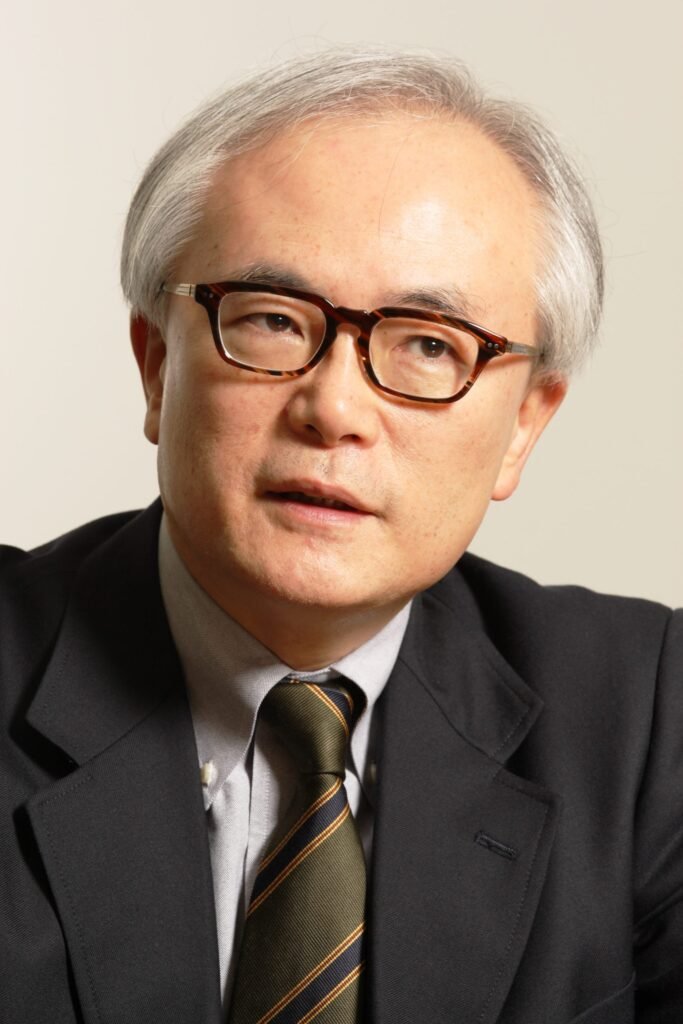
BY TOMOHIKO TANIGUCHI Quad has generated international headlines and conflicting interpretations. It is important, therefore, to understand its essential nature. Quad, from the beginning, has been about seascape, not landscape. That’s number one. Number two, Quad could not have come into being without a new geographic concept pushed forward, and that is Indo-Pacific. In the 1980s, the Prime Ministers of Australia and Japan got together and came up with a geographic concept of Asia-Pacific. Based on that geographic concept, the APEC, or Asia Pacific Economic Cooperation, came into being. Fast forward to 2010s: Shinzo Abe, based on his address to the Indian parliament, “Confluence of the Two Seas,” proposed a new concept of Indo-Pacific. The Indo-Pacific concept is always mentioned with adjectives of “free and open’’. So came about the new term, Free and Open Indo Pacific. We’ve been talking about the Quad being a seascape gathering, and then FOIP was its foundational concept. Thirdly, if it had not been for an outgoing, forward looking – Prime Minister of India, Narendra Modi, who was willing to break out the non-alignment mould, Quad or for that matter, FOIP, couldn’t have materialised. So those are the three points that I always associate with the emergence of this concept of Quad. Japan’s Perspective 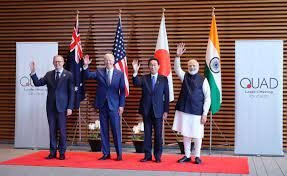
Quad is important for Japan to widen its breathing space or strategic space. Without it, Japan would likely be cornered into a narrow niche in the Far East or East Asia, with the resurgence of the gigantic power of China.
Also, if you lose Japan, it would automatically mean that the great footprint of the US military would lose its value. So, there is an equation here. If you lose Japan, you will lose the US commitment in the region. And that awareness has brought the United States and Japan together to push this Quad concept forward. There is a growing awareness among Americans that given this massive power of China, it will become even harder for the United States alone to provide security to the region. The United States badly needed allies and alliance relationships are being readily provided by Japan and Australia. Herein comes the importance of India, because the Chinese are looking at Indo-Pacific as a combined sum. The Chinese Navy is busy building its presence in the Indian Ocean. Besides, the Indian Ocean promises to become almost like an industrial highway for the 21st century’s economy, with the rise of African economies as well. So, Quad is also about the future. Because it is about the future, the hiccups that you have in response to present day challenges should be overcome by the forward looking nature of the Quad. As far as Japanese commitment is concerned, it’s pleasantly surprising for me to see that the Japanese prime minister, who was previously dubbed dovish, has chosen to be very much buoyant and straightforward about Quad. This shows that there is a growing bipartisan awareness in this country, that without an institution such as Quad, Japanese security and the region’s security, especially the security of Taiwan, would be in jeopardy. Mixed Bag Prime Minister Kishida is supportive of that awareness. People tend to look at Quad as a basket that could contain many different items. I wouldn’t disagree with that presupposition, but I would like the four leaders to focus their attention, first and foremost, on the security environment. After all, had it not been for this gigantic neighbour, Quad could not have materialised. So, the four leaders have to stick to the core thread of Quad namely security concerns.
Going forward, Quad is going to continue to work as a signalling institution. To keep the region free from coercion, the grouping signals that the four great democracies always shake hands with each other, work shoulder to shoulder with each other and set the goals rules for the 21st century’s economy.
[pdf-embedder url=”https://www.indiawrites.org/wp-content/uploads/2022/08/TOMOHIKO-TANIGUCHI-1.pdf” title=”TOMOHIKO TANIGUCHI (1)”]