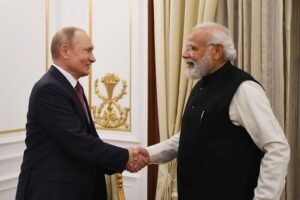
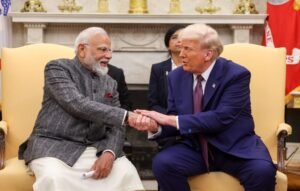

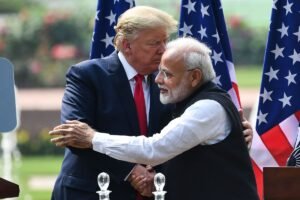
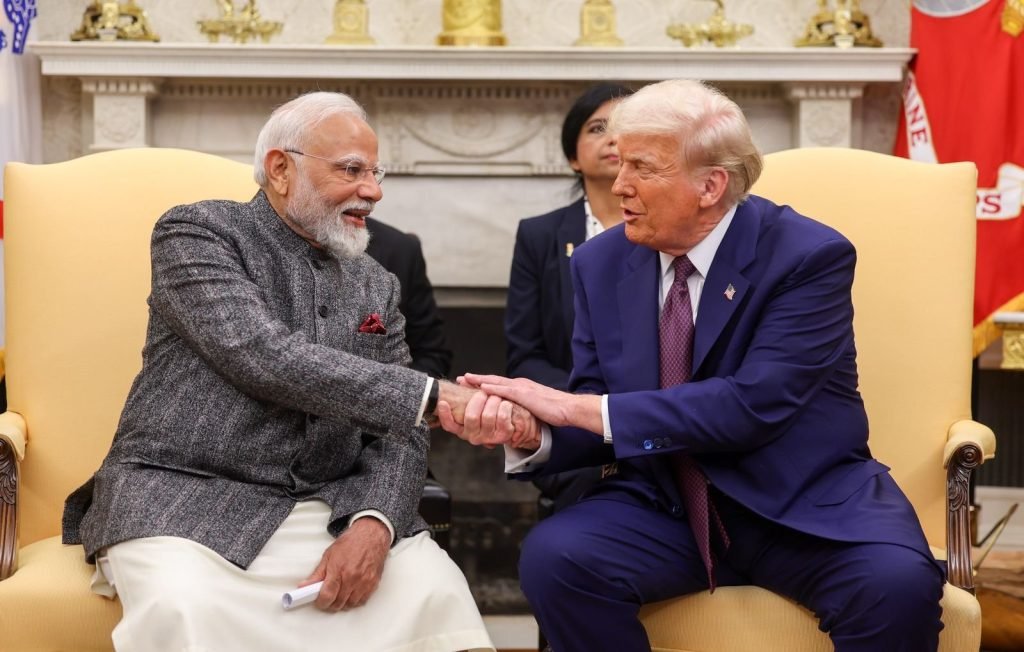
The long-awaited telephone call took place when US President Donald Trump rang up India’s Prime Minister Narendra Modi on March 24 and discussed the fraught situation in the war-torn West Asia.
The two leaders shared their assessment of the latest situation in West Asia amid conflicting reports of the US and Iran initiating talks to end 25-day-war.
The message from PM Modi was unambiguous – only diplomacy and dialogue can end the war that has devasted the world and severely hurt economies around the world, especially developing countries of the Global South.
In a post on X, PM Modi crystallized the essence of his conversation with PM Modi. “Received a call from President Trump and had a useful exchange of views on the situation in West Asia. India supports de-escalation and restoration of peace at the earliest,” he wrote.
“Ensuring that the Strait of Hormuz remains open, secure and accessible is essential for the whole world. We agreed to stay in touch regarding efforts towards peace and stability,” said PM Modi.
This was the first call between the two leaders since the start of the war on February 28 when the US and Israel launched attacks on Iran.
US Ambassador to India Sergio Gor, Trump’s confidante and pointsman in New Delhi, was the first one to break the news on X. “President Donald Trump just spoke with Prime Minister Modi. They discussed the ongoing situation in the Middle East, including the importance of keeping the Strait of Hormuz open.”
External Affairs Minister S. Jaishankar’s telephonic conversation with US Secretary of State Marco Rubio on March 23 set the stage for Trump-Modi call a day later.
“Our discussions focused on the West Asia conflict and its impact on the international economy. We particularly spoke about energy security concerns. Agreed to remain in touch,” said Jaishankar.
With global energy supply chains badly disrupted by the war, fuelling energy shortages around the world, the two leaders concentrated their discussion on keeping open the Strait of Hormuz, the critical waterway through which more than 20 per cent of global oil passes. For India, Strait of Hormuz is the critical energy lifeline as India depends on the Gulf countries for more than 70 per cent of its energy imports.
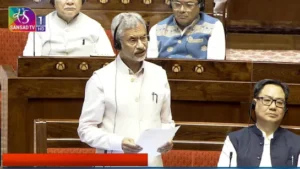
PM Modi’s message to Trump was an amplification of statement in the Indian parliament on the situation in West Asia. “As far as diplomacy is concerned, India’s standing has been very clear. From the beginning, we had expressed our deep concern on this conflict,” PM Modi said in statement on the situation in West Asia in the parliament on March 23.
“Amid this war, India is trying to secure the movement of its ships through diplomacy. We have always raised our voice for humanity and peace. I repeat that talks and diplomacy are the only way to end the problem. All our efforts are aimed towards reducing tension and ending this war. In this war, threat to any life is not in favour of humanity. India wants a peaceful resolution at the earliest.”
“Amid this war, India is trying to secure the movement of its ships through diplomacy. We have always raised our voice for humanity and peace. I repeat that talks and diplomacy are the only way to end the problem. All our efforts are aimed towards reducing tension and ending this war. In this war, threat to any life is not in favour of humanity. India wants a peaceful resolution at the earliest.”
PM Modi’s conversation with Trump came much after he spoke to nearly all leaders of West Asia and urged everyone to reduce tension and end this conflict.
As the US-Iran-Israel war entered the fourth week, PM Modi also updated the Indian parliament about steps taken by his government to ensure the country’s energy security and the welfare of around 10 million Indians living in the Gulf countries.