













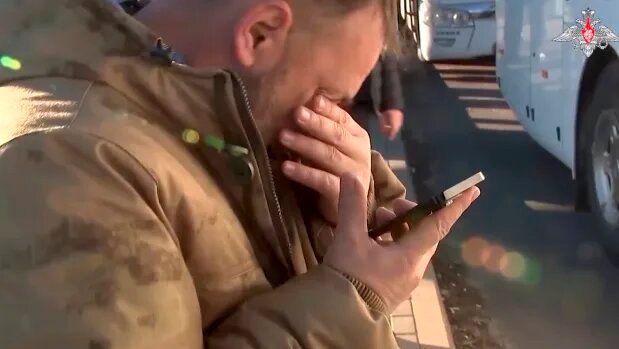
Those who live by the smartphone should be ready to die! Addiction to mobile phones can be literally deadly, especially on the battlefield, as Russians discovered at the stroke of midnight on the New Year. Ukraine began the year with a lethal strike that resulted in the deaths of numerous Russian soldiers. These deaths have been blamed on the Russian soldiers using mobile phones in the war zone. But is that the reality? Or, is Russia just playing its usual blame game?
In the early hours of January 1, Ukraine fired six artillery rockets at a barracks in Makiivka, in the Donetsk region, using its HIMARS system, which was provided by the US. Five cranes and rescue personnel were seen lifting large slabs of concrete under a clear blue sky at the scene in Makiivka, a town in the eastern Donetsk area that is partially under Russian occupation.
Since the war started more than ten months ago, it was one of the worst strikes on Russian soldiers. It also sparked new criticism of the war tactics that Russia has been following. The Russian government claimed 63 deaths after the strike, but the revised numbers are 89. This is the highest number of lives lost in a single strike accepted by Moscow so far in the war. The Defence Ministry affirmed in a statement that the deputy commander of the regiment, Lt Colonel Bachurin, was among those deceased. A commission has been set up to investigate the incident. But it is “ already obvious” the main cause of Ukraine’s drone attack was the use of mobile phones by the Russian soldier in spite of clear and repeated bans on the same. “This factor allowed the enemy to locate the personnel for launching the missile strike” The statement by lieutenant General Sevryukov also said that “ all the necessary measures are being adopted to prevent this kind of tragic incident in the future.” Consequently, Russia has stepped up the use of “Kamikaze drones” in Ukrainian cities with great frequency. Mostly, they come at night. With the use of these “single-use” drones Russia is trying to destroy civil infrastructure and residential buildings to spread fear among the population. During the initial stages of their invasion of Ukraine, some Russian troops advancing on Kyiv made telephone calls and uploaded videos on TikTok, revealing their whereabouts to Ukrainian snoopers. According to Ukraine’s head of military intelligence, the Ukrainians launched missiles at their location using cellphone signals to catastrophic effect. A year into the war, the Russian defense ministry has admitted to this drawback in an official statement. Blame Game An official from Ukraine and a group of pro-war bloggers from Russia claim that the strike was caused by other circumstances and that the ministry was seeking to shift the blame away from military officials by placing it on soldiers. They said that Russian commanders had failed to adequately conceal their movements, had stationed a sizable number of troops close together rather than dispersing them, and had placed them close to weapons that exploded during the raid.
But the use of cell phones has been prevalent among the soldiers of both countries. Since at least 2014, when pro-Kremlin rebels started to battle Ukrainian troops in the country’s east, Russian-backed forces, according to Ukrainian officials, have been targeting Ukrainian soldiers using cellular data.
Even in situations where their use has been restricted or forbidden altogether due to the potential for fatal repercussions, smartphones are ubiquitous and their presence on the battlefield is unavoidable. However, every location ping sends the adversary a new message that can eventually lead to a missile strike or a more effective defensive position. The side with the edge in this informational conflict will probably triumph in the war. (Swaratmika Dubey contributed inputs for this article)