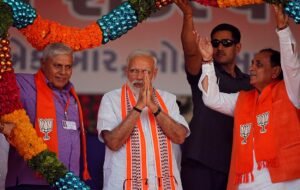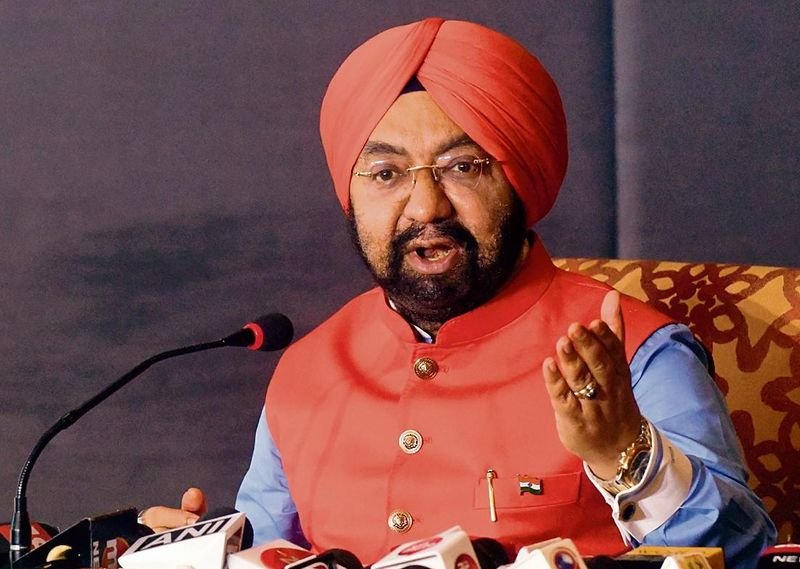








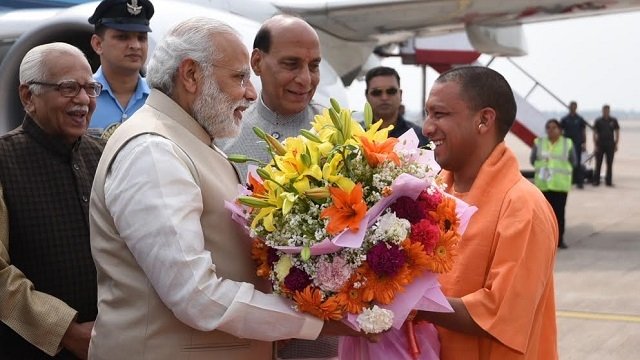
The installation of five-time parliamentarian Yogi Adityanath as the chief minister of India’s most populous state Uttar Pradesh has come a surprise for the media mainly due to his controversial remarks targeting the minority community. What came as an even bigger surprise is that Adityanath, who has represented Gorakhpur Lok Sabha constituency in eastern part of UP since 1998, occupies the top post in the state without any previous experience as an administrator. It is not that the BJP did not have leaders with administrative track record for the post of UP chief minister. There were persons like federal ministers like Rajnath Singh and Manoj Sinha. And yet the mantle fell on Aditynath. A careful study of the politics of UP, marked by caste and religious fault lines for long, and the recent landslide win of Hindu nationalist Bharatiya Janata Party make it amply clear that the choice of the 44-year-old priest-politician is a purely political decision.  Ádityanath, who belongs to the Thakur community, has often found himself in the spotlight because of his controversial statements against minorities on the issues of love affairs among Hindus and Muslims and religious conversions over the last few years. This has turned him into a poster boy of strident Hindutva ideology. He was considered as a hothead fringe element within BJP. But given the fact that the saffron party rode to power in UP with such a sweeping mandate (312 out of the total of 403 seats in the state assembly) on the back of a huge consolidation of votes in the elections cutting across caste and religious divides, Adityanath’s elevation as UP chief minister was guided by politics. Setting stage for 2019 In political circles, Adityanath’s appointment as chief minister is being viewed as a powerful signal to the electorate in UP ahead of the national elections in 2019. The BJP is convinced that the consolidation of votes in recent assembly elections in the state was no flash in the pan as was evident in Lok Sabha polls in 2014. This is a trend which the party believes has come here to stay at least till the 2019 national elections in a state where the politics of erstwhile ruling parties, Congress, Samajwadi Party and Bahujan Samaj Party, thrived on pandering to caste and religious fault lines.
 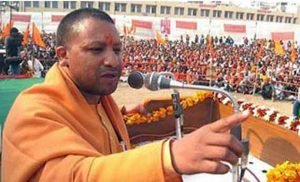 By choosing Adityanath to govern India’s largest state, the top BJP leadership has sent across a strong message that it will not be apologetic about its Hindu nationalist credentials and that the country must be ready to expect the unexpected from the party. After all, one should not lose sight of the fact that BJP leaders, during the electioneering in UP recently, had resorted to raising sensitive issues by talking about the previous Samajwadi Party and BSP governments had discriminated among communities. In anointing Adityanath, an administrative greenhorn, as chief minister, the BJP has no doubt taken a political gamble. Uttar Pradesh is one of the most backward states of India, and is crying for development on several fronts, including buttressing power and road infrastructures. Adityanath is seen in BJP circles as a politician in close touch with the grassroots not only in his own constituency Gorakhpur, but also in the eastern part of UP which is more backward than the western. The eastern part of UP has about 133 assembly seats. If BJP finds that the political message of having Adityanath as chief minister works till the next parliamentary polls, it’s fine. But if development take a back seat in the next two years, there is always scope for a mid-course correction because there will be still three years left for the next assembly elections in the state. (Pallab Bhattacharya contributed inputs for this article)