



Walking the talk: India’s surgical strikes on terror pads in Pakistan a fitting response to Uri attack
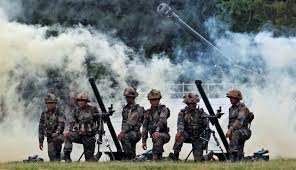
The audacious surgical strikes on seven terror launch pads across the Line of Control (LoC) by India has underscored India’s resolve to punish Pakistan for the Uri terror strike and its continued use of terrorism as an instrument of state policy.
The special operation launched by the Indian Army on the intervening night of September 28 and 29 in a nearly five-hour-long operation to destroy terror camps in Pakistan-occupied Kashmir has been widely welcomed in India and is seen a fitting retaliation for the killing of 18 Indian soldiers in Uri the terror strike.
The surgical strikes have also demonstrated to Pakistan and the world that India is not going to suffer any more Pakistan’s duplicity and nuclear blackmail by deploying techniques it considers necessary for the country’s honour and self-defence.
The details of the special operation are not clear, but reliable sources disclosed that the launch pads in PoK were located in the range of 2 to 3km from the LoC and were under constant surveillance for over a week.
Independent India is a faithful reflection of the legacy of our national movement: Vice President
India, the largest democracy in the world rejoices at the gains made by Nigerian democracy, the largest democracy in Africa, in the past 18 years. Our shared struggle against the colonial rule provides the foundations of India-Africa friendship. This mutually beneficial engagement continues to inspire and strengthen as we embark on elevating this partnership to a strategic level for the benefit the peoples of Africa and India. For this reason, a closer look at how perceptions developed is of relevance.
Cancellation of the SAARC Summit: Has India Succeeded in Isolating Pakistan Regionally?
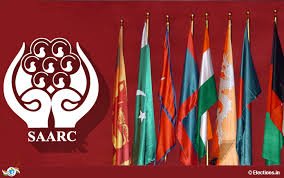
India’s announcement that it will not participate in the forthcoming 19th SAARC summit scheduled to be held in Islamabad did not come as a surprise. There was already a rethink afoot on India’s participation after the shabby treatment meted out to Home Minister Rajnath Singh during his visit to Islamabad to attend the SAARC Home Ministers’ meeting. Unlike during past conventions, the Pakistan media blacked out the speech that Singh delivered at the meeting. India contemplating the decision of not participating was reinforced when Vikas Swarup, the spokesperson of the Ministry of External Affairs, countered Indian High Commissioner Gautam Bambawale’s remarks in Karachi that “as of today Prime Minister Modi is looking forward to visiting Islamabad for the SAARC summit.”
Bilateral Issue or Regional Consensus?
Unlike in the past when SAARC summits have been postponed due to one member state’s decision not to attend the summit, this time India is not alone. Three other member states – Afghanistan, Bhutan and Bangladesh – have decided not to attend the summit in Islamabad and have conveyed their decisions to the current SAARC chair Nepal.
The reaction of each of these countries and their frustration with Pakistan has given rise to a new regional consensus that state sponsored terrorism cannot be dealt with only at the bilateral level. Bangladesh cited the lack of a congenial atmosphere and interference in its internal affairs by “one country” as the reason, while also firmly stating that it is its own decision not to attend the summit. The Ministry of Foreign Affairs issued a statement which read – “uncalled for reactions after the execution of war criminals in Bangladesh that amount to direct interference in the internal affairs of a sovereign country, which is totally unacceptable” – as the reason for Bangladesh’s abstention.