At first glance, the conflict appears distant from the core of India–US trade negotiations. But that would be a misreading of how deeply geopolitics now shapes economic outcomes. Energy markets, supply chains, financial flows, and strategic alignments are all in flux. In this shifting landscape, the India–US trade relationship is no longer merely about tariffs or market access; it is about resilience, trust, and shared strategic purpose.
Energy Security
The immediate impact of the US–Iran confrontation has been felt most acutely in energy markets. Oil price volatility has once again underscored the vulnerability of import-dependent economies like India. For the United States, now a major energy exporter, such volatility has a different implication; it strengthens its position as a relatively stable supplier within a turbulent global system. This divergence creates both tension and opportunity. India’s imperative is to secure affordable and diversified energy supplies; the US, meanwhile, seeks to deepen its role as a reliable partner in ensuring energy security for its allies.
This is where trade policy and strategic alignment begin to converge. Any forward movement on an India–US trade deal will increasingly have to account for energy flows, investment in clean technologies, and the broader transition away from volatile fossil fuel dependencies. A narrow focus on goods trade alone will no longer suffice.
Mitigating Geopolitical Risks
More fundamentally, the conflict has reinforced a trend that has been building for several years – the securitisation of economic relationships. The United States has been actively reconfiguring its trade partnerships to reduce exposure to geopolitical risk, particularly in regions prone to instability. In this context, India’s position as a large, democratic, and relatively stable economy becomes significantly more valuable.
However, this opportunity is not automatic. It must be earned through credible policy signals. For years, India–US trade discussions have been weighed down by familiar sticking points: digital trade regulations, agricultural access, tariffs on manufactured goods, and concerns over regulatory unpredictability. While these issues remain important, the strategic environment now demands a shift in emphasis – from transactional bargaining to structural alignment.
Friend-shoring
The provisional ceasefire between the US and Iran, while welcome, does little to reduce the underlying volatility of the region. If anything, it reinforces the likelihood of periodic disruptions. For global supply chains, this translates into a premium on diversification. The United States has already begun to operationalise ‘friend-shoring’ as a guiding principle – redirecting investment and sourcing towards trusted partners. India stands to benefit from this shift, but only if it can demonstrate the ability to absorb large-scale manufacturing and integrate seamlessly into global value chains.
This is where the trade deal assumes critical importance. It can serve as the institutional anchor that converts strategic intent into economic reality. Without such a framework, the risk is that opportunities will be diffused, captured piecemeal, or diverted to more agile competitors.
At the same time, India must approach the negotiations with a clear understanding of its own priorities. Strategic autonomy has long been a cornerstone of India’s foreign policy, and it remains relevant even in this evolving context. Closer economic alignment with the United States should not translate into dependence. Rather, it should be seen as part of a broader diversification strategy; one that enhances India’s options rather than constrains them.
This balance will be particularly important in areas such as technology and digital trade. The United States is keen to establish high-standard rules on data flows, intellectual property, and platform governance. India, on the other hand, has legitimate concerns around data sovereignty, domestic innovation, and regulatory space. Reconciling these positions will require creativity and mutual accommodation. The geopolitical moment provides an incentive to do so, but it does not eliminate the underlying differences.
Investment Flows
Another dimension that merits attention is the role of capital.
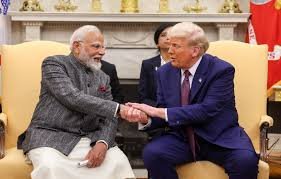
Geopolitical uncertainty tends to redirect global investment flows towards perceived safe havens. India has already benefited from this trend to some extent, but the scale can increase significantly if supported by a credible trade and investment framework with the United States. This would not only boost manufacturing but also accelerate the development of infrastructure, logistics, and clean energy systems.
Focus on Renewables
Indeed, the energy transition itself offers a compelling area for collaboration. The US–Iran conflict has once again highlighted the risks associated with overdependence on fossil fuels from geopolitically sensitive regions. For both India and the United States, this reinforces the urgency of investing in renewables, green hydrogen, and next-generation energy technologies. A forward-looking trade agreement could incorporate provisions that facilitate such collaboration, moving beyond the traditional confines of trade policy.
Yet, for all the opportunities, there are also risks. One of the lessons of recent years is that geopolitical alignment does not automatically translate into economic convergence. Domestic political considerations, protectionist impulses, and bureaucratic inertia can all act as constraints. In the United States, trade policy remains a politically sensitive domain, particularly in an election cycle. In India, concerns around protecting domestic industry and livelihoods continue to shape negotiating positions.
The challenge, therefore, is to craft a trade compact that is both ambitious and politically sustainable. This will require a departure from maximalist positions on both sides. Incrementalism has characterised India–US trade engagement in the past, but the current moment calls for a more decisive approach. Not necessarily a comprehensive free trade agreement, but a well-structured, phased arrangement that delivers tangible gains while building trust over time.
Ultimately, the significance of the US–Iran conflict for India–US trade lies not in its immediate effects, but in the way it accelerates existing trends. It sharpens the focus on resilience, reinforces the logic of diversification, and elevates the strategic dimension of economic policy. In doing so, it creates a window of opportunity; one that may not remain open indefinitely.
India’s Choice
For India, the task is to move with both clarity and confidence. To recognise that in a world marked by uncertainty, partnerships with trusted economies can serve as stabilising anchors. And to ensure that its engagement with the United States is shaped not by compulsion, but by a clear-eyed assessment of mutual benefit.
For the United States, the imperative is equally clear. If it seeks to build a network of reliable economic partners, it must be willing to invest in those relationships, through market access, regulatory cooperation, and long-term commitment.
The ceasefire in West Asia may be provisional, but the lessons it offers are enduring. In an era where geopolitics and economics are increasingly intertwined, the future of trade will be written not just in negotiating rooms, but in the shadow of global events. The India–US partnership, if shaped wisely, can emerge stronger from this moment – more resilient, more strategic, and more consequential than ever before.
This article is exclusively written for Centre for Global India Insights and India and the World magazine. For re-publication, write to ceo@cgiiglobal.org, indiawritesgroup@gmail.com



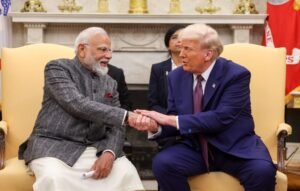
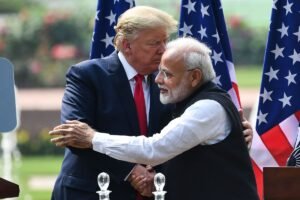







Trade Under Fire: How Geopolitics is Recasting India–US Economic Compact
At first glance, the conflict appears distant from the core of India–US trade negotiations. But that would be a misreading of how deeply geopolitics now shapes economic outcomes. Energy markets, supply chains, financial flows, and strategic alignments are all in flux. In this shifting landscape, the India–US trade relationship is no longer merely about tariffs or market access; it is about resilience, trust, and shared strategic purpose.
Energy Security
The immediate impact of the US–Iran confrontation has been felt most acutely in energy markets. Oil price volatility has once again underscored the vulnerability of import-dependent economies like India. For the United States, now a major energy exporter, such volatility has a different implication; it strengthens its position as a relatively stable supplier within a turbulent global system. This divergence creates both tension and opportunity. India’s imperative is to secure affordable and diversified energy supplies; the US, meanwhile, seeks to deepen its role as a reliable partner in ensuring energy security for its allies.
This is where trade policy and strategic alignment begin to converge. Any forward movement on an India–US trade deal will increasingly have to account for energy flows, investment in clean technologies, and the broader transition away from volatile fossil fuel dependencies. A narrow focus on goods trade alone will no longer suffice.
Mitigating Geopolitical Risks
More fundamentally, the conflict has reinforced a trend that has been building for several years – the securitisation of economic relationships. The United States has been actively reconfiguring its trade partnerships to reduce exposure to geopolitical risk, particularly in regions prone to instability. In this context, India’s position as a large, democratic, and relatively stable economy becomes significantly more valuable.
However, this opportunity is not automatic. It must be earned through credible policy signals. For years, India–US trade discussions have been weighed down by familiar sticking points: digital trade regulations, agricultural access, tariffs on manufactured goods, and concerns over regulatory unpredictability. While these issues remain important, the strategic environment now demands a shift in emphasis – from transactional bargaining to structural alignment.
Friend-shoring
The provisional ceasefire between the US and Iran, while welcome, does little to reduce the underlying volatility of the region. If anything, it reinforces the likelihood of periodic disruptions. For global supply chains, this translates into a premium on diversification. The United States has already begun to operationalise ‘friend-shoring’ as a guiding principle – redirecting investment and sourcing towards trusted partners. India stands to benefit from this shift, but only if it can demonstrate the ability to absorb large-scale manufacturing and integrate seamlessly into global value chains.
This is where the trade deal assumes critical importance. It can serve as the institutional anchor that converts strategic intent into economic reality. Without such a framework, the risk is that opportunities will be diffused, captured piecemeal, or diverted to more agile competitors.
At the same time, India must approach the negotiations with a clear understanding of its own priorities. Strategic autonomy has long been a cornerstone of India’s foreign policy, and it remains relevant even in this evolving context. Closer economic alignment with the United States should not translate into dependence. Rather, it should be seen as part of a broader diversification strategy; one that enhances India’s options rather than constrains them.
This balance will be particularly important in areas such as technology and digital trade. The United States is keen to establish high-standard rules on data flows, intellectual property, and platform governance. India, on the other hand, has legitimate concerns around data sovereignty, domestic innovation, and regulatory space. Reconciling these positions will require creativity and mutual accommodation. The geopolitical moment provides an incentive to do so, but it does not eliminate the underlying differences.
Investment Flows
Another dimension that merits attention is the role of capital.
Geopolitical uncertainty tends to redirect global investment flows towards perceived safe havens. India has already benefited from this trend to some extent, but the scale can increase significantly if supported by a credible trade and investment framework with the United States. This would not only boost manufacturing but also accelerate the development of infrastructure, logistics, and clean energy systems.
Focus on Renewables
Indeed, the energy transition itself offers a compelling area for collaboration. The US–Iran conflict has once again highlighted the risks associated with overdependence on fossil fuels from geopolitically sensitive regions. For both India and the United States, this reinforces the urgency of investing in renewables, green hydrogen, and next-generation energy technologies. A forward-looking trade agreement could incorporate provisions that facilitate such collaboration, moving beyond the traditional confines of trade policy.
Yet, for all the opportunities, there are also risks. One of the lessons of recent years is that geopolitical alignment does not automatically translate into economic convergence. Domestic political considerations, protectionist impulses, and bureaucratic inertia can all act as constraints. In the United States, trade policy remains a politically sensitive domain, particularly in an election cycle. In India, concerns around protecting domestic industry and livelihoods continue to shape negotiating positions.
Ultimately, the significance of the US–Iran conflict for India–US trade lies not in its immediate effects, but in the way it accelerates existing trends. It sharpens the focus on resilience, reinforces the logic of diversification, and elevates the strategic dimension of economic policy. In doing so, it creates a window of opportunity; one that may not remain open indefinitely.
India’s Choice
For India, the task is to move with both clarity and confidence. To recognise that in a world marked by uncertainty, partnerships with trusted economies can serve as stabilising anchors. And to ensure that its engagement with the United States is shaped not by compulsion, but by a clear-eyed assessment of mutual benefit.
For the United States, the imperative is equally clear. If it seeks to build a network of reliable economic partners, it must be willing to invest in those relationships, through market access, regulatory cooperation, and long-term commitment.
The ceasefire in West Asia may be provisional, but the lessons it offers are enduring. In an era where geopolitics and economics are increasingly intertwined, the future of trade will be written not just in negotiating rooms, but in the shadow of global events. The India–US partnership, if shaped wisely, can emerge stronger from this moment – more resilient, more strategic, and more consequential than ever before.
This article is exclusively written for Centre for Global India Insights and India and the World magazine. For re-publication, write to ceo@cgiiglobal.org, indiawritesgroup@gmail.com
Shishir Priyadarshi
Related Posts
Modi-Macron bonding: Innovation powers India-France ties
Indian Ocean at Strategic Crossroads
China’s Calculus in the Iran Conflict
India, US focus on restoring trust, strategic convergence
Writing a green & blue chapter in India-Norway strategic partnership
A new dawn in India-Nordic partnership
Latest Events
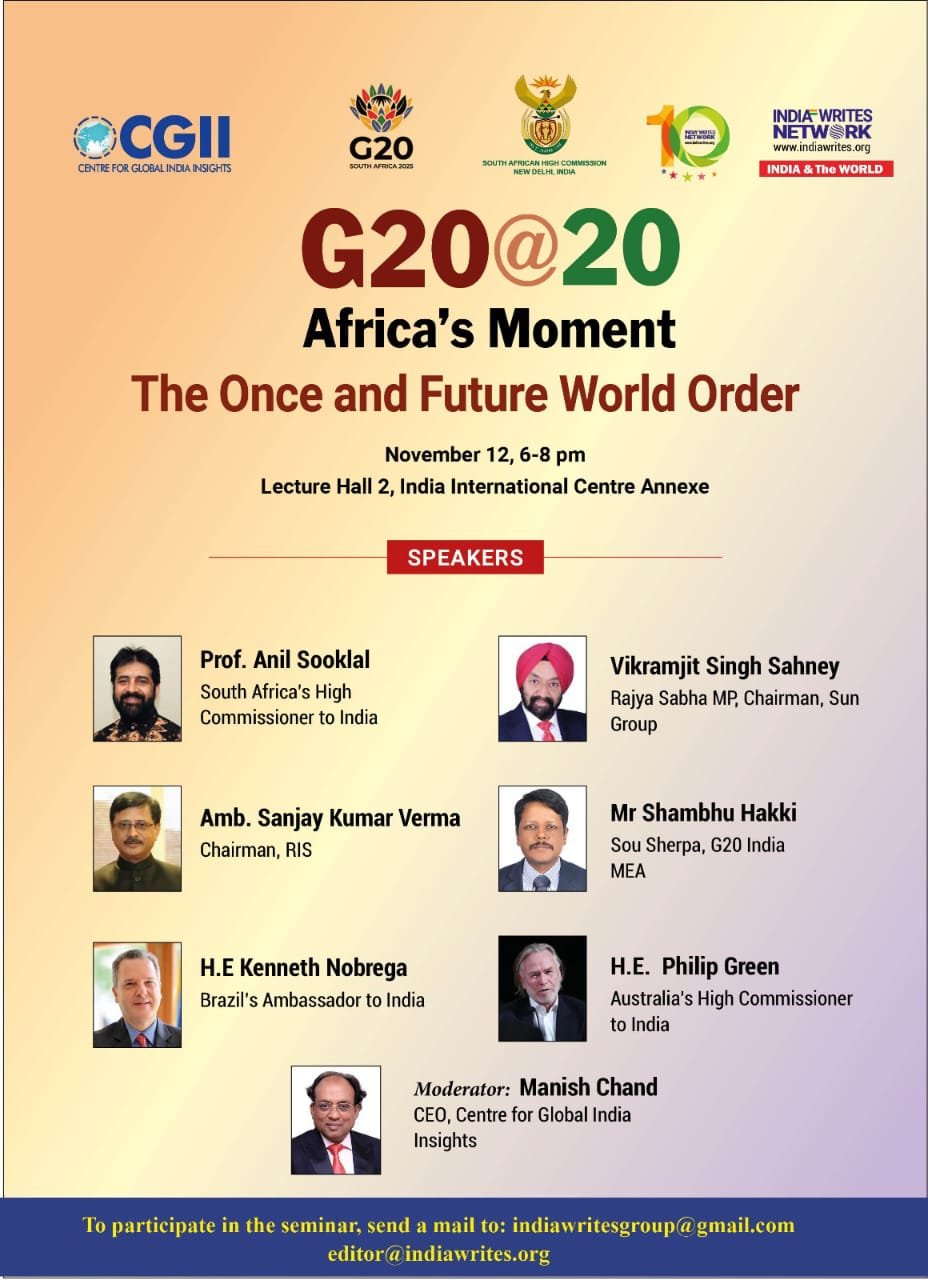
G20@20: Africa’s Moment – The Once and Future World Order
Speakers
Professor Anil Sooklal
Kenneth da Nobrega
Manish Chand
Ambassador Philip Green
sanjay Kumar Verma
Shambhu Hakki
Vikramjit Singh Sahney
MPs, diplomats laud Operation Sindoor, call for national unity to combat Pakistan-sponsored terror
Speakers
Aparajita Sarangi
Brij Lal
Dr Amar Patnaik
Manish Chand
Priyanka Chaturvedi
Sujan Chinoy
Yashvardhan Kumar Sinha
BRICS summit in Rio to focus on Global South, local currency trade
Speakers
Dammu Ravi
Denis Alipov
Ina Hagniningtyas Krisnamurthi
Jyoti Vij
Kamel Zayed Kamel Galal
Kenneth da Nobrega
Manish Chand
Book
India’s G20 Legacy: Shaping a New World Order
Editor: Manish Chand
Pages: 206
Publisher: Pentagon Press LLP
Cover Price: INR 995
In Conversation
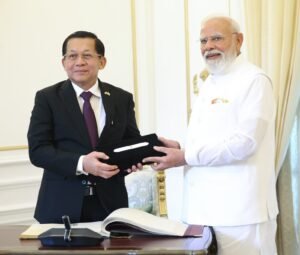
Myanmar’s President’s visit to India has taken relations to higher level: Rajiv Bhatia
In The Press
Rescuing G20 from North-South divide: Ubuntu Moment
The Sunday Guardian: India calls for strengthened BRICS cooperation
Daily Excelsior: Ahead BRICS summit in Rio, envoys call for greater focus on combating terrorism
Rediff: BRICS Summit 2024: Focus on National Currencies
Latest From CGII
Modi-Macron bonding: Innovation powers India-France ties
Indian Ocean at Strategic Crossroads
China’s Calculus in the Iran Conflict
India, US focus on restoring trust, strategic convergence
Writing a green & blue chapter in India-Norway strategic partnership
A new dawn in India-Nordic partnership
The Journal
India’s G20 Journey – Scaling A New Summit
India’s G20 Moment: Hope, Healing and Harmony