
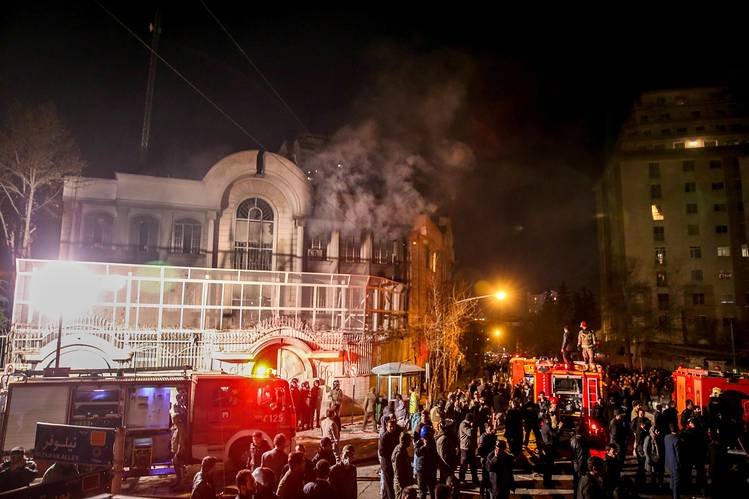
Hitting a new low in the relations between the two West Asian regional powers, Saudi Arabia has cut off diplomatic ties with Iran after protesters attacked its embassy in Tehran. The attackers were protesting the execution of a Shiite cleric Nimr al-Nimr, whose killing has triggered violence. Making the announcement at a media gathering in Riyadh, Saudi Arabia’s Foreign Minister Adel al-Jubeir said on January 3 that Iranian diplomats had 48 hours to leave the kingdom. The diplomatic fallout come as Iran’s supreme leader said Saudi Arabia would face “divine revenge” for executing Mr Nimr. Western nations have expressed concern over the escalating sectarian tensions between Sunnis and Shias in the region. Saudi Arabia “is breaking off diplomatic ties with Iran and requests that all members of the Iranian diplomatic mission leave within 48 hours,” Mr Jubeir stated. “Iran’s history is full of negative interference and hostility in Arab issues, and it is always accompanied by destruction,” he added. He further accused Tehran of seeking to “destabilise” the region. A mob attacked the Saudi embassy in Tehran on January 2, and a consulate in second city Mashhad in the backdrop of protests at Mr Nimr’s execution. Saudi authorities had asked their Iranian counterparts to ensure security at the embassy but they did not cooperate and failed to protect it, Mr Jubeir stated. Mr Nimr was one of the rallying figures behind 2011 anti-government protests in oil-rich eastern Saudi Arabia, where Shiites have complained of being neglected and marginalised by the Sunni dominated sect. Mr Nimr was sentenced to death along with 46 other people. The list included Shiite activists and convicted Sunni militants, who have been singled out by the Saudi interior ministry, of being involved in Al Qaeda attacks that killed dozens in 2003 and 2004. The breakdown of diplomatic ties between the two regional powers is set to exacerbate regional instability and could also be a setback to finding a solution to the festering Syria crisis where both the countries have a crucial role to play.