
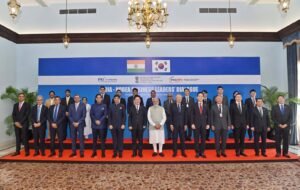


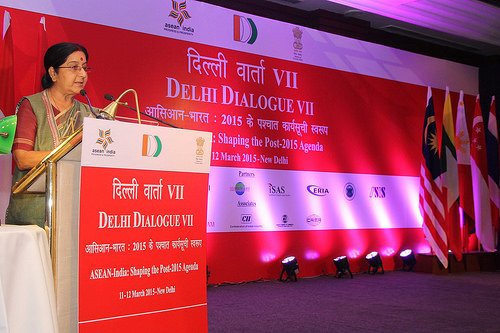
India’s multi-faceted ties with the 10-nation ASEAN are set to acquire renewed energy and momentum as the two growth zones, home to around 1.8 billion people, gear up to celebrate the 25th anniversary of ASEAN-India relations in 2017. Against this backdrop, the annual Track 1.5 dialogue between India and ASEAN, which boats combined GDP of around $4.7 trillion, is expected to generate fresh ideas and initiatives to bolster the strategic partnership between the two sides and impart added traction to India’s Act East policy. The eighth edition of the ‘Delhi Dialogue,’ which is scheduled to be held in New Delhi from February 17-19m will focus on strengthening political, security, economic and socio-cultural engagements between ASEAN and India. The event has been held annually since 2009. Themed ‘ASEAN-India relations: A new paradigm,’ the ‘Delhi Dialogue’ will seek to build upon the advances that have been made in 2015 between India and ASEAN, according to Secretary (East), External Affairs Ministry, Anil Wadhwa. The dialogue will have a business session on February 17, a ministerial session on February 18 and an academic session on February 19. For the first time a full day is dedicated to a business session as the economic linkages between the two regions continues to grow. According to Mr Wadhwa, Day 1 will witness a panel discussions on four or five main topics like co-manufacturing, creating manufacturing value chains, what do mega trade blocs RCEP and TPP mean for ASEAN and India, infrastructure and sustainable energy for realizing India-ASEAN economic integration, promoting cross-border trade with ASEAN and capitalising on comparative advantage and ‘Startups and Digitisation: The Way Forward’. RCEP and TPP The ASEAN-India Plan of Action for the period of 2016-2020, which was adopted during the India-ASEAN summit in Kuala Lumpur in November 2015, has laid down a roadmap for the growth of this crucial partnership. The negotiations for the Regional Comprehensive Economic Partnership (RCEP) between ASEAN and its six Free Trade partners India, China, Australia, New Zealand, Japan and South Korea are expected to be completed by the end of 2016. The RCEP, which is seen as a competitor to the more powerful Trans-Pacific Partnership (TPP) bloc which has already completed negotiations and has been signed between US and 11 Pacific-Rim countries, would be discussed during the dialogue. Act East Policy India’s ‘Act East Policy’ seeks to enhance connectivity between India and Southeast Asia through Northeast India, which is crucial for the success of India’s policy. As a part of the ‘Delhi Dialogue,’ some of the Chief Ministers of the Northeastern states have been invited to participate and give their views and suggestions on what needs to be done. The trilateral highway which connects India and Thailand through Myanmar has made plenty of progress and will be completed by 2018, according to Mr Wadhwa. The Motor Vehicles Agreement between India and ASEAN is expected to be signed by June-July 2016. India’s Commerce and Industry ministry is also working towards the process of establishing a project development fund with a corpus of Rs 500 crore ($76 million approx). The aim of this fund is to help create manufacturing hubs in Cambodia, Lao PDR, Myanmar and also in Vietnam. South China Sea The dialogue will also see an animated discussion on navigation in South China Sea under the security architecture. India has been vocal in recent times on the freedom of navigation in the disputed region. India has also entered into an oil and gas exploration agreement with Vietnam which gives it access to the South China sea.