









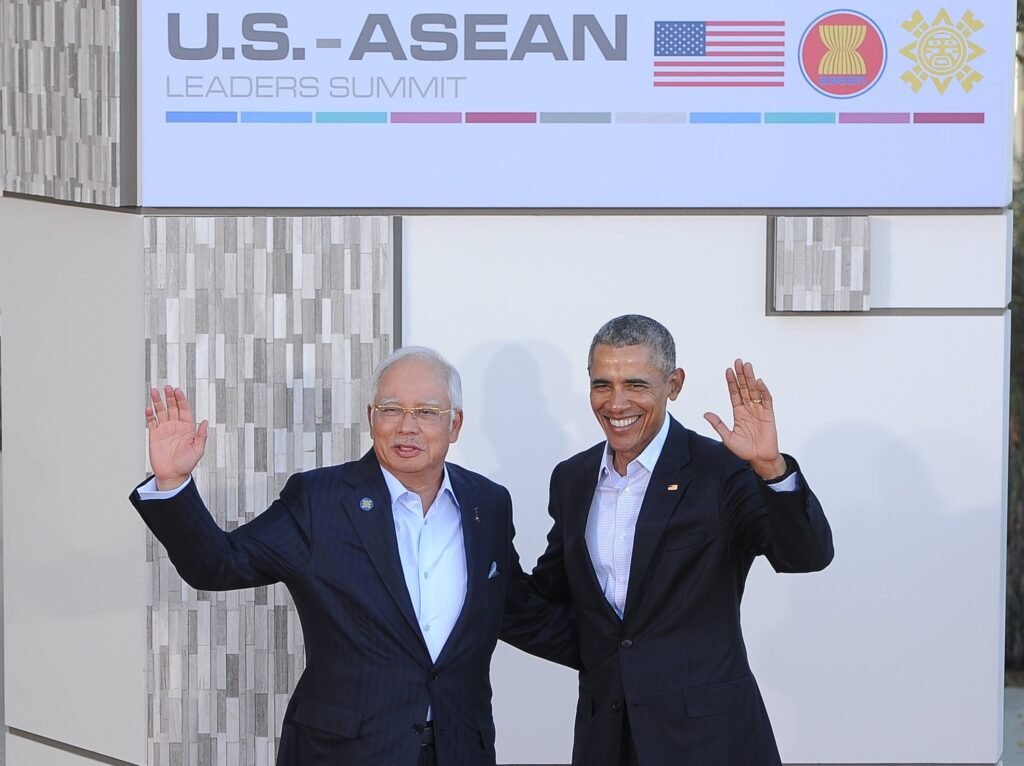
The geopolitical tensions in the disputed South China Sea region was the centre of the focus during the two-day US-ASEAN summit at Sunnylands in California (February 15-16). While the two sides discussed an entire spectrum of issues, including enhancing economic cooperation, security and climate change, the churn in the South China Sea dispute dominated discussions between US President Barack Obama and the leaders of ASEAN countries. China’s growing assertion in the Asia-Pacific has been a major cause of concern for other countries in the region and the US. The summit culminated in a joint statement, with a renewed emphasis was on freedom of navigation in the disputed South China Sea region as per the universally recognized principles of international law and the 1982 United Nations Convention of the Law of the Sea (UNCLOS). “The US will continue to fly, sail and operate wherever international law allows, and will support the right of all countries to do the same,” US President Barack Obama said. Addressing the media after the summitm Mr Obama said that the US and ASEAN discussed the need for tangible steps in South China Sea to lower tensions including the halt to further reclamation, new construction and militarisation of disputed areas. “We will continue to help our allies and partners strengthen their maritime capabilities, and we discussed how any disputes between claimants in the region must be resolved peacefully, through legal means, such as the upcoming arbitration ruling under the UN Convention of the Law of the Seas, which the parties are obligated to respect and abide by,” Mr Obama said. The US-ASEAN joint statement also emphasised on the need to have mutual respect for sovereignty and territorial integrity. “Mutual respect for the sovereignty, territorial integrity, equality and political independence of all nations by firmly upholding the principles and purposes of the Charter of the United Nations, the ASEAN Charter and international law,” the joint statement read. Pivot to Asia The Obama administration has been working towards rebalancing Asia or better known as the pivot to Asia, which would help it to counter China’s suspected hegemonic designs in the region. Mr Obama spoke about the need to have a unified voice so that it can help advance security, opportunity in the Asia-Pacific and also advance human dignity across the world. The signing of the Trans-Pacific Partnership between US and 11 other countries in the Pacific Rim is expected to change the landscape of global trade. The TPP is being seen as crucial for the success of the US Rebalance to Asia. ASEAN has a population of more than 600 million and has a GDP of around $4.7 trillion. The summit also focused on improving people-to-people contact and joint projects for fostering innovation. The two sides are set to step up cooperation across a spectrum of global issues such as terrorism and violent extremism, trafficking in persons, drug trafficking. They also agreed to have a shared commitment to promote security and stability in cyberspace, consistent with norms of responsible state behavior. (Sridhar Ramaswamy contributed inputs for this article)