
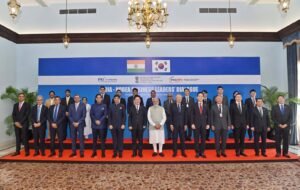
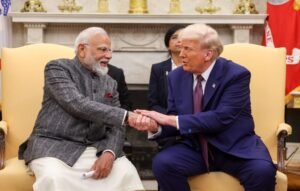
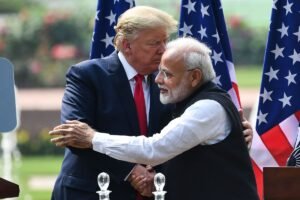
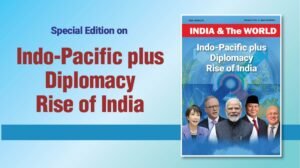





I am very pleased to be present here for the second Australia-India-Japan-United States Consultations on regional and global issues of common interest. Foremost, I would like to thank Japan for hosting us in these challenging times and appreciate their warm and gracious hospitality.The fact that we are meeting here today, in person, despite the global pandemic, is a testimony to the importance that these Consultations have gained, particularly in recent times. Our world is significantly different today than what it was when we last met in New York in September 2019. The Covid-19 pandemic has brought about a profound transformation globally. The events of this year have clearly demonstrated how imperative it is for likeminded countries to coordinate responses to the various challenges that the pandemic has brought to the fore. As we collectively navigate these uncharted waters, we seek to emerge from the pandemic more resilient than ever before.You are all aware that India assumes membership of the UN Security Council next year. We look forward to seeking collective solutions to global challenges,including global recovery from the pandemic and reform of multilateral institutions. As vibrant and pluralistic democracies with shared values, our nations have collectively affirmed the importance of maintaining a free, open and inclusive Indo-Pacific. We remain committed to upholding the rules-based international order, underpinned by the rule of law, transparency, freedom of navigation in the international seas, respect for territorial integrity and sovereignty and peaceful resolution of disputes. Our objective remains advancing the security and the economic interests of all countries having legitimate and vital interests in the region. It is a matter of satisfaction that the Indo-Pacific concept has gained increasingly wider acceptance. The Indo-Pacific Ocean’s Initiative that we tabled at the East Asia Summit last year is a development with considerable promise in that context. I look forward to our discussions today on important issues such as connectivity and infrastructure development, security including counter-terrorism; cyber and maritime security; and the stability and prosperity in the region. In this spirit, I look forward to engaging with our partners at the Consultations today. Excerpts of EAM remarks at 2nd Quad Ministerial Meeting in Tokyo, Japan