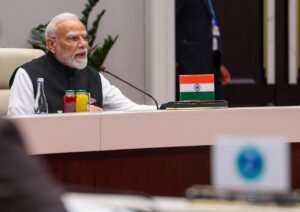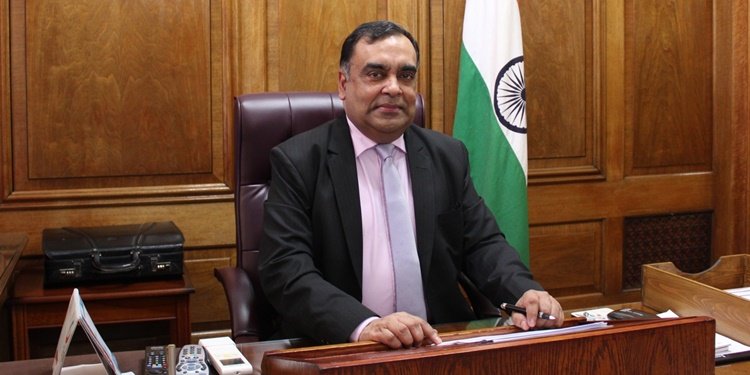
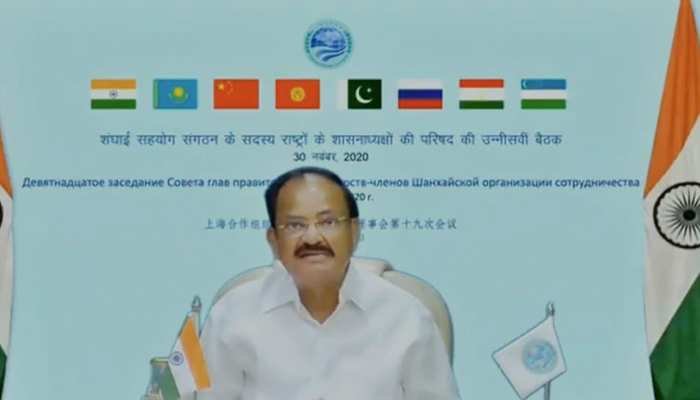
By Sanjeeb Baruah In an oblique reference to Pakistan and China in his speech at the 19th Summit of the Shanghai Cooperation Organization, India’s Vice President Venkaiah Naidu has said that terrorism and nontransparent trade practices are the biggest challenges for the countries of the SCO. The vice-president directed his ire at the former for giving a safe-haven to terrorists, and the latter for unclear trade policies of the Belt and Road Initiative. “The most important challenge faced by us in the region is terrorism, particularly cross-border terrorism. Terrorism is truly the enemy of humanity. It is a scourge we need to collectively combat,” Mr Naidu said. He also spoke of the need for trade partners to be “trustworthy and transparent” and compliant with global rules, in criticism aimed at China’s trade practices. Mr Naidu, who stood in for Prime Minister Narendra Modi at the virtual conference on November 30, said that India remains “concerned about threats emerging from ungoverned spaces and are particularly concerned about states that leverage terrorism as an instrument of state policy”. However, a joint communique issued after the meeting did not refer to his terrorism or trade concerns. It said that all countries in the SCO are committed to cooperation on the “prevention and control of infectious and non-infectious diseases, response to sanitary and epidemiological emergencies, elimination of the consequences of the COVID-19 pandemic, countering the circulation of counterfeit medicines and the development of medical tourism.” 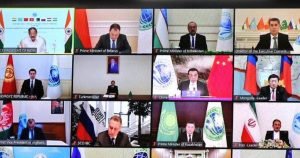 In his remarks, Mr Naidu had said that a “sustainable” economic recovery depended more on compliance with multilateral trade rules and transparent practices. He called for reform of global institutions, including the World Health Organization (WHO). He also drew attention to the fact that over 60 percent of the immunization vaccines produced globally are manufactured in India, and three of the 30 indigenously made drugs are in advanced stages of development. “This global vaccine production and delivery capacity will be used to help all the countries in fighting this crisis”, he added. In a sign of China’s continuing stranglehold over the Eurasian grouping, all other SCO members except India have expressed support to China’s One Belt One Road initiative in the joint communiqué and pledged “joint implementation” of projects with the Eurasian Economic Union. India had refused to join the BRI in 2017 over its lack of “transparency and sustainability”, and execution of the project in Pakistan-occupied Kashmir.