The 18th BRICS Summit held in New Delhi marked a transformative moment for the 11-nation grouping. Convening under the theme “Building for Resilience, Innovation, Cooperation and Sustainability,” the summit moved beyond its traditional agenda to focus on enhancing cross-border digital and scientific integration.
As the first summit hosted under India’s chairship for the expanded 11-member framework, including newer entrants like Egypt, Ethiopia, Iran, the UAE, and Indonesia, the meeting underscored a collectively shared ambition: transitioning BRICS from an economic alliance into a global hub for technological sovereignty and inclusive growth in the face of global geo-political instability created largely by the United States.
The New Delhi Declaration outlines a roadmap for collaboration in technology, artificial intelligence, Digital Public Infrastructure (DPI), and startup ecosystems. Rather than approaching technologies as isolated commercial tools, the summit established frameworks that view them as structural vehicles for economic resilience and democratic tech distribution across the Global South. India’s guidance on AI for humanity and people-centric adoption of AI & other technologies, as already mainstreamed into India’s economy, found its way into the Declaration with overwhelming support from the member counters.
Redefining Global Tech Governance & AI
The New Delhi Summit addressed tech governance against the backdrop of steep digital divides and concentrated market power. BRICS leaders called for more equitable global governance, explicitly passing frameworks to make emerging tech safer, open, and more inclusive, as always espoused by India.
The adoption of the BRICS Leaders’ Statement on the Global Governance of Artificial Intelligence was a major step forward. The framework represents a notable shift from western-led risk models, moving away from standard technical design metrics to view AI security as a structural, sovereign institutional responsibility. Key priorities under this governance agenda include:
- Combating Synthetic Harms: The grouping called for unified technical detection standards against data threats within the digital realm. The primary focus is preventing malicious software, coordinated disinformation, hate speech, and deepfakes from destabilising local socio-economic landscapes.
- Resource Democratization: True ethical governance requires lowering development barriers. The declaration explicitly pushes for wider, affordable access to computational resources, high-performance computing assets, and massive datasets for developing nations to counter algorithmic biases trained only on western data.
- In-Situ Operational Oversight: Moving beyond simple pre-deployment checklists, member states agreed to India’s pioneering tech regulation paradigm of a principle-based approach. This focuses on monitoring software during real-world deployments to prevent algorithmic discrimination in critical public applications like banking, justice, and healthcare.
- The GIFT City Risk Lab: To turn these concepts into practical policies, the leaders welcomed the proposal of a specialized Risk Lab at GIFT City, Gujarat. This cross-border testing environment will function as an international sandbox, allowing developers to test advanced models against joint safety and reliability parameters before deploying them commercially across the bloc.
Deepening Advanced Scientific Fields
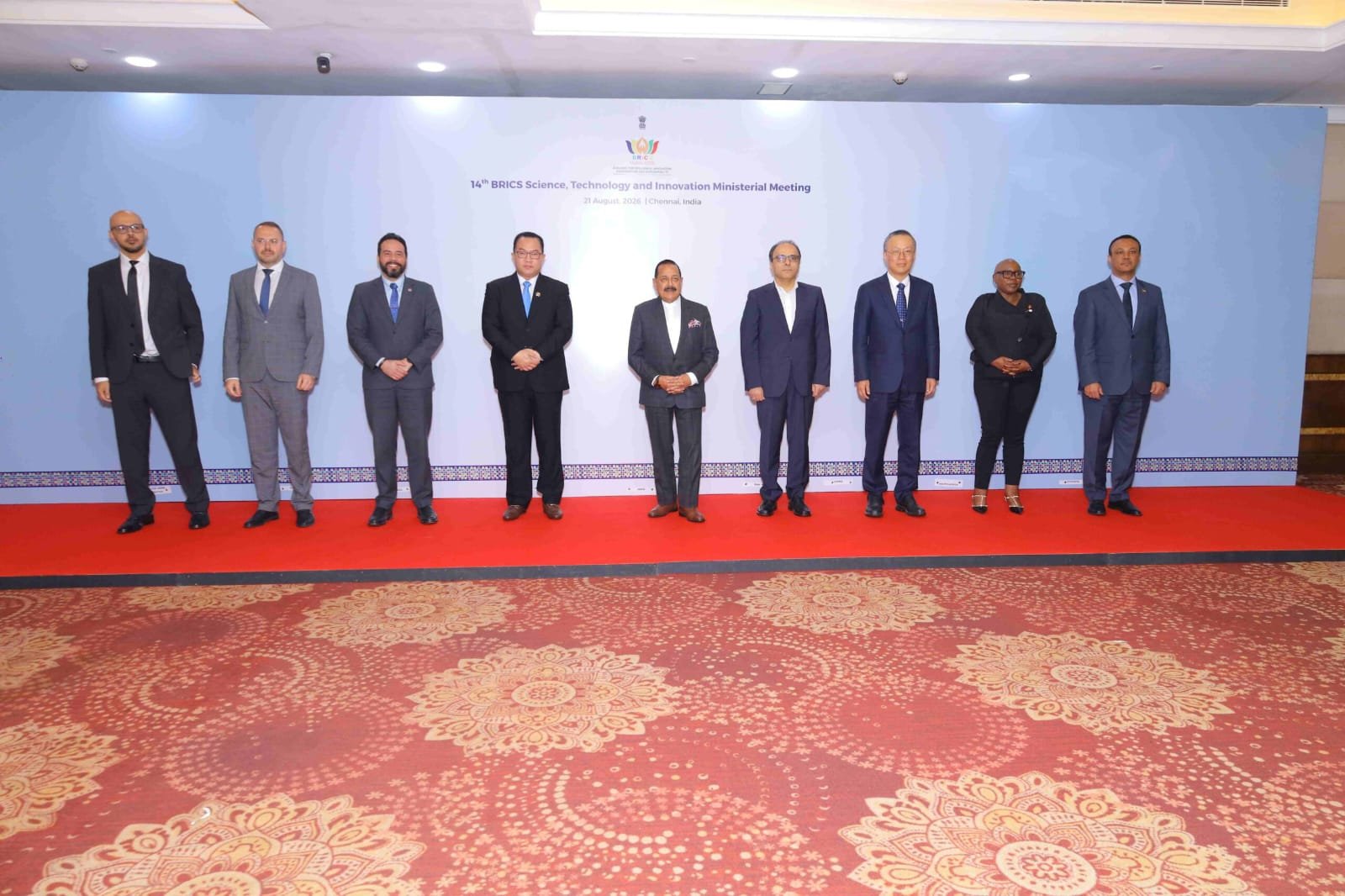
The summit built on the conclusions of the 14th BRICS Science, Technology and Innovation (STI) Ministerial Meeting. Nations finalized plans to share high-performance computing assets and open-source models for quantum computing, biotechnology, and advanced manufacturing.
To sustain this, the grouping adopted an action plan for the Global Research Advanced Infrastructure Network (GRAIN). This network allows member countries to pool scientific talent and capital into large-scale research initiatives, lowering individual costs and building collective self-reliance.
DPI: Multipolar Digital Economy
One of the most consequential outcomes of the New Delhi Summit was the structural embrace of India’s Digital Public Infrastructure (DPI). Spurred by India’s domestic success with population-scale open-source platforms (such as UPI, Aadhaar, and DigiLocker), the bloc framed DPI as a core strategy for digital inclusion.
The New Delhi Declaration formalizes a shift toward a multipolar digital economy. It features key agreements tailored to construct a shared digital architecture:
- The BRICS DPI Repository: A shared, open-access clearinghouse where member countries can host and download scalable, open-source software blocks. This repository enables nations to deploy their own local identity systems, digital ledgers, and payment platforms without getting locked into expensive, proprietary systems managed by private tech giants, mostly anchored in the developed world.
- Cross-Border Interoperability & Payments: The declaration prioritized linking national payment systems to speed up cross-border transactions and lower costs. This works in tandem with local-currency payment rails to reduce reliance on legacy financial networks. The declaration noted India’s massive success at allowing UPI’s integration with the local payment rails in several countries (11 now).
- Focus Group on Digital Public Infrastructure: Established as a formal mechanism within the Digital BRICS Forum, this specialized body is tasked with standardizing APIs, data-privacy protocols, and security compliance to ensure systems remain compatible and seamless across borders.
DPI Strategy: Individual Member State Responses
The adoption of the Indian DPI architecture model was welcomed with targeted operational strategies across the expanded membership:
- Brazil: Expressed significant interest in adopting the open-source architecture blocks to bridge its rural digital inclusion gaps. Brazil intends to integrate these tools into its existing ‘Pix’ payment infrastructure, expanding digital financial rails into regional agricultural sectors.
- South Africa: Stressed that a sovereign DPI repository ensures technical autonomy. South Africa views this framework as a cornerstone for African digital integration, offering a viable route to build identity and transaction systems decoupled from external proprietary networks.
- United Arab Emirates (UAE): Focused heavily on the regulatory and logistical alignments of connecting their domestic corporate ecosystems with the unified BRICS digital repository, ensuring high data protection compliance.
- Russia & China: Highlighted the critical role of data sovereignty, welcoming the repository as a model to construct highly protected public data ledgers and public goods.
Catalyzing Startup and Innovation Ecosystem
With the expanded bloc representing roughly 40% of global GDP and nearly half of the world’s population, creating market bridges for early-stage companies was identified as vital for long-term growth. The New Delhi Summit introduced financial and market-access pathways designed to scale startups internationally.
| Initiative / Framework |
Primary Objective |
Key Impact / Focus Area |
| BRICS Startup Innovation Fund |
Address early and growth-stage capital bottlenecks. |
Voluntary public and private funding pools to help high-potential tech startups to scale across borders. |
| BRICS Incubator Network |
Link domestic technology incubators and national nodal agencies. |
Smooths out global regulatory hurdles and secures market entry for foreign expansion. |
| Startup Knowledge Hub & Forum |
Institutionalize mentoring and policy alignment. |
Provides a centralized portal for sharing regulatory sandboxes, talent pools, and intellectual property support a first of its kind. |
37 Deep-Tech Cohort via ‘Bharat Innovates’
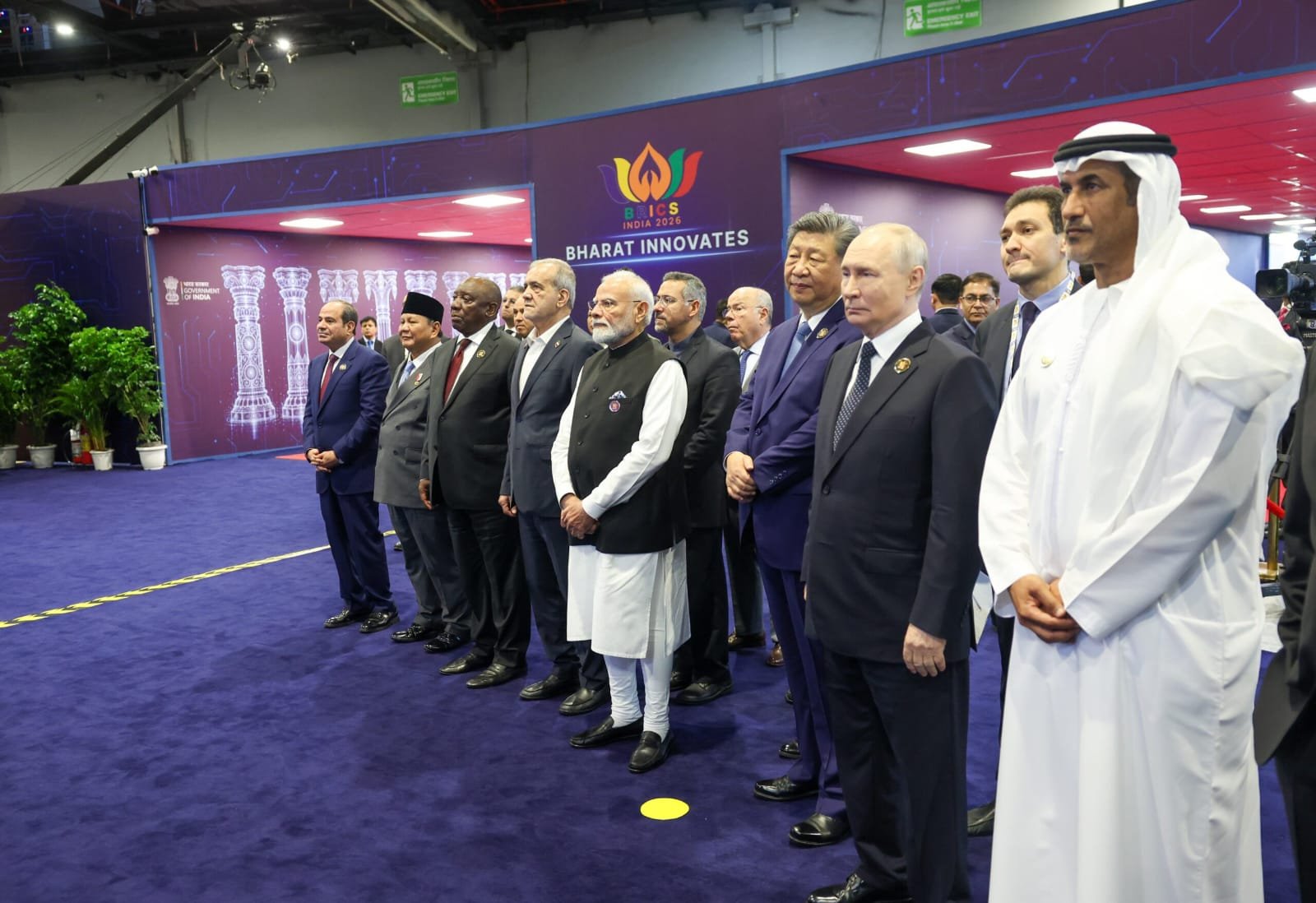
Organised by the Ministry of Education in coordination with the Ministry of External Affairs, the BRICS Bharat Innovates Exposition at Bharat Mandapam served as a concrete application of these startup frameworks. The exposition featured an elite cohort of 37 Indian deep-tech startups, selected from a broader group that participated in a maiden exhibition in Nice, France. These ventures are closely linked to Higher Education Institutions (HEIs) and national research parks. They represent practical, laboratory-to-market solutions.
Deep-Tech Cohort Sustainable Development Goals (SDGs) Matching Matrix
| Cohort Focus Area |
Core Technical Solution Showcase |
Primary SDG Match |
Secondary SDG Match |
| Lifesaving MedTech & Healthcare |
AI-driven point-of-care cervical cancer screening devices (<60 sec returns); portable maternal-foetal distress monitoring arrays. |
SDG 3: Good Health & Well-being |
SDG 10: Reduced Inequalities |
| Sustainable Energy & Infrastructure |
Floating solar PV arrays using marine-grade composite materials; rare earth-free electric vehicle (EV) powertrains. |
SDG 7: Affordable & Clean Energy |
SDG 13: Climate Action |
| Next-Gen Frontier Technologies |
Full-stack maritime robotic inspection craft; quantum computing software configurations; localized semiconductor materials. |
SDG 9: Industry, Innovation & Infrastructure |
SDG 14: Life Below Water |
Specialized Innovation Networks
The summit also moved beyond generic tech targets, creating vertical innovation networks to tackle shared real-world challenges:
- BRICS Network on Digital Agriculture: Centered at IIT Delhi, this initiative applies AI, IoT sensors, and geospatial intelligence to improve climate-resilient farming and secure supply chains.
- Digital Centre of Excellence for Smart Grids: Focuses on using advanced software to integrate renewable energy sources into erratic national power grids.
- WISE (Women in Innovation, Science and Entrepreneurship): A targeted initiative addressing equity gaps by offering funding pools, mentorship pipelines, and policy advocacy for women leading STEM startups.
From Declarations to Sustained Implementation
The 18th BRICS Summit in New Delhi significantly updated the grouping’s strategic focus. By building institutional pipelines like the DPI Repository, the Startup Innovation Fund, and the Incubator Network, the grouping moved beyond high-level consensus toward practical, day-to-day technological integration.
For member nations, these frameworks offer a viable blueprint for long-term development. However, the ultimate success of the New Delhi Declaration depends on sustained national action. As the grouping enters its third decade, its global influence will be measured by how effectively it executes these plans — transforming diplomatic access into measurable domestic innovation, secure digital systems, and thriving commercial startups across the Global South.
References
Business Standard. (2026, September 12). Brics 2026: Delhi Declaration backs startup fund, incubator network. Business Standard. https://www.business-standard.com/companies/start-ups/brics-2026-delhi-declaration-backs-startup-fund-incubator-network-126091200750_1.html
Drishti IAS. (2026, September 14). 18th BRICS Summit 2026: Adoption of the New Delhi Declaration. Drishti IAS Daily News Analysis. https://www.drishtiias.com/daily-updates/daily-news-analysis/18th-brics-summit-2026-adoption-of-the-new-delhi-declaration
Ministry of External Affairs, Government of India. (2026, September 13). BRICS New Delhi Declaration: Building for Resilience, Innovation, Cooperation and Sustainability. Bilateral Documents. https://www.mea.gov.in/bilateral-documents?dtl/41776/BRICS_New_Delhi_Declaration_Building_for_Resilience_Innovation_Cooperation_and_Sustainability_September_12_2026
Press Information Bureau, Government of India. (2026, September 12). English translation of Prime Minister’s address at the BRICS Business Forum 2026. Ministry of Commerce and Industry. https://www.pib.gov.in/PressReleasePage.aspx?PRID=2309275&lang=1®=3&
Startup India, Government of India. (2026). BRICS engagement frameworks and market weight. Startup India Hub. https://www.startupindia.gov.in/content/sih/en/BRICS.html
TelecomDrive. (2026, September 14). 10 technology takeaways from BRICS India 2026 New Delhi Declaration. TelecomDrive Bureau. https://telecomdrive.com/10-technology-takeaways-from-brics-india-2026-new-delhi-declaration/
The Economic Times (BFSI). (2026, September 15). India shows way forward on multipolar digital economy at BRICS Summit. ETBFSI. https://bfsi.economictimes.indiatimes.com/articles/india-shows-way-forward-on-multipolar-digital-economy-at-brics-summit/134256904
The Hindu. (2026, September 13). BRICS leaders call for stronger international cooperation, wider access to AI resources. National News. https://www.thehindu.com/news/national/brics-leaders-call-for-stronger-international-cooperation-wider-access-to-ai-resources/article71460974.ece
TV BRICS. (2026, September 13). BRICS Summit in New Delhi outlines new mechanisms for cooperation in technology, security and economy. TV BRICS International Network. https://tvbrics.com/en/news/brics-summit-in-new-delhi-outlines-new-mechanisms-for-cooperation-in-technology-security-and-economy/
YourStory. (2026, September 13). BRICS backs startup incubator network, considers innovation fund in New Delhi Declaration. YourStory Media. https://yourstory.com/2026/09/brics-startup-incubator-network-considers-innovation-fund-new-delhi-declaration.









India redefining BRICS’ Role in Promoting Tech and Innovation
The 18th BRICS Summit held in New Delhi marked a transformative moment for the 11-nation grouping. Convening under the theme “Building for Resilience, Innovation, Cooperation and Sustainability,” the summit moved beyond its traditional agenda to focus on enhancing cross-border digital and scientific integration.
As the first summit hosted under India’s chairship for the expanded 11-member framework, including newer entrants like Egypt, Ethiopia, Iran, the UAE, and Indonesia, the meeting underscored a collectively shared ambition: transitioning BRICS from an economic alliance into a global hub for technological sovereignty and inclusive growth in the face of global geo-political instability created largely by the United States.
The New Delhi Declaration outlines a roadmap for collaboration in technology, artificial intelligence, Digital Public Infrastructure (DPI), and startup ecosystems. Rather than approaching technologies as isolated commercial tools, the summit established frameworks that view them as structural vehicles for economic resilience and democratic tech distribution across the Global South. India’s guidance on AI for humanity and people-centric adoption of AI & other technologies, as already mainstreamed into India’s economy, found its way into the Declaration with overwhelming support from the member counters.
Redefining Global Tech Governance & AI
The New Delhi Summit addressed tech governance against the backdrop of steep digital divides and concentrated market power. BRICS leaders called for more equitable global governance, explicitly passing frameworks to make emerging tech safer, open, and more inclusive, as always espoused by India.
The adoption of the BRICS Leaders’ Statement on the Global Governance of Artificial Intelligence was a major step forward. The framework represents a notable shift from western-led risk models, moving away from standard technical design metrics to view AI security as a structural, sovereign institutional responsibility. Key priorities under this governance agenda include:
Deepening Advanced Scientific Fields
The summit built on the conclusions of the 14th BRICS Science, Technology and Innovation (STI) Ministerial Meeting. Nations finalized plans to share high-performance computing assets and open-source models for quantum computing, biotechnology, and advanced manufacturing.
To sustain this, the grouping adopted an action plan for the Global Research Advanced Infrastructure Network (GRAIN). This network allows member countries to pool scientific talent and capital into large-scale research initiatives, lowering individual costs and building collective self-reliance.
DPI: Multipolar Digital Economy
One of the most consequential outcomes of the New Delhi Summit was the structural embrace of India’s Digital Public Infrastructure (DPI). Spurred by India’s domestic success with population-scale open-source platforms (such as UPI, Aadhaar, and DigiLocker), the bloc framed DPI as a core strategy for digital inclusion.
The New Delhi Declaration formalizes a shift toward a multipolar digital economy. It features key agreements tailored to construct a shared digital architecture:
DPI Strategy: Individual Member State Responses
The adoption of the Indian DPI architecture model was welcomed with targeted operational strategies across the expanded membership:
Catalyzing Startup and Innovation Ecosystem
With the expanded bloc representing roughly 40% of global GDP and nearly half of the world’s population, creating market bridges for early-stage companies was identified as vital for long-term growth. The New Delhi Summit introduced financial and market-access pathways designed to scale startups internationally.
37 Deep-Tech Cohort via ‘Bharat Innovates’
Organised by the Ministry of Education in coordination with the Ministry of External Affairs, the BRICS Bharat Innovates Exposition at Bharat Mandapam served as a concrete application of these startup frameworks. The exposition featured an elite cohort of 37 Indian deep-tech startups, selected from a broader group that participated in a maiden exhibition in Nice, France. These ventures are closely linked to Higher Education Institutions (HEIs) and national research parks. They represent practical, laboratory-to-market solutions.
Deep-Tech Cohort Sustainable Development Goals (SDGs) Matching Matrix
Specialized Innovation Networks
The summit also moved beyond generic tech targets, creating vertical innovation networks to tackle shared real-world challenges:
From Declarations to Sustained Implementation
The 18th BRICS Summit in New Delhi significantly updated the grouping’s strategic focus. By building institutional pipelines like the DPI Repository, the Startup Innovation Fund, and the Incubator Network, the grouping moved beyond high-level consensus toward practical, day-to-day technological integration.
For member nations, these frameworks offer a viable blueprint for long-term development. However, the ultimate success of the New Delhi Declaration depends on sustained national action. As the grouping enters its third decade, its global influence will be measured by how effectively it executes these plans — transforming diplomatic access into measurable domestic innovation, secure digital systems, and thriving commercial startups across the Global South.
References
Business Standard. (2026, September 12). Brics 2026: Delhi Declaration backs startup fund, incubator network. Business Standard. https://www.business-standard.com/companies/start-ups/brics-2026-delhi-declaration-backs-startup-fund-incubator-network-126091200750_1.html
Drishti IAS. (2026, September 14). 18th BRICS Summit 2026: Adoption of the New Delhi Declaration. Drishti IAS Daily News Analysis. https://www.drishtiias.com/daily-updates/daily-news-analysis/18th-brics-summit-2026-adoption-of-the-new-delhi-declaration
Ministry of External Affairs, Government of India. (2026, September 13). BRICS New Delhi Declaration: Building for Resilience, Innovation, Cooperation and Sustainability. Bilateral Documents. https://www.mea.gov.in/bilateral-documents?dtl/41776/BRICS_New_Delhi_Declaration_Building_for_Resilience_Innovation_Cooperation_and_Sustainability_September_12_2026
Press Information Bureau, Government of India. (2026, September 12). English translation of Prime Minister’s address at the BRICS Business Forum 2026. Ministry of Commerce and Industry. https://www.pib.gov.in/PressReleasePage.aspx?PRID=2309275&lang=1®=3&
Startup India, Government of India. (2026). BRICS engagement frameworks and market weight. Startup India Hub. https://www.startupindia.gov.in/content/sih/en/BRICS.html
TelecomDrive. (2026, September 14). 10 technology takeaways from BRICS India 2026 New Delhi Declaration. TelecomDrive Bureau. https://telecomdrive.com/10-technology-takeaways-from-brics-india-2026-new-delhi-declaration/
The Economic Times (BFSI). (2026, September 15). India shows way forward on multipolar digital economy at BRICS Summit. ETBFSI. https://bfsi.economictimes.indiatimes.com/articles/india-shows-way-forward-on-multipolar-digital-economy-at-brics-summit/134256904
The Hindu. (2026, September 13). BRICS leaders call for stronger international cooperation, wider access to AI resources. National News. https://www.thehindu.com/news/national/brics-leaders-call-for-stronger-international-cooperation-wider-access-to-ai-resources/article71460974.ece
TV BRICS. (2026, September 13). BRICS Summit in New Delhi outlines new mechanisms for cooperation in technology, security and economy. TV BRICS International Network. https://tvbrics.com/en/news/brics-summit-in-new-delhi-outlines-new-mechanisms-for-cooperation-in-technology-security-and-economy/
YourStory. (2026, September 13). BRICS backs startup incubator network, considers innovation fund in New Delhi Declaration. YourStory Media. https://yourstory.com/2026/09/brics-startup-incubator-network-considers-innovation-fund-new-delhi-declaration.
Dr Amar Patnaik
Related Posts
BRICS: Building a Vibrant Community of People
From Voice to Impact: BRICS and Push for Global Governance Reform
Enhancing Indo-Pacific Diplomacy for India’s Rise
Diplomatic win for India: BRICS bridges Gulf divide, bats for Global South
Illuminating India’s BRICS moment
With Trump listening in, Iran urges PM Modi to end war with US
Latest Events
G20@20: Africa’s Moment – The Once and Future World Order
Speakers
Professor Anil Sooklal
Kenneth da Nobrega
Manish Chand
Ambassador Philip Green
Sanjay Kumar Verma
Shambhu Hakki
Vikramjit Singh Sahney
MPs, diplomats laud Operation Sindoor, call for national unity to combat Pakistan-sponsored terror
Speakers
Aparajita Sarangi
Brij Lal
Dr Amar Patnaik
Manish Chand
Priyanka Chaturvedi
Sujan Chinoy
Yashvardhan Kumar Sinha
BRICS summit in Rio to focus on Global South, local currency trade
Speakers
Dammu Ravi
Denis Alipov
Ina Hagniningtyas Krisnamurthi
Jyoti Vij
Kamel Zayed Kamel Galal
Kenneth da Nobrega
Manish Chand
Book
India’s G20 Legacy: Shaping a New World Order
Editor: Manish Chand
Pages: 206
Publisher: Pentagon Press LLP
Cover Price: INR 995
In Conversation
Sanctions create new opportunities, invest in Tatarstan: Taliya Minullina
In The Press
Can BRICS help reshape global order by strengthening emerging economies?
Rescuing G20 from North-South divide: Ubuntu Moment
The Sunday Guardian: India calls for strengthened BRICS cooperation
Daily Excelsior: Ahead BRICS summit in Rio, envoys call for greater focus on combating terrorism
Latest From CGII
BRICS: Building a Vibrant Community of People
From Voice to Impact: BRICS and Push for Global Governance Reform
India-US trade deal soon, says Rubio
Enhancing Indo-Pacific Diplomacy for India’s Rise
Diplomatic win for India: BRICS bridges Gulf divide, bats for Global South
Illuminating India’s BRICS moment
The Journal
Special Edition on India’s Indo-Pacific plus Diplomacy
India’s G20 Journey – Scaling A New Summit