Taiwan has belonged to China since ancient times. This statement has a sound basis in history and jurisprudence. A large number of historical records and annals document the development of Taiwan by the Chinese people in earlier periods. Starting from the Song and Yuan dynasties, the imperial central governments of China set up administrative bodies to exercise jurisdiction over Penghu and Taiwan. Today, the vast majority of people in Taiwan are mainland immigrants or their descendants. Taiwan’s Minnan dialect and Hakka dialect, in fact, are variants of the Chinese language, and were brought to Taiwan by ancient immigrants from today’s Fujian and Guangdong provinces.
In 1894, Japan launched a war of aggression against China. In April 1895, the defeated Qing government was forced to cede Taiwan and the Penghu Islands to Japan. In 1943, the Cairo Declaration issued by China, the United States and the United Kingdom stated that it was the purpose of the three allies that all the territories Japan had stolen from China, such as Northeast China, Taiwan and the Penghu Islands, should be restored to China. In 1945, the Potsdam Proclamation was signed by China, the United States and the United Kingdom. It reiterated: “The terms of the Cairo Declaration shall be carried out.” In the same year, Japan signed the instrument of surrender, in which it promised that it would faithfully fulfill the obligations laid down in the Potsdam Proclamation. The Chinese government announced that it was resuming the exercise of sovereignty over Taiwan, and the ceremony to accept Japan’s surrender in Taiwan Province of the China war theater of the Allied powers was held in Taibei (Taipei). From that point forward, China had recovered Taiwan de jure and de facto through a host of documents with international legal effect.
Birth of PRC
On October 1, 1949, the People’s Republic of China (PRC) was founded, becoming the successor to the Republic of China (1912-1949), and the Central People’s Government became the only legitimate government of the whole of China. At its 26th session in October 1971, the United Nations General Assembly adopted Resolution 2758, which undertook “to restore all its rights to the People’s Republic of China and to recognize the representatives of its Government as the only legitimate representatives of China to the United Nations…”.
This resolution settled once and for all the political, legal and procedural issues of China’s representation in the UN, and it covered the whole country, including Taiwan. It also spelled out that China has one single seat in the UN, so there is no such thing as “two Chinas” or “one China, one Taiwan”. Although our two sides of the Taiwan Straits have yet to be reunified, the sovereignty and territory of China has never been severed and the fact that the mainland and Taiwan belong to one and same China has never changed.
One-China principle
The one-China principle represents the universal consensus of the international community and the basic norms of international relations. To date, 183 countries including India have established diplomatic relations with the PRC on the basis of the one-China principle. It was clearly stated in the official legal opinions of the Office of Legal Affairs of the UN Secretariat that “the United Nations considers ‘Taiwan’ as a province of China with no separate status”, and the “‘authorities’ in ‘Taipei’ are not considered to… enjoy any form of government status”. At the UN the Island is referred to as “Taiwan, Province of China”.
Internal Affair
The Taiwan question is one left over by the Chinese civil war, and is totally an internal affair of China. The tension across the Taiwan Straits has been heightened recently. The root lies in some people in the United States trying to use Taiwan to contain China through political manipulation and attempting to contain China’s development and obstruct the great rejuvenation of the Chinese nation. The Democratic Progressive Party (DPP) authorities, out of their selfish motives, have served as a pawn of the United States, and have had no qualms about harming the common interests of compatriots on both sides of the Taiwan Straits. To truly safeguard Cross-Straits peace, we must unequivocally oppose “Taiwan independence.” We are ready to create vast space for peaceful reunification, work with the greatest sincerity and exert our utmost efforts to achieve peaceful reunification. But we will not renounce the use of force, and we reserve the option of taking all necessary measures. This is to guard against external interference and all separatist activities. In no way does it target our fellow Chinese in Taiwan.
People on both sides of the Taiwan Strait share a close kinship, and our roots as one nation cannot be severed. The Taiwan question originated in a weak and ravaged China, and it will definitely end with China’s rejuvenation.
India is one of the first countries to recognize that there is only one China and China appreciates India’s adherence to the one-China principle. Since the elections in Taiwan ended, more than 180 countries and international organizations have reaffirmed their commitment to the one-China principle and their support to China in safeguarding its sovereignty and territorial integrity.
This sufficiently proves that the one-China principle is already a prevailing international consensus. We believe that some day, there will be a family photo of the whole international community in which all members uphold the one-China principle. It is only a matter of time.
(Ma Jia is Minister of the Embassy of the P.R.C. in India.)
(The views expressed in this article are solely those of the author, and do not represent the views of the publisher of this website)


The Nature of the Taiwan Question
Taiwan has belonged to China since ancient times. This statement has a sound basis in history and jurisprudence. A large number of historical records and annals document the development of Taiwan by the Chinese people in earlier periods. Starting from the Song and Yuan dynasties, the imperial central governments of China set up administrative bodies to exercise jurisdiction over Penghu and Taiwan. Today, the vast majority of people in Taiwan are mainland immigrants or their descendants. Taiwan’s Minnan dialect and Hakka dialect, in fact, are variants of the Chinese language, and were brought to Taiwan by ancient immigrants from today’s Fujian and Guangdong provinces.
In 1894, Japan launched a war of aggression against China. In April 1895, the defeated Qing government was forced to cede Taiwan and the Penghu Islands to Japan. In 1943, the Cairo Declaration issued by China, the United States and the United Kingdom stated that it was the purpose of the three allies that all the territories Japan had stolen from China, such as Northeast China, Taiwan and the Penghu Islands, should be restored to China. In 1945, the Potsdam Proclamation was signed by China, the United States and the United Kingdom. It reiterated: “The terms of the Cairo Declaration shall be carried out.” In the same year, Japan signed the instrument of surrender, in which it promised that it would faithfully fulfill the obligations laid down in the Potsdam Proclamation. The Chinese government announced that it was resuming the exercise of sovereignty over Taiwan, and the ceremony to accept Japan’s surrender in Taiwan Province of the China war theater of the Allied powers was held in Taibei (Taipei). From that point forward, China had recovered Taiwan de jure and de facto through a host of documents with international legal effect.
Birth of PRC
This resolution settled once and for all the political, legal and procedural issues of China’s representation in the UN, and it covered the whole country, including Taiwan. It also spelled out that China has one single seat in the UN, so there is no such thing as “two Chinas” or “one China, one Taiwan”. Although our two sides of the Taiwan Straits have yet to be reunified, the sovereignty and territory of China has never been severed and the fact that the mainland and Taiwan belong to one and same China has never changed.
One-China principle
The one-China principle represents the universal consensus of the international community and the basic norms of international relations. To date, 183 countries including India have established diplomatic relations with the PRC on the basis of the one-China principle. It was clearly stated in the official legal opinions of the Office of Legal Affairs of the UN Secretariat that “the United Nations considers ‘Taiwan’ as a province of China with no separate status”, and the “‘authorities’ in ‘Taipei’ are not considered to… enjoy any form of government status”. At the UN the Island is referred to as “Taiwan, Province of China”.
Internal Affair
The Taiwan question is one left over by the Chinese civil war, and is totally an internal affair of China. The tension across the Taiwan Straits has been heightened recently. The root lies in some people in the United States trying to use Taiwan to contain China through political manipulation and attempting to contain China’s development and obstruct the great rejuvenation of the Chinese nation. The Democratic Progressive Party (DPP) authorities, out of their selfish motives, have served as a pawn of the United States, and have had no qualms about harming the common interests of compatriots on both sides of the Taiwan Straits. To truly safeguard Cross-Straits peace, we must unequivocally oppose “Taiwan independence.” We are ready to create vast space for peaceful reunification, work with the greatest sincerity and exert our utmost efforts to achieve peaceful reunification. But we will not renounce the use of force, and we reserve the option of taking all necessary measures. This is to guard against external interference and all separatist activities. In no way does it target our fellow Chinese in Taiwan.
People on both sides of the Taiwan Strait share a close kinship, and our roots as one nation cannot be severed. The Taiwan question originated in a weak and ravaged China, and it will definitely end with China’s rejuvenation.
This sufficiently proves that the one-China principle is already a prevailing international consensus. We believe that some day, there will be a family photo of the whole international community in which all members uphold the one-China principle. It is only a matter of time.
(Ma Jia is Minister of the Embassy of the P.R.C. in India.)
(The views expressed in this article are solely those of the author, and do not represent the views of the publisher of this website)
Ma Jia
Related Posts
Diplomatic win for India: BRICS bridges Gulf divide, bats for Global South
Illuminating India’s BRICS moment
With Trump listening in, Iran urges PM Modi to end war with US
India Russia ‘dosti’ in Bishkek: Focus on end of Ukraine war, balanced trade
Uncovering Pakistan: Modi rallies SCO against states that use terror as policy
Modi’s SCO agenda: Shaping a region free of terror, widening arc of prosperity
Latest Events
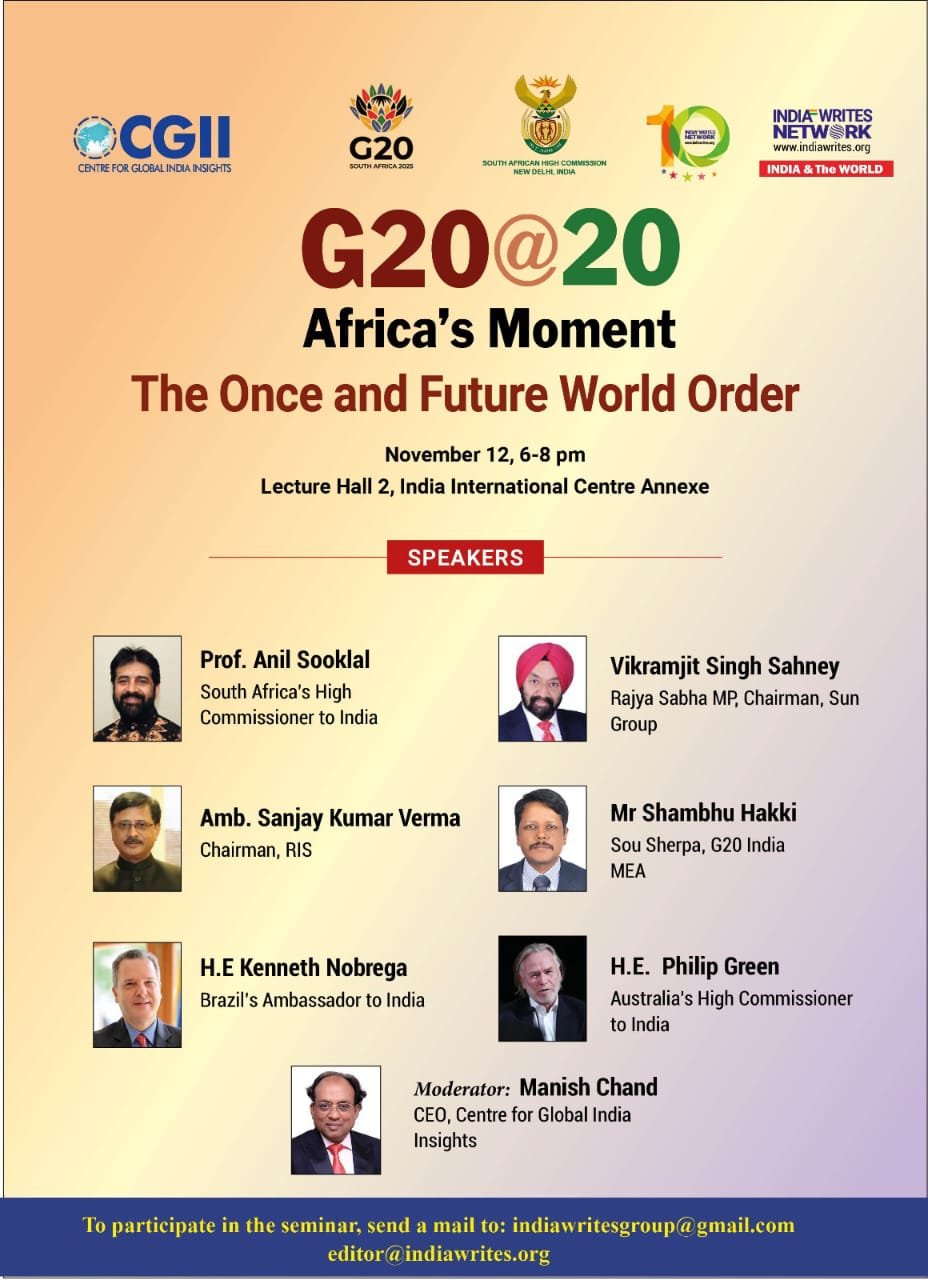
G20@20: Africa’s Moment – The Once and Future World Order
Speakers
Professor Anil Sooklal
Kenneth da Nobrega
Manish Chand
Ambassador Philip Green
Sanjay Kumar Verma
Shambhu Hakki
Vikramjit Singh Sahney
MPs, diplomats laud Operation Sindoor, call for national unity to combat Pakistan-sponsored terror
Speakers
Aparajita Sarangi
Brij Lal
Dr Amar Patnaik
Manish Chand
Priyanka Chaturvedi
Sujan Chinoy
Yashvardhan Kumar Sinha
BRICS summit in Rio to focus on Global South, local currency trade
Speakers
Dammu Ravi
Denis Alipov
Ina Hagniningtyas Krisnamurthi
Jyoti Vij
Kamel Zayed Kamel Galal
Kenneth da Nobrega
Manish Chand
Book
India’s G20 Legacy: Shaping a New World Order
Editor: Manish Chand
Pages: 206
Publisher: Pentagon Press LLP
Cover Price: INR 995
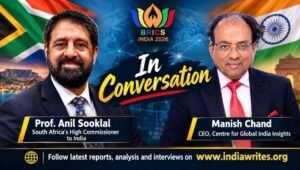
In Conversation
India’s BRICS Chairship Critical for Global South: South Africa’s Envoy
In The Press
Rescuing G20 from North-South divide: Ubuntu Moment
The Sunday Guardian: India calls for strengthened BRICS cooperation
Daily Excelsior: Ahead BRICS summit in Rio, envoys call for greater focus on combating terrorism
Rediff: BRICS Summit 2024: Focus on National Currencies
Latest From CGII
Diplomatic win for India: BRICS bridges Gulf divide, bats for Global South
Illuminating India’s BRICS moment
With Trump listening in, Iran urges PM Modi to end war with US
India Russia ‘dosti’ in Bishkek: Focus on end of Ukraine war, balanced trade
Uncovering Pakistan: Modi rallies SCO against states that use terror as policy
Modi’s SCO agenda: Shaping a region free of terror, widening arc of prosperity
The Journal
Special Edition on India’s Indo-Pacific plus Diplomacy
India’s G20 Journey – Scaling A New Summit