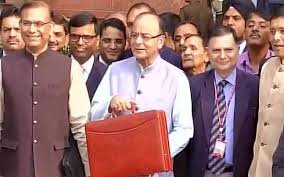












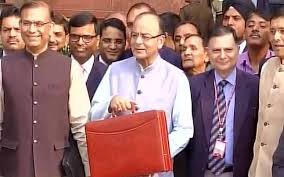
In a remarkable effort to promote tax friendly regime, Finance Minister Arun Jaitley, while presenting the Union Budget 2016-17, proposed one-time Dispute Resolution Scheme (DRS) for pending tax cases ongoing under retrospective amendment. Under the proposed scheme, any taxpayer can settle the case by paying only the tax arrears in which case liability of the interest and penalty will be waived. This is subject to agreeing to withdraw any pending case lying in any Court or Tribunal or any proceeding for arbitration. With this proposal, Arun Jaitley is trying to drive home the point that the government is committed to provide a stable and predictable taxation regime with government’s assurance of not to create retrospectively of fresh tax liability. There are 3 lakh tax cases pending with the 1st Appellate Authority with disputed amount being Rs 5.5 lakh crores. “Litigation is a scourge for tax friendly regime and creates an environment of distrust,” Finance Minister Arun Jaitley said today in the Parliament. Following are highlights of dispute resolution scheme:
- A taxpayer who has an appeal pending as of today before the Commissioner (Appeals) can settle his case by paying the disputed tax and interest up to the date of assessment.
- No penalty in respect of Income-tax cases with disputed tax up to Rs. 10 lakh will be levied.
- Cases with disputed tax exceeding Rs. 10 lakhs will be subjected to only 25% of the minimum of the imposable penalty for both direct and indirect taxes.
- Any pending appeal against a penalty order can also be settled by paying 25% of the minimum of the imposable penalty.
Identifying that levy of heavy penalty as a cause of large number of disputes, Jaitley proposed to modify the scheme of penalty by providing different categories of misdemeanor with graded penalty and thereby substantially reducing the discretionary power of the tax officers. The penalty rates will now be 50% of tax in case of underreporting of income and 200% of the tax where there is misreporting of facts. Remission of penalty is also proposed where taxes are paid and appeal is not filed. Quantification of disallowance of expenditure relatable to exempt income in terms of Section 14A of the Income Tax Act is another issue led to a number of disputes. Therefore, it has been proposed to rationalize formula in Rule 8D governing such quantification.