




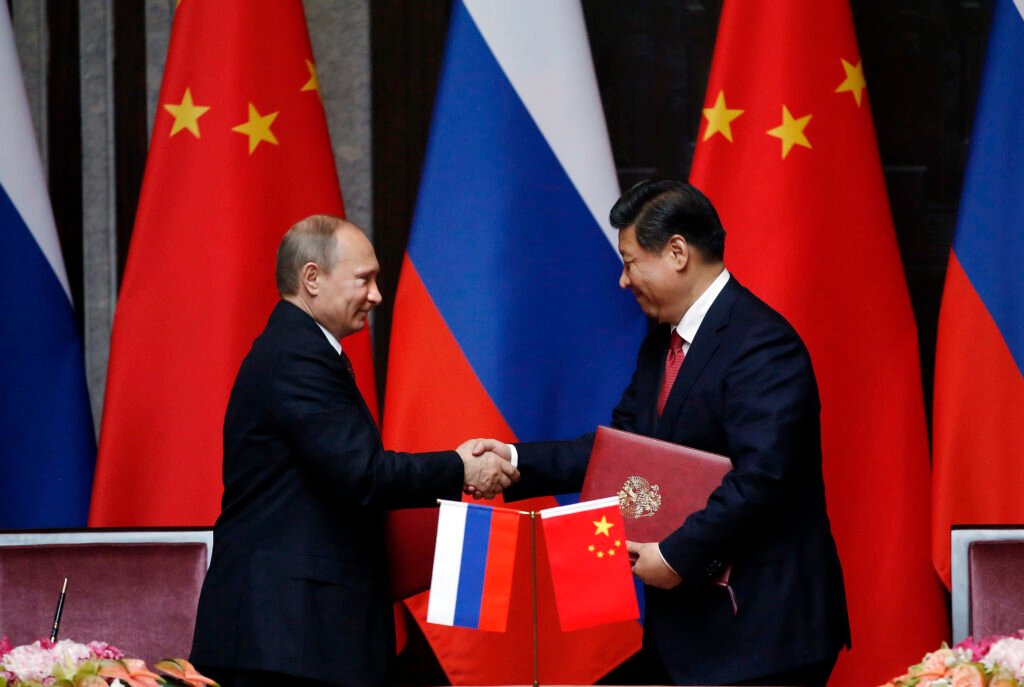
Amid the US-South Korea talks on possible deployment of the Terminal High Altitude Area Defense (THAAD) system following North Korea’s renewed nuclear and rocket tests earlier this year, China and Russia have raised concerns over US plans to put a missile defence system on the Korean peninsula. Beijing fears that the increasing presence of US military hardware in the region will fuel power struggle and tension in the Pacific area. “We both are gravely concerned about the US’s likely deployment of the THAAD system in South Korea,” Chinese Foreign Minister Wang Yi said at a joint press conference with his Russian counterpart Sergei Lavrov in Beijing. “The US should not use Pyongyang’s actions as an excuse to increase their military presence in the region,” said Mr Lavrov said. According to US military, North Korea test-fired what appeared to be two intermediate range ballistic missiles on April 28, but both failed. The US and South Korea have started discussions on the possibility of deploying the THAAD missile system on the peninsula after North Korea tested its fourth nuclear bomb on January 6 and conducted missile tests. The US maintains that the THAAD system, capable of intercepting ballistic missiles in the terminal phase, was a “defensive measure” against provocations by North Korea. However, military experts argue that the powerful radar would have a detection range that covered part of China and Russia, if it was stationed on the peninsula. Mr Wang said the United States should respect legitimate concerns of China and Russia over the missile system. “This move goes beyond the defensive needs of the relevant countries. If it is deployed it will directly impact China’s and Russia’s respective strategic security,” Mr Wang added. “Not only does it threaten the resolution of the peninsula nuclear issue, it quite possibly could pour oil on the fire of an already tense situation, and even destroy strategic equilibrium on the peninsula.” Mr Lavrov is in Beijing to prepare for Russian President Vladimir Putin’s visit to China in June. He also endorsed Beijing’s position on South Chia dispute, saying the issue should not be “internationalised” nor interfered with by outside players. The two defence minister announced that their countries would increase military exercises to strengthen security and defence cooperation.