








By Simran Walia Amidst growing synergies between India and Japan, PM Narendra Modi recently stated that the partnership between the two nations has become even more relevant for global stability and prosperity in the era of the Covid-19 pandemic.
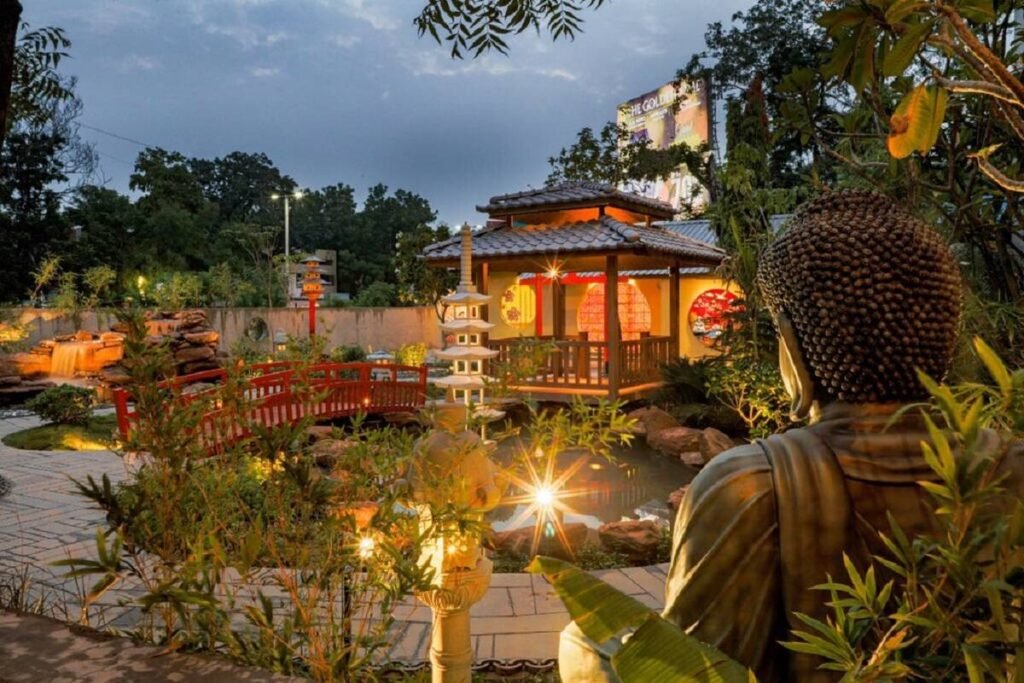
While virtually inaugurating a Japanese ‘Zen Garden-Kaizen Academy’ at the Ahmedabad Management Association (AMA), PM Modi underlined that the relationship between the two Asian countries shall be strengthened further to face a host of global challenges. The opening of the Zen Garden and the Kaizen Academy here “is a symbol of the spontaneity and modernity of relations between India and Japan,” said PM Modi.
Japan and India share centuries-old cultural ties and a common vision for the future in terms of freedom, democracy and the rule of law. Both the nations are also putting in efforts to strengthen their special strategic and global partnership. Former Japanese Prime Minister Shinzo Abe and Narendra Modi laid the foundation stone for the ‘Bullet Train Project’ in 2017, which is the ‘Mumbai-Ahmedabad bullet train project’. This would further strengthen the ties between the two nations and give a boost to the ‘Make in India initiative. “PM Suga and I believe that in this current era of Covid pandemic, our friendship and partnership has become even more relevant for global stability and prosperity. Today, when many global challenges are facing us, it is the need of the hour that our friendship and relations become stronger day by day. And effort like Kaizen Academy is certainly a beautiful example of that,” he added. Mr Modi said that whenever he said that he wanted to create a mini-Japan in Gujarat, he meant that Japanese people should “feel at home in Gujarat”.  The Zen-Garden seeks to display several elements of Japanese art, culture, landscape and architecture which would deepen cultural ties between India and Japan. Through the Kaizen Academy, the work culture of Japan could spread in India and increase business interaction between the two countries, said Mr Modi. Zen means meditation, which is linked with the meditation that Buddha gave to the world and is common for both India and Japan. “The concept of Kaizen is proof of the strength of our intentions in the present and of our will to move forward continuously,” said PM Modi. ‘Zen Garden – Kaizen Academy’ has traditional Japanese elements such as Red Bridge Guzei, Shoji Interior, Glory of Tori, a 3D art mural, fusion Chabutaro, Taki waterfall, Tsukubai basin and Kimono scroll. There are other efforts too that are going in the same direction such as that of the Indo-Japan student exchange programme between the Gujarat University and the Otemon Gakuin University of Osaka. This initiative has helped in strengthening the relationship and develop people-to-people ties. People of India, particularly Gujarat, have always been influenced by the affection of the people of Japan, their working style and their discipline. Around 135 Japanese companies are functioning across the region of Gujarat and are helping in the skill development of Gujarat’s youth. India has also made a special arrangement of ‘Japan Plus’, which is a team of officials to promote greater Japanese investments in India. Under PM Modi’s watch, India-Japan relations have grown exponentially. Taking their strategic partnership forward, India and Japan are proactive in strengthening the Quad, a four-nation grouping of the United States, India, Australia and Japan.