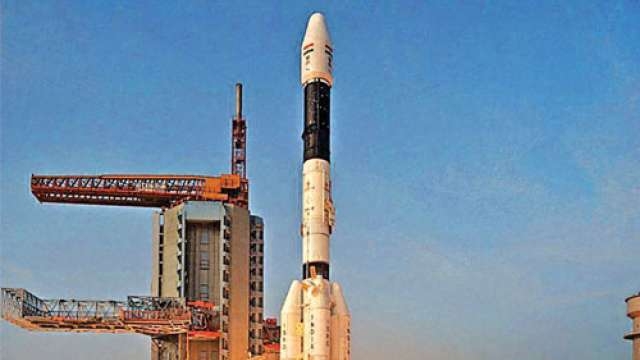









Intending to play a more proactive role in the Asia-Pacific region, India has decided to set up a satellite tracking and imaging centre in southern Vietnam that will give it access to pictures from Indian earth observation satellites that cover the region, including China and the South China Sea. The satellite tracking centre in Vietnam is being seen as part of India’s larger strategy to strengthen its presence by forging alliances with friendly countries to balance China’s growing assertiveness in the region. Last year, when India had announced its decision to set up satellite centre, Beijing had reacted testily saying it amounted to stoking trouble in the region. The growing bilateral ties between India and Vietnam have seen China issuing statements opposing India’s active involvement in the region as “external interference.” China had earlier objected to oil exploration by India in South China Sea after India’s oil giant ONGC had entered into an agreement with Vietnam. The earth observation satellites have agricultural, scientific and environmental applications. According to security experts, improved imaging technology meant the pictures could also be used for military purposes. Vietnam has been looking for advanced intelligence, surveillance and new technologies as tensions continue to escalate with China over the disputed South China Sea. According to Collin Koh, a marine security expert at Singapore’s S Rajaratnam School of International Studies “In military terms, this move could be quite significant. It looks like a win-win for both sides, filling significant holes for the Vietnamese and expanding the range for the Indians.” China’s reaction Reacting to this decision by India, recently a Chinese think tank had termed this move by India as an attempt to “stir up trouble” in the disputed South China Sea region to serve its own ends. According to some Chinese analysts, India wants to cause trouble in the region to serve its own ends, which is to counterbalance China’s influence. India has been consistently advocating freedom of navigation in the South China Sea and has reinforced this stance with joint statements on South China Sea with countries like US, Vietnam and Japan. This has rattled China, which believes disputes in the region should be resolved bilaterally and countries outside the region should not interfere in the regional disputes. India has repeatedly denied any containment of China strategy and has been focusing on ramping up economic and strategic ties with Asia’s largest economy. (Sridhar Ramaswamy contributed inputs for this article)