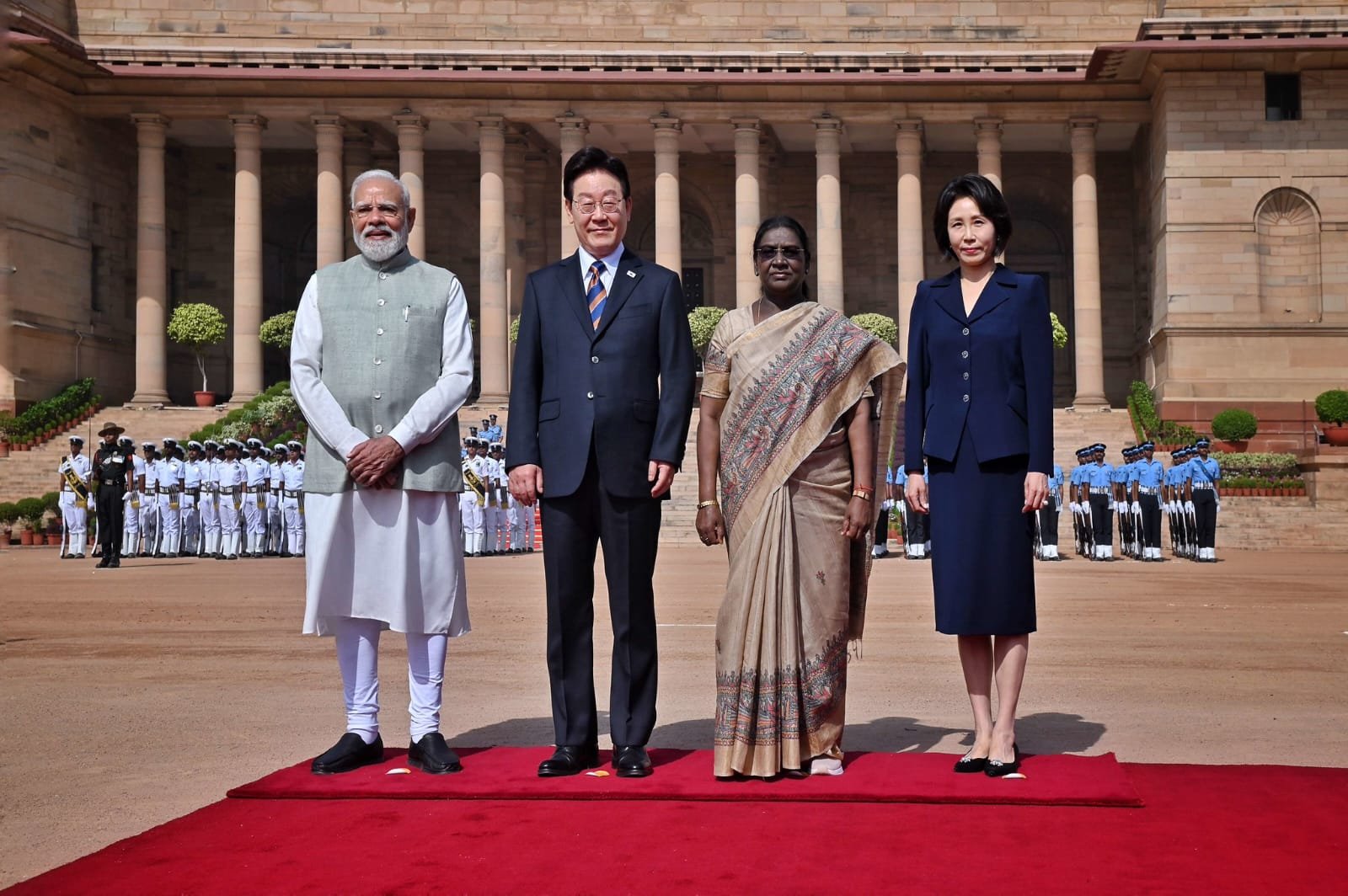
The tone set by both leaders reflected this evolving understanding. Prime Minister Narendra Modi described the expanding scope of the partnership as spanning “from chips to ships,” a phrase that succinctly captures the technological and industrial breadth of contemporary India–ROK cooperation. More than rhetorical flourish, the phrase reflects a strategic recalibration in bilateral thinking, emphasizing the integration of industrial capability, technological innovation, and maritime cooperation.
Strategic Vision
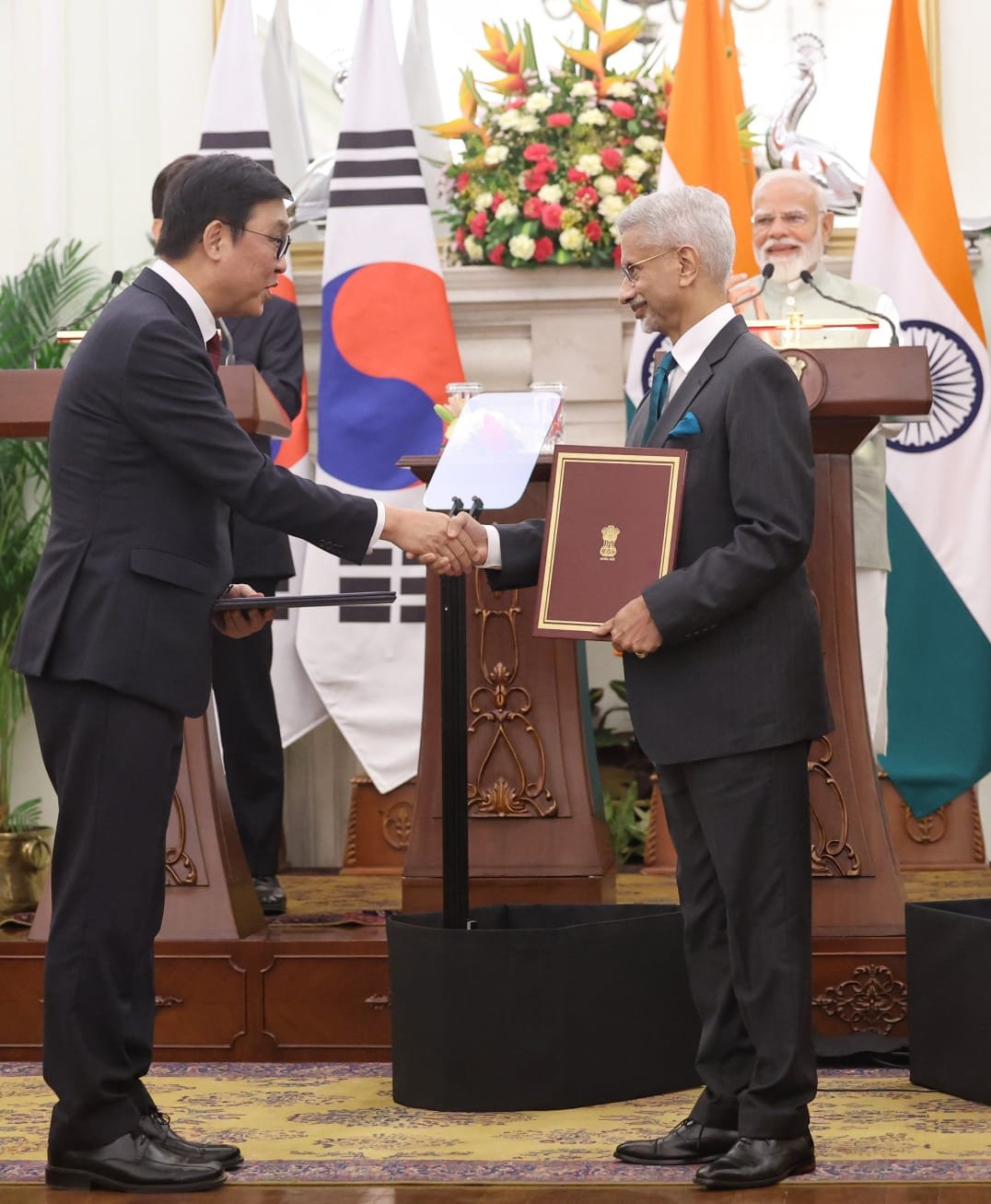
At the centre of the visit was the articulation of a renewed strategic vision designed to institutionalize cooperation across sectors such as advanced manufacturing, semiconductors, maritime logistics, and digital innovation. Institutionalization in this context is strategic rather than merely procedural. In an era marked by supply chain disruptions and technological rivalries, partnerships anchored in formal frameworks provide continuity beyond political cycles and geopolitical volatility. President Lee’s observation that India and South Korea are “optimal partners in achieving their respective national visions” highlights the movement of bilateral ties beyond transactional engagement toward long-term alignment in national development strategies.
Maritime Security
One of the most geopolitically consequential outcomes of the visit lies in the domain of maritime and energy security. With instability affecting shipping routes in West Asia, particularly around the Strait of Hormuz, the commitment by South Korea to coordinate closely with India in safeguarding maritime flows reflects deepening strategic trust. This commitment was reinforced through a Joint Statement on Energy Resource Security, which seeks to ensure stable access to energy supplies and enhance coordination during disruptions in global energy markets.
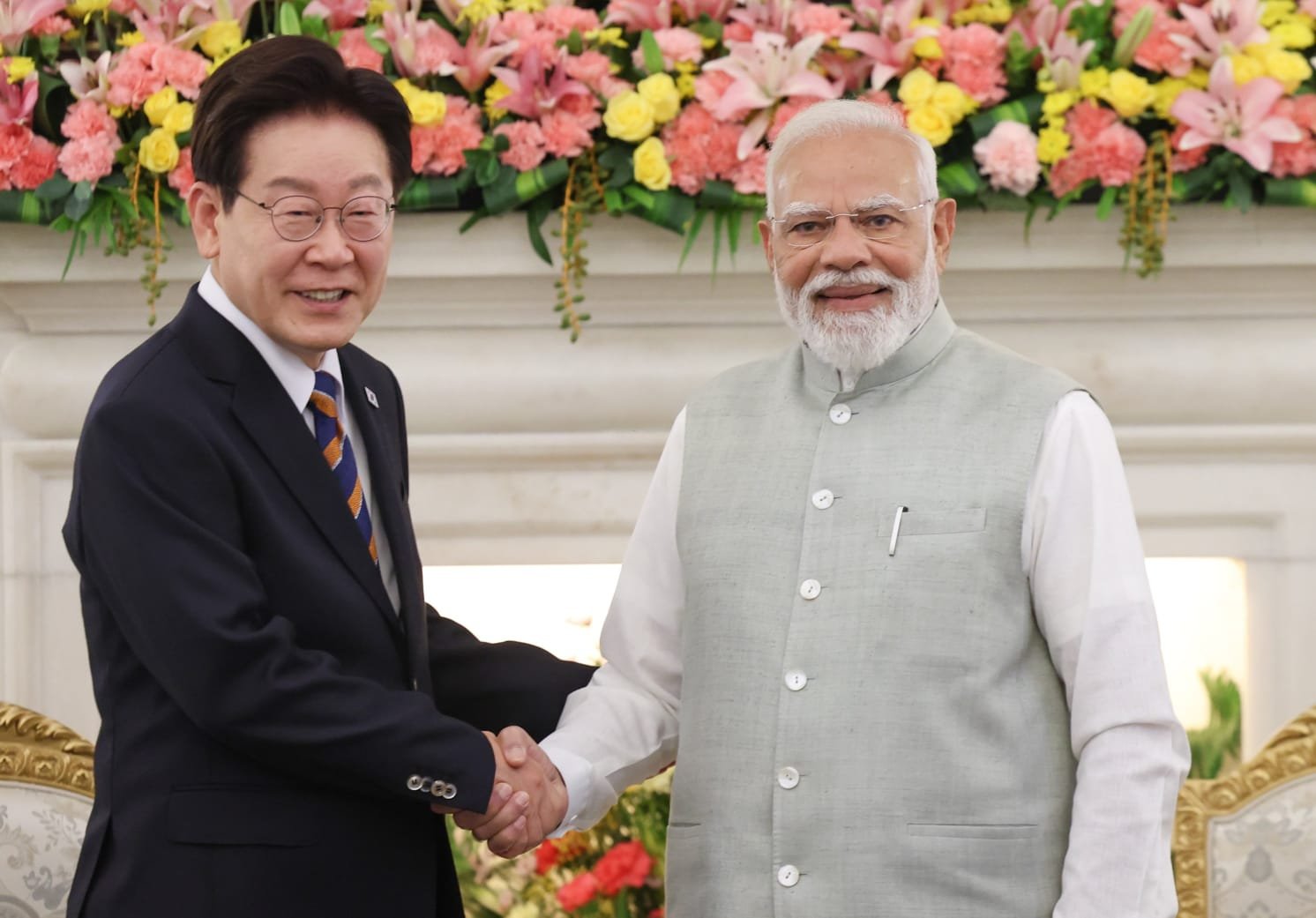
India’s growing profile as a maritime security provider in the Indian Ocean lends credibility to this collaboration. Over the past decade, India has invested substantially in naval modernization and maritime surveillance capabilities. South Korea’s willingness to engage with India in this domain reflects recognition of India’s evolving role in safeguarding regional stability. More broadly, this partnership illustrates the emergence of an Indo-Pacific security framework in which middle powers collaborate to protect global commons and maintain open sea lanes.
Industrial cooperation, particularly in shipbuilding and maritime logistics, emerged as another cornerstone of the partnership. A Comprehensive Framework for Cooperation in Shipbuilding, Shipping and Maritime Logistics signals recognition that maritime capability is central not only to economic growth but also to strategic resilience. As Foreign Secretary Vikram Misri noted, “the outcomes of this visit reflect a conscious decision by both sides to expand cooperation from traditional economic engagement into strategic sectors such as maritime logistics, energy security, and advanced technologies.” South Korea’s leadership in shipbuilding offers India a pathway to accelerate its ambitions of becoming a maritime manufacturing hub, strengthening both industrial capacity and national security.
Fast-tracking CEPA Review
The economic dimension of the visit was equally significant. Both sides agreed to nearly double bilateral trade to $50 billion by 2030, demonstrating renewed momentum in commercial engagement. A critical component of this ambition is the decision to accelerate negotiations to upgrade the Comprehensive Economic Partnership Agreement (CEPA). The modernization of CEPA reflects recognition that contemporary trade agreements must extend beyond tariff reductions to include digital trade provisions, regulatory harmonization, supply chain integration, and investment facilitation.
For India, deeper integration with South Korea presents an opportunity to diversify supply chains and reduce vulnerability to external shocks. For South Korea, India offers a large consumer base and a dynamic growth environment capable of offsetting risks associated with concentrated markets. In strategic terms, expanding trade is not simply about increasing volume; it is about building resilience in a fragmented global economy.
Critical Technologies
Technology cooperation emerged as another defining theme of the visit, reflecting the growing centrality of innovation in geopolitical competition. Joint initiatives in semiconductors, artificial intelligence, and advanced manufacturing mark a significant step toward building shared technological ecosystems. Such collaboration assumes heightened importance as global technology supply chains undergo rapid restructuring.
By working together in critical technologies, India and South Korea position themselves to shape the next phase of industrial transformation while reducing dependence on single-source suppliers. Technology diplomacy, in this context, increasingly overlaps with national security, blurring traditional distinctions between economic and strategic policy. Equally notable is the growing emphasis on sustainability and green transition. A Joint Statement on Sustainability reflects commitments to collaborate on climate technologies, renewable energy development, and environmentally responsible industrialization. Beyond bilateral engagement, the visit carries broader implications for the Indo-Pacific order. India and South Korea share a commitment to maintaining an open, rules-based international system. Their cooperation represents an evolving model of strategic multilateralism, where like-minded nations collaborate through flexible partnerships to address shared challenges.
For India, the strategic gains from the visit are multifaceted. The partnership enhances technological capabilities, strengthens industrial capacity, and reinforces India’s maritime leadership. It also aligns with India’s long-term objective of emerging as a manufacturing and innovation hub within the Indo-Pacific. Importantly, it supports India’s pursuit of strategic autonomy by expanding networks of trusted partners across key sectors.
For South Korea, engagement with India offers both economic opportunity and strategic reassurance. India’s demographic scale, geographic location, and expanding industrial base make it an indispensable partner in navigating global economic and security uncertainties. Strengthening ties with India enables South Korea to diversify its strategic partnerships and reduce vulnerability to regional disruptions.







From chips to ships, transforming India–South Korea ties
The tone set by both leaders reflected this evolving understanding. Prime Minister Narendra Modi described the expanding scope of the partnership as spanning “from chips to ships,” a phrase that succinctly captures the technological and industrial breadth of contemporary India–ROK cooperation. More than rhetorical flourish, the phrase reflects a strategic recalibration in bilateral thinking, emphasizing the integration of industrial capability, technological innovation, and maritime cooperation.
Strategic Vision
At the centre of the visit was the articulation of a renewed strategic vision designed to institutionalize cooperation across sectors such as advanced manufacturing, semiconductors, maritime logistics, and digital innovation. Institutionalization in this context is strategic rather than merely procedural. In an era marked by supply chain disruptions and technological rivalries, partnerships anchored in formal frameworks provide continuity beyond political cycles and geopolitical volatility. President Lee’s observation that India and South Korea are “optimal partners in achieving their respective national visions” highlights the movement of bilateral ties beyond transactional engagement toward long-term alignment in national development strategies.
Maritime Security
One of the most geopolitically consequential outcomes of the visit lies in the domain of maritime and energy security. With instability affecting shipping routes in West Asia, particularly around the Strait of Hormuz, the commitment by South Korea to coordinate closely with India in safeguarding maritime flows reflects deepening strategic trust. This commitment was reinforced through a Joint Statement on Energy Resource Security, which seeks to ensure stable access to energy supplies and enhance coordination during disruptions in global energy markets.
India’s growing profile as a maritime security provider in the Indian Ocean lends credibility to this collaboration. Over the past decade, India has invested substantially in naval modernization and maritime surveillance capabilities. South Korea’s willingness to engage with India in this domain reflects recognition of India’s evolving role in safeguarding regional stability. More broadly, this partnership illustrates the emergence of an Indo-Pacific security framework in which middle powers collaborate to protect global commons and maintain open sea lanes.
Industrial cooperation, particularly in shipbuilding and maritime logistics, emerged as another cornerstone of the partnership. A Comprehensive Framework for Cooperation in Shipbuilding, Shipping and Maritime Logistics signals recognition that maritime capability is central not only to economic growth but also to strategic resilience. As Foreign Secretary Vikram Misri noted, “the outcomes of this visit reflect a conscious decision by both sides to expand cooperation from traditional economic engagement into strategic sectors such as maritime logistics, energy security, and advanced technologies.” South Korea’s leadership in shipbuilding offers India a pathway to accelerate its ambitions of becoming a maritime manufacturing hub, strengthening both industrial capacity and national security.
Fast-tracking CEPA Review
The economic dimension of the visit was equally significant. Both sides agreed to nearly double bilateral trade to $50 billion by 2030, demonstrating renewed momentum in commercial engagement. A critical component of this ambition is the decision to accelerate negotiations to upgrade the Comprehensive Economic Partnership Agreement (CEPA). The modernization of CEPA reflects recognition that contemporary trade agreements must extend beyond tariff reductions to include digital trade provisions, regulatory harmonization, supply chain integration, and investment facilitation.
For India, deeper integration with South Korea presents an opportunity to diversify supply chains and reduce vulnerability to external shocks. For South Korea, India offers a large consumer base and a dynamic growth environment capable of offsetting risks associated with concentrated markets. In strategic terms, expanding trade is not simply about increasing volume; it is about building resilience in a fragmented global economy.
Critical Technologies
Technology cooperation emerged as another defining theme of the visit, reflecting the growing centrality of innovation in geopolitical competition. Joint initiatives in semiconductors, artificial intelligence, and advanced manufacturing mark a significant step toward building shared technological ecosystems. Such collaboration assumes heightened importance as global technology supply chains undergo rapid restructuring.
By working together in critical technologies, India and South Korea position themselves to shape the next phase of industrial transformation while reducing dependence on single-source suppliers. Technology diplomacy, in this context, increasingly overlaps with national security, blurring traditional distinctions between economic and strategic policy. Equally notable is the growing emphasis on sustainability and green transition. A Joint Statement on Sustainability reflects commitments to collaborate on climate technologies, renewable energy development, and environmentally responsible industrialization. Beyond bilateral engagement, the visit carries broader implications for the Indo-Pacific order. India and South Korea share a commitment to maintaining an open, rules-based international system. Their cooperation represents an evolving model of strategic multilateralism, where like-minded nations collaborate through flexible partnerships to address shared challenges.
For India, the strategic gains from the visit are multifaceted. The partnership enhances technological capabilities, strengthens industrial capacity, and reinforces India’s maritime leadership. It also aligns with India’s long-term objective of emerging as a manufacturing and innovation hub within the Indo-Pacific. Importantly, it supports India’s pursuit of strategic autonomy by expanding networks of trusted partners across key sectors.
For South Korea, engagement with India offers both economic opportunity and strategic reassurance. India’s demographic scale, geographic location, and expanding industrial base make it an indispensable partner in navigating global economic and security uncertainties. Strengthening ties with India enables South Korea to diversify its strategic partnerships and reduce vulnerability to regional disruptions.
Portia Conrad
Related Posts
Armageddon now! Deconstructing the language of US-Iran war
IAFS IV: Mapping new frontiers in India-Africa partnership
Trade Under Fire: How Geopolitics is Recasting India–US Economic Compact
Why India-Armenia ties are blossoming in a volatile world
Modi’s Israel visit brings defence and tech
Eyewitness recalls: US-Israel-Iran war, up close and personal
Latest Events
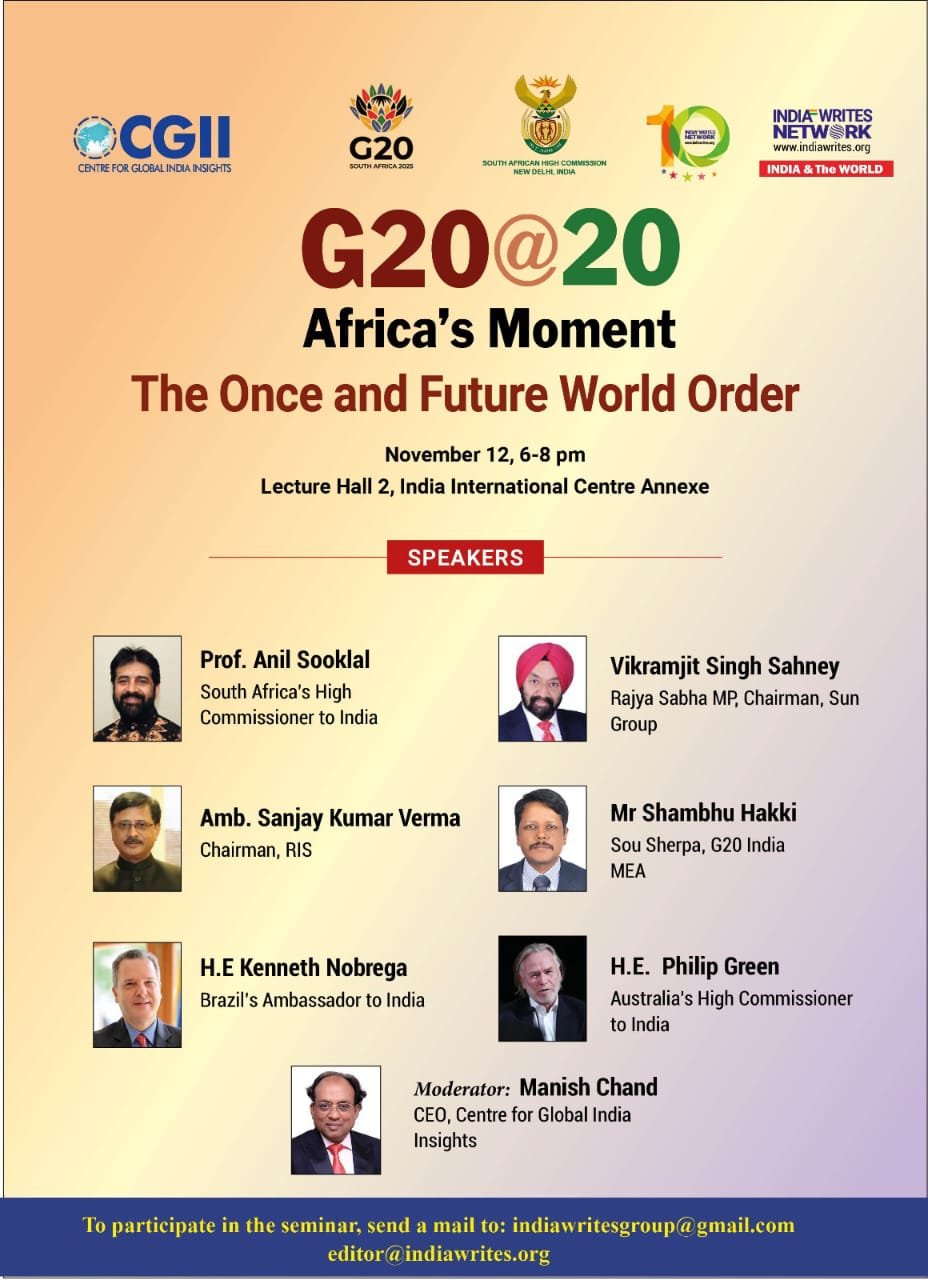
G20@20: Africa’s Moment – The Once and Future World Order
Speakers
Professor Anil Sooklal
Kenneth da Nobrega
Manish Chand
Ambassador Philip Green
sanjay Kumar Verma
Shambhu Hakki
Vikramjit Singh Sahney
MPs, diplomats laud Operation Sindoor, call for national unity to combat Pakistan-sponsored terror
Speakers
Aparajita Sarangi
Brij Lal
Dr Amar Patnaik
Manish Chand
Priyanka Chaturvedi
Sujan Chinoy
Yashvardhan Kumar Sinha
BRICS summit in Rio to focus on Global South, local currency trade
Speakers
Dammu Ravi
Denis Alipov
Ina Hagniningtyas Krisnamurthi
Jyoti Vij
Kamel Zayed Kamel Galal
Kenneth da Nobrega
Manish Chand
Book
India’s G20 Legacy: Shaping a New World Order
Editor: Manish Chand
Pages: 206
Publisher: Pentagon Press LLP
Cover Price: INR 995
In Conversation
Expanding the canvas: India’s ambassador on art, new momentum in India-Spain ties
In The Press
Rescuing G20 from North-South divide: Ubuntu Moment
The Sunday Guardian: India calls for strengthened BRICS cooperation
Daily Excelsior: Ahead BRICS summit in Rio, envoys call for greater focus on combating terrorism
Rediff: BRICS Summit 2024: Focus on National Currencies
Latest From CGII
Armageddon now! Deconstructing the language of US-Iran war
IAFS IV: Mapping new frontiers in India-Africa partnership
Trade Under Fire: How Geopolitics is Recasting India–US Economic Compact
Why India-Armenia ties are blossoming in a volatile world
Modi’s Israel visit brings defence and tech
Eyewitness recalls: US-Israel-Iran war, up close and personal
The Journal
India’s G20 Journey – Scaling A New Summit
India’s G20 Moment: Hope, Healing and Harmony