









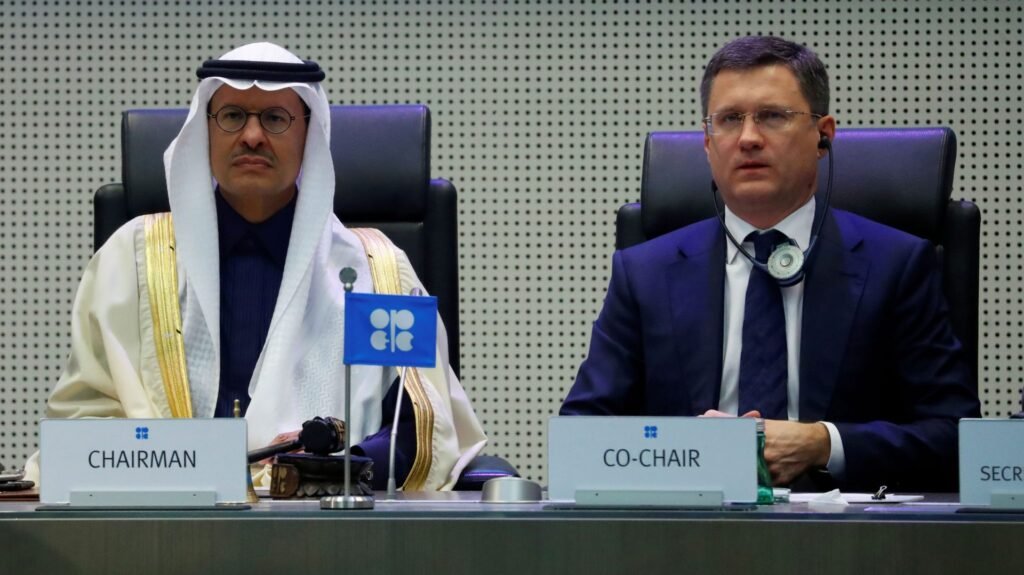
By Rushali Saha After almost a month-long feud between Russia and Saudi Arabia over oil production, the two countries ended their oil price war through an historic deal which slashes global output by 9.7 million barrels per day (bpd). The deal includes all major oil suppliers, including the US and other G-20 countries and comes at a time when global demand for oil slumped by 4%. The world witnessed its biggest one- day drop in oil prices crash since the 1991 Gulf War on March 9,2020 when Saudi Arabia slashed its export prices in response to diplomatic differences and ensuing war of words with Russia. The oil crisis took place against the backdrop of reports about the coronavirus plunging the global economy into a depression. There was a glimmer of hope to stabilise oil production when major oil-producing countries, including Russia and Saudi Arabia, met on April 9 to slash oil supply and boost prices by cutting 10 million barrels a day but was “conditional” on the consent of Mexico. President Andres Manuel Lope Obrador found the supply cuts of 4000,000 bpd to be “unfair” to Mexico and offered a reduction of 100,000 bpd. US President Trump brokered a deal with Mexico,despite his previous vocal criticism of OPEC, by agreeing to make 250,000 bpd in additional cuts to oil output, allowing Mexico to stick to just 100,000. The 10-million-barrel cut will start in May and is set to last for two months, after which the cuts would reduce by 8 million bpd from July through December and then cuts of 6 million bpd for all of 2021 and 2022. Why US Matters What role does US have in this? The US emerged as major exporter of oil following the shale revolution and a serious competitor to SaudiArabia and Russia. This made Russia and Saudi Arabia overly reliant on China which continued to buy cheap oil from them and hence as demand reduced from China following the pandemic, both countries were hit hard. The US emerged as the largest oil producer in 2019, changing the oil dynamics – a price drop in oil could drive some countries under and affect growth and investment across the industry. This has led some commentators to suggest that a reason for Russian President Vladimir Putin’s long drawn out hesitance to keep prices high by working with Saudi’s would benefit America. The immediate reason for Russia’s anger with Washington was the latter’s decision to impose sanctions in February 2020 over its continued support in selling Venezuela’s oil. In view of the threat to US oil market, the US ratcheted up pressure on Saudi Arabia and Russia to declare a ceasefire and reverse the export increase. President Trump played a key role in finalising this historic agreement and without his mediation, it is highly unlikely that Mexico would arrive at the negotiating table. Impact on global economy The final cuts agreed upon are significantly lower compared to the 10 million bpd that was originally announced by OPEC and OPEC+ members without Mexico. In the short run, this deal addresses the storage problem since inventories were filling up as the demand was reducing in view of the pandemic forcing countries to enforce some form of travel restriction. The size of the agreed cut will slow down the pace at which the global inventories fill up but cannot prevent the unprecedented collapse in global oil demand due to the pandemic. There remains a mismatch where supply continues to outstrip demand which is likely to remain until the world recovers from the Covid pandemic. Moreover, the deal only becomes effective from May which means producers still have two weeks to flood the market. However, without intervention, violent swings in oil prices would destabilise economies and financial markets worldwide, hence it is safe to deal is better than no deal in this scenario. Implications for India India, the third largest crude oil consumer, would be among the big beneficiaries of low oil prices as the import bill will fall significantly. This is a welcome development as the Indian economy was already suffering due to slow growth rate and slow demand which is predicted to get aggravated by the pandemic. According to Akhil Bery, an analyst at political risk consultancy Eurasia Group, for every dollar the price of oil drops, India saves approximately $1.5 billion.Most of India’s oil demand is met through imports, which makes India particularly vulnerable to fluctuations in the global oil prices. For example, in January 2020, amidst the escalated tensions between Iran and US, drove oil prices high and placed India in an uncomfortable diplomatic position. Given that India’s demand for oil is expected to continue growing and even surpass China soon, it must insulate itself from energy price shocks by controlling national demand for oil and boosting its reserves of unconditional fuel. (Rushali Saha is Research Intern at India Writes Network)