


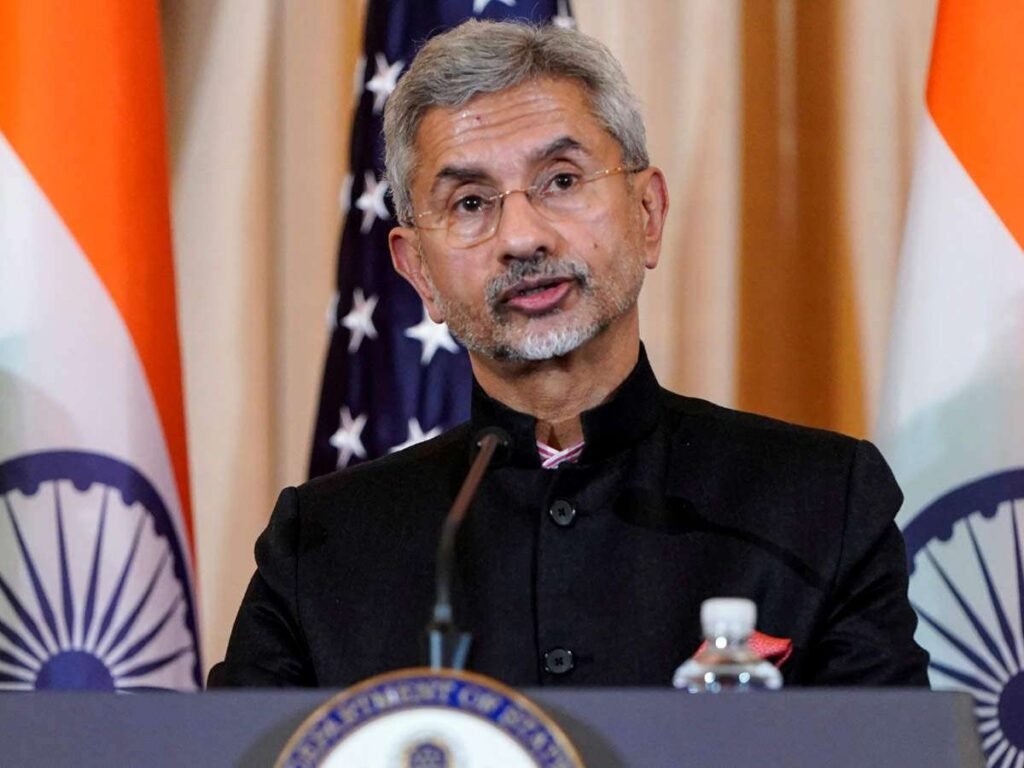
Amid a prolonged standoff between Indian and Chinese troops on the icy heights of Ladakh, External Affairs Minister S. Jaishankar has outlined an eight-point template for improving India-China ties which have been profoundly disturbed by the territorial incursion by China. Addressing the All-India Conference of China Studies, Mr Jaishankar also underscored the three “Mutuals” for harmonious ties between the two Asian giants that includes mutual respect, mutual sensitivity and mutual interests. These are the determining factors for the bilateral relationship and cannot be brushed aside as the two countries try to resolve a nine-month standoff in Ladakh sector of the Line of Actual Control (LAC). “Respecting the three mutuals and observing those eight principles…will surely help us make the right decisions,” he said. “Any expectation that they can be brushed aside, and that life can carry on undisturbed despite the situation at the border, that is simply not realistic.” The eight principles for better India-China relations enunciated by Jaishankar includes:
- Agreements already reached must be adhered to in their entirety, both in letter and spirit.
- The LAC must be strictly observed and respected, and any attempt to unilaterally change the status quo is completely unacceptable.
- Peace and tranquillity in the border areas is the basis for development of relations in other domains. If they are disturbed, so inevitably will the rest of the relationship be.
- While both nations are committed to a multi-polar world, there should be a recognition that a multi-polar Asia is one of its essential constituents.
- Each state will have its own interests, concerns and priorities, but sensitivity to them cannot be one-sided as relationships between major states are reciprocal in nature.
- As rising powers, each will have their own set of aspirations and their pursuit too cannot be ignored.
- There will always be divergences and differences but their management is essential to bilateral ties.
- Civilisational states like India and China must always take the long view.