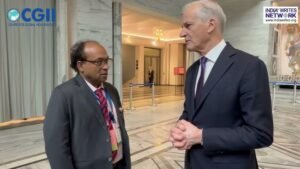






(Excerpts from the interview)
Q: How do you look at Pakistan’s role as a mediator? Why was Pakistan singled out for this role?
A: I think the Pakistanis have certain equities which both parties to the conflict realized were important and had value.
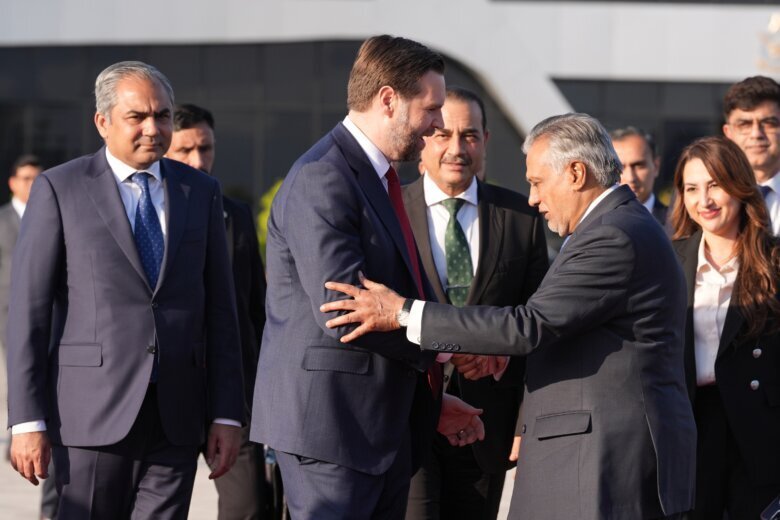
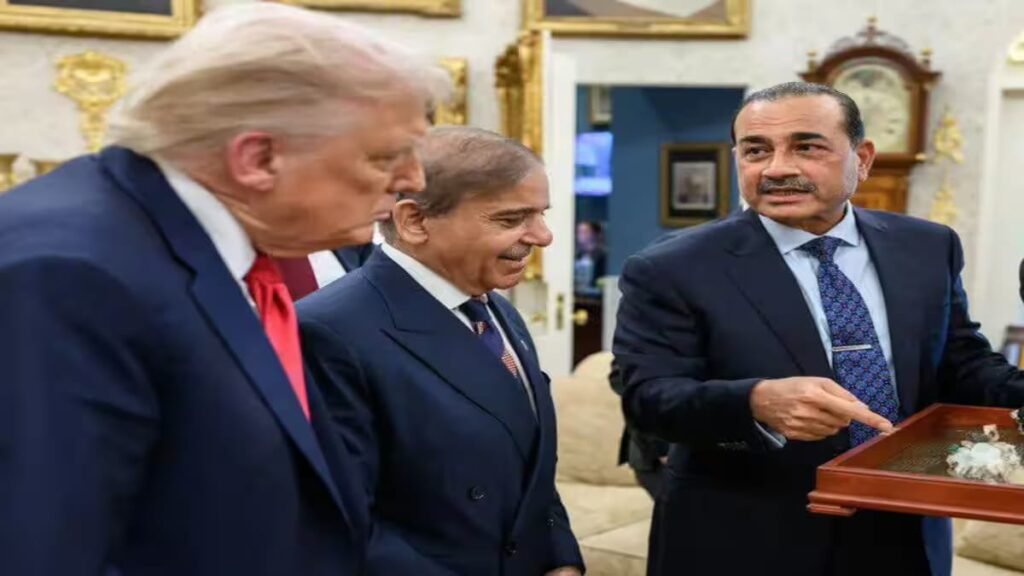
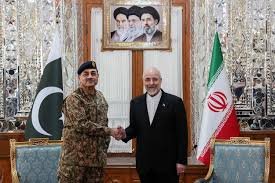
First, it is a very important neighbour of Iran. Then it has strong relations with the Gulf sheikhdoms and Saudi Arabia. In the past 2 years or so, its relations with the United States have also been on an upswing, and this has made up to some extent for the severe downturn in their ties between 2016–17 and 2024. Historically, the US and Pakistan have worked together closely in different contexts. Finally, Pakistan has also played a relatively even-handed role in the ongoing crisis involving Iran, the US, and Israel. It was quite forthright in condemning the Israeli attack on Iran, while also taking a position on Iranian attacks on Gulf countries. These factors worked towards making Pakistan a viable platform for engagement between Iran and the United States. It is also relevant that Pakistan does not have diplomatic relations with Israel, which made it more acceptable to Iran.
Quite frankly, I am somewhat surprised by the angst in India over Pakistan assuming such a role. This stems in part from the conviction that Pakistan had become geopolitically irrelevant. That has never been the case. We convinced ourselves of this due to our adversarial relations with Pakistan and the severe downturn in bilateral ties since 2018 alongside a deepening multi-dimensional internal crisis in Pakistan, but it was never an accurate portrayal.
Q: Critics argue that Pakistan’s internal instability and history of using terrorism as an instrument of state policy makes it an unlikely mediator. How do you respond to this kind of argument?
A: In India, we are insufficiently conscious of the fact that the global “war on terror” is over. The world no longer views developments through that prism of terrorism in the same way and Pakistan’s double game in Afghanistan is now in the past.
Countries assess Pakistan based on their own self-interest, not through India’s lens. While we may believe Pakistan’s internal and regional challenges and the license which terrorist groups enjoy in its territory limit its diplomatic capacity, others do not share that view.
The fact that the war of terror came to an end with the US’s withdrawal from Afghanistan is suggested by the change in our own policies. Till a few years ago, India made no difference between the “good Taliban” and “bad Taliban,” but now we have no problem with pragmatic relations with the Taliban.
Diplomacy has to be clinical and pragmatic; it is not conducted on the basis of sentiment or past history alone.
Q) But when you say the war against terror is over, clearly it is not over for India. We saw that in the Pahalgam attack in 2025.
A: I am not saying that we no longer face the challenge of terrorism. We do. But that global umbrella — which allowed India’s fight against terrorism to be seen as part of a wider international campaign — no longer exists.
We faced terrorism even before there was a global war on terror. We dealt with it on our own in the 1980s and 1990s. At that time, we did not expect other countries to necessarily adopt our perspective. Similarly, it is unrealistic to expect today that other countries will fully align with our view of the challenge and threat we encounter from Pakistan.
Q: Some argue that India, with strong ties to all parties — the US, Iran, Israel, and Gulf states — was better placed to play a role. How do you see that?
A: This argument reflects a zero-sum mindset regarding Pakistan — that any gain for Pakistan is a loss for India, even in areas where we are not directly competing.
But more substantively one reason for this, India did not maintain a relatively even-handed position in this crisis. We were more aligned with the US, Israel, and the Gulf countries. That naturally limited our suitability as a mediator.
There are many other reasons too. Pakistan has been embedded in Iran’s regional calculus for a much longer time, in a way that India is not, simply because they are immediate neighbours.
Q: What do you make of remarks suggesting India is not a “dalal nation” (broker nation)?
A: I am unable to understand what that means.
Historically, India – ever since independence– has often played a significant role in conflict resolution — in Korea, Indochina, Africa, and West Asia. There is nothing intrinsically wrong, morally, or ethically, in trying to end a conflict that harms everyone, including us.
Q: Regarding the collapse of US–Iran talks — what went wrong, and where do you see the possibility of progress?
A: No one expected the first meeting to produce a spectacular breakthrough. The fact that such a meeting took place at all, is a huge step forward, especially given that only weeks earlier, Iran’s leadership had in effect been assassinated by US-Israeli actions, and there had been numerous attacks on the country.
Since then, Iran retaliated strongly, impacting economic and civil infrastructure in Gulf countries and affecting the global economy. In that context, the meeting itself is an achievement.
My sense is that there will be follow-up meetings. The immediate goal will likely be to implement some sort of pragmatic formula, to prolong the ceasefire.
Q: Where do you see convergence emerging between the two sides? One would be the prolongation of the ceasefire and the other would be the achievement of some sort of durable settlement. How do you see that going forward?
A: Well, it depends on how you define a durable settlement. Clearly, the Iran–US relationship has so many different dimensions and so many fundamental differences of perception that no settlement will be durable for all times to come unless one or both governments radically changes its postures.
Nevertheless, in the past, the Iranians and the Americans had agreed on certain arrangements for the next 10–15 years regarding Iran’s nuclear programme but from which the Americans had withdrawn. Now that agreement or those arrangements cannot simply be adopted in the same form as they had earlier been agreed to. In between, a major conflict has taken place and the and that conflict now has to be factored into that earlier agreement.
We should not forget that, so far, in the 40 days of conflict till it was paused by the ceasefire, neither side conceded that they had not achieved the upper hand. Both sides, in a sense, have claimed victory. In a way, that is a positive thing, because that enables an agreement to be reached relatively more easily. But certain changes in the earlier arrangement, with regard to the next 10–15–20 years of Iran’s nuclear programme — will probably provide a basis for some workable arrangement to be worked out.
Alongside this, there are even more fundamental differences between Iran and Israel. And we have to see how those differences, if at all, can be managed through some stable arrangement. In some ways, it may be easier for Iran and the US to reach some workable arrangement than Iran and Israel. With Israel and Iran, there will be extra-regional factors which will impact that particular interface. In my view will be the question of how much diplomatic capital Israel has exhausted in the Western world over the past two years. The future contours of the Israel–Iran relationship will depend a great deal on this factor.
Q: When you talk about Israel exhausting diplomatic capital, one of the core issues is this strong mutual threat perception. Israel sees Iran as an existential threat, and Iran sees Israel as an existential threat. What do you make of it? Is it all about Iran’s pursuit of a nuclear bomb?
A: In these kinds of deeply adversarial relationships, there is no way out. There is no magic formula which will solve problems once and for all. Those kinds of formulas don’t exist in real neighbourhood situations.
The question is, can they come to some stable arrangement which will last for some time? At the moment this may appear unlikely, because their differences are too far apart, and particularly because Israel presently acts in a way that does allows no constraints in implementation of policies to ensure future security but in the future, it may well find that external constraints in limiting its behaviour will be stronger.
My own impression is that changes are going to emerge regarding how the United States views Israel, and how many important Western countries view Israel. This is what I mean by Israel having exhausted its diplomatic capital to a greater extent than ever earlier. And that may change the nature of how Israel conducts its policies. But that is just my guess — I may be wrong.
The more important point is that after such an intense conflict, we don’t quite know how the region will change and what new environment will emerge. What will be the nature of the new Iranian political architecture that emerges? What will be the kind of new Israeli political architecture that emerges, and most of all, what kind of impact will this conflict have in the medium term on how the Gulf Sheikhdoms conduct their affairs These are important questions – but there is no answer to them as of now.
Q: Iran has raised demands for reparations and even proposed transit fees in the Strait of Hormuz. Is this practical or justified?
A: At early stages of negotiation, the basket of demands put forward tend to be expansive. We have to see what is retained and what is given up.
At this moment, it is difficult to assess how much weightage Iran will assign to this. But one reality has changed.
One political reality has changed —one does not know whether it may change again, — but what appears so far is that Iran has now invoked a certain power which was always there, but it was implied, which is of controlling the passage through an international navigation channel. And it has done so. And no one was able to prevent it from doing so.
So that means that a new reality has emerged. And usually, international practice follows reality. We cannot expect to go back to assuming that nothing has changed since the conflict broke out. I think the region has changed in many ways, and those changes are going to remain with us. And we will have to live with those changes.
Q: Do you see the war reviving or escalating?
A: My sense is that since Iran and the United States met at such a high level after an intense conflict, and the tenor of the statements after this meeting suggests that the door is not closed to further meetings, I think the inclination of both sides is not to embark again on actual combat operations. However, domestic pressures in both countries are not fully visible to us, and those could influence decisions.
But my sense is that the inclination of both leaders is not to embark on combat again, because of the great damage which both have suffered and the unpredictable nature of the conflict and duration, which neither side had probably anticipated.
Q: Finally, how should India navigate the new emerging regional order?
A: At this stage, we should observe rather than rush to conclusions. The situation is highly uncertain. To some extent, we are relatively more insulated from this conflict than many others because of our size. But at the same time, we are deeply and negatively impacted by it.
So, in the first instance, we need an end to this conflict. And secondly, we need some kind of stable arrangements to emerge so that such conflicts do not repeat themselves.
More than that, I think rather than rushing into anticipating events and framing policies accordingly, we should recognise that there are many imponderables. The future of hydrocarbon passage and routes — whether it will continue in the same form or change — what will be the nature of the Iran–Gulf sheikhdoms interface — all of these are imponderables.
I think we need to be much more realistic. My key takeaway is this: pay attention to your neighbourhood. When neighbourhood dynamics deteriorate, they can escalate dangerously. Also, military or kinetic solutions are not always the best way to address deep-rooted geopolitical differences. It is time we become also more realistic about how we view ourselves and our South Asian neighbourhood, drawing lessons from these conflicts.