

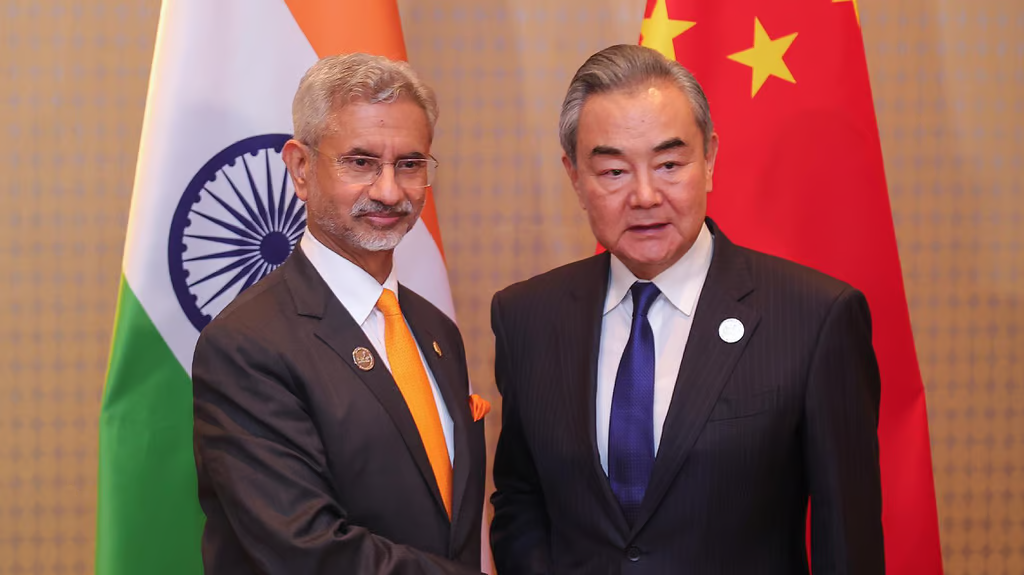
Rio De Janeiro/New Delhi: Advancing the ongoing reset in India-China relations, the foreign ministers of India and China met on the sidelines of the G20 Summit in Brazil and discussed the next steps to bolster relations between the two Asian powers. The meeting between India’s External Affairs Minister S. Jaishankar and his Chinese counterpart in Rio de Janeiro was their first since the landmark agreement on disengagement along the Line of Actual Control (LAC) in eastern Ladakh, marked a crucial moment in India-China relations. A Reset Amid Lingering Tensions The conversation between Dr. Jaishankar and Mr. Wang Yi occurred against the backdrop of the October 21 border agreement, which saw both nations finally dismantling forward positions at the contested Depsang and Demchok areas.
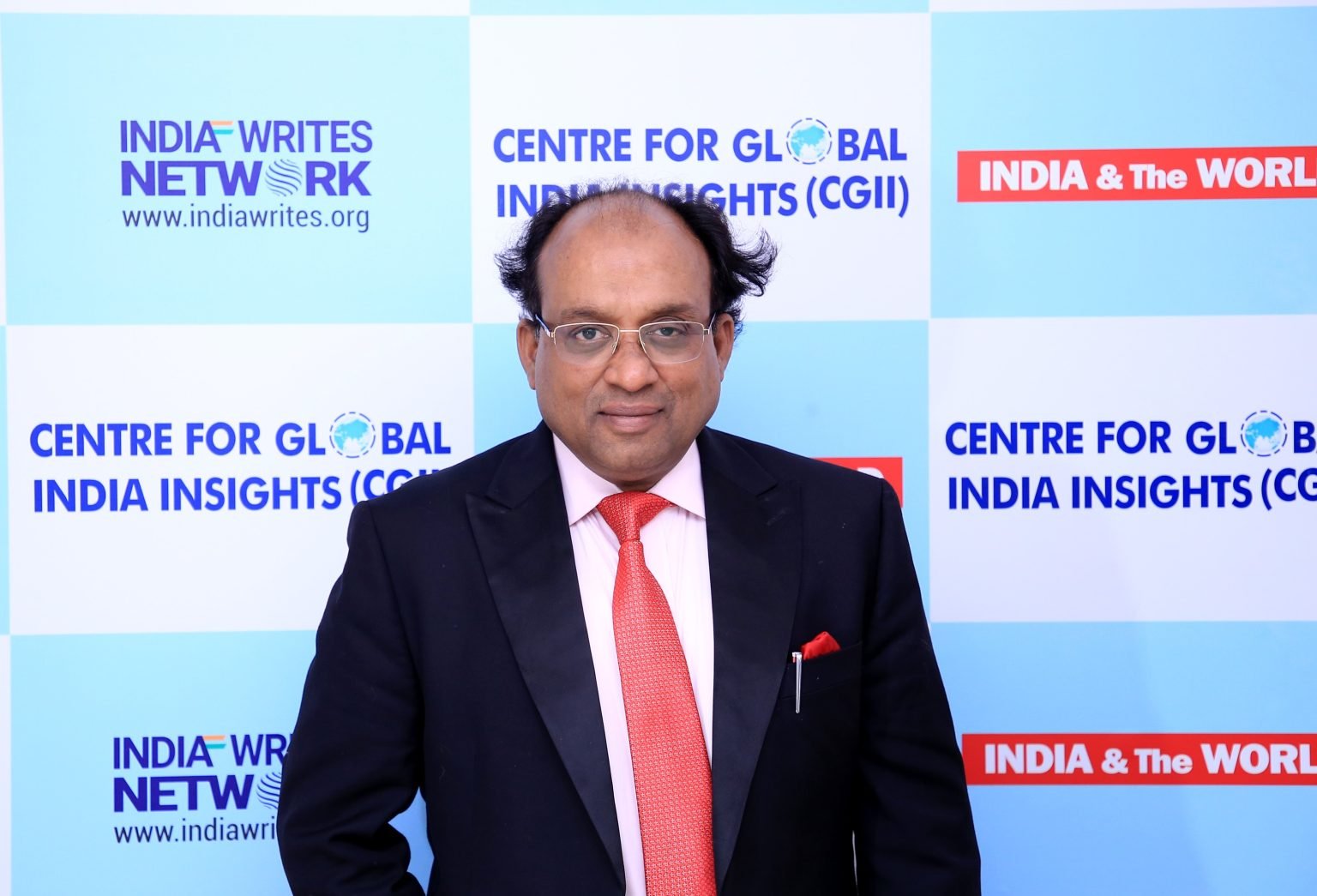
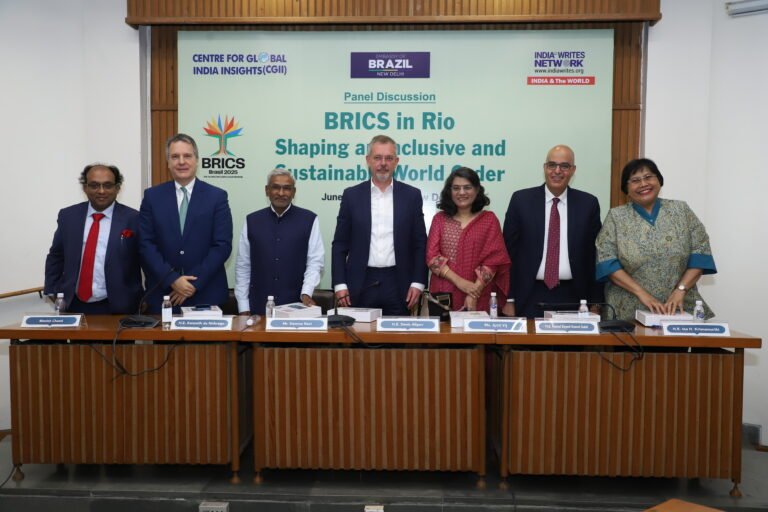
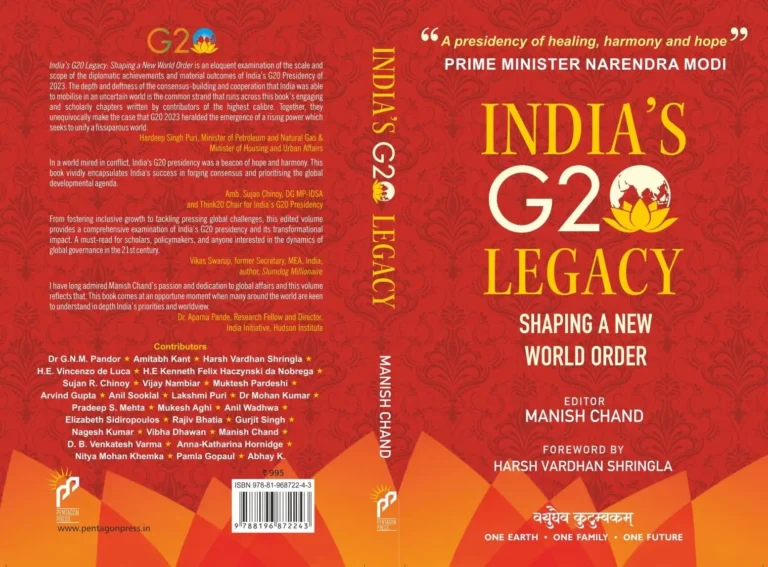
“The meeting between the foreign ministers takes place barely a month after the meeting between Prime Minister Narendra Modi and Chinese President Xi Jinping in the Russian city of Kazan on October 21, which paved the way for a rapprochement. The foreign ministers’ meeting, so soon after the leaders’ meeting, shows the sincerity of the two sides to carry forward the agreement reached last month,” said Manish Chand, CEO, Centre for Global India Insights, a think tank focused on global affairs.
This development followed three years of heightened tensions, which had frozen broader diplomatic engagement between the two Asian giants. “It is very good to meet on the sidelines of G20. We saw each other recently on the sidelines of BRICS as well,” Dr. Jaishankar remarked during the meeting, referring to their last interaction in Kazan, Russia, in October. Dr. Jaishankar acknowledged the importance of the recent breakthrough, stating, “In Kazan, our leaders reached a consensus in taking the next steps in our relations bearing in mind the understanding of October 21. I am glad to note that on the ground, the implementation of that understanding has proceeded as planned.”
The two foreign ministers reflected on their nations’ pivotal roles in shaping the outcomes of multilateral platforms like BRICS and G20. Dr. Jaishankar highlighted their shared responsibilities, noting, “Our contribution to both platforms was notable in shaping the eventual outcomes. But it was a reminder to us of the importance of our two countries in international politics.”
Ahead of the meeting, a spokesperson for the Chinese Foreign Ministry reiterated Beijing’s commitment to implementing agreements reached by PM Modi and his Chinese counterpart. “China stands ready to work with India to deliver on the important common understandings between the leaders of the two countries,” the spokesperson said, highlighting mutual interests in stability and strategic trust. Progress Along the LAC and Beyond India and China’s border agreement represented a rare instance of diplomacy overcoming entrenched military standoffs. Under the terms of the deal, both sides agreed to pull back troops and dismantle temporary posts, restoring the status quo at the LAC’s friction points. Speaking after the meeting, Dr. Jaishankar shared updates on the progress: “We noted the progress in the recent disengagement in border areas. And exchanged views on the next steps in our bilateral ties. We also discussed the global situation.” The breakthrough in Ladakh and the subsequent diplomatic engagements have rekindled hopes of stabilizing a relationship strained by mistrust since the Galwan Valley clash in 2020. While military disengagement continues, broader de-escalation, which would involve withdrawing concentrated troop deployments, remains a work in progress. Cautious Optimism in Bilateral Ties Despite the progress, India has signalled it will tread carefully in rebuilding ties with Beijing. Dr. Jaishankar, speaking at the Hindustan Times Leadership Summit just days before the G20 meeting, stressed that disengagement was only the first step. “I see disengagement as disengagement. Nothing more, nothing less,” he said, underscoring that reducing military proximity along the LAC does not equate to a strategic reset. “Disengagement must lead to de-escalation,” he added, highlighting the need for broader troop withdrawals and stability in what he described as a “complicated relationship.” While the meeting in Brazil reinforced a shared commitment to implementing the recent agreement, Dr. Jaishankar’s remarks reflected the measured optimism with which India is approaching the thaw. “At this moment, frankly, we are focused on the disengagement,” he said, signalling that while progress is welcome, broader challenges in the bilateral relationship remain.