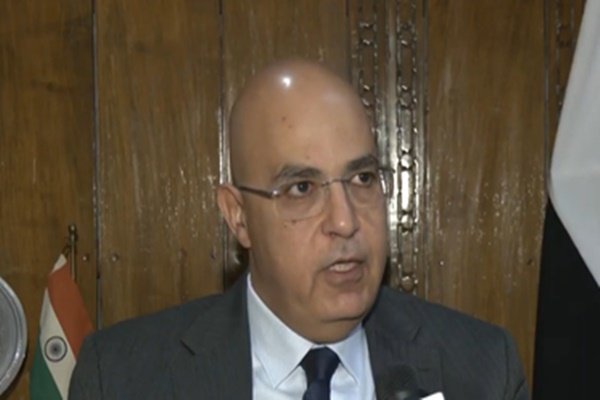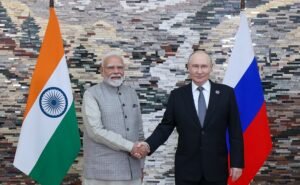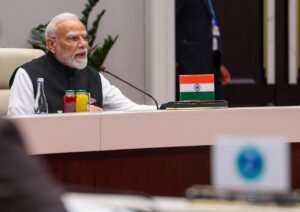



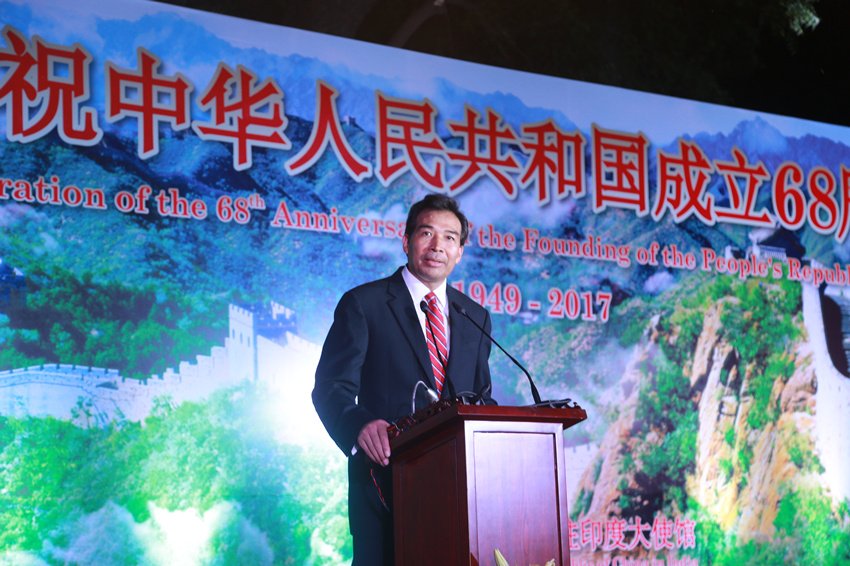
More than a month after India and China ended their embittered standoff at the Doklam plateau, followed by a defrosting meeting between the leaders of two countries in Xiamen, China’s ambassador to India Luo Zhaohui has conjured up a new formula for improving India-China ties that envisages reconciliation and proactive cooperation between the two Asian giants. In his formulation, Doklam, with its connotations of hostility and one-upmanship, should be replaced by a synchronous dance between Asia’s leading economies. Alluding to the defining meeting between Prime Minister Narendra Modi and Chinese President Xi Jinping in the coastal city of Xiamen on September 5, the Chinese envoy said: “They sent a clear message to the world, “reconciliation” and “cooperation”. “We should turn the old page and start a new chapter with the same pace and direction. We should dance together,” the Chinese envoy said at the National Day celebrations to mark the 68th anniversary of the founding of the People’s Republic of China. “China is the largest trading partner of India. We have made a lot of progress at bilateral level, as well as in international and regional affairs. I am quite sure that with joint efforts, we will focus on cooperation, handle the difference properly, enhance mutual trust, and move forward our relations to a new height,” he said at the premises of the Chinese embassy in New Delhi on September 29. 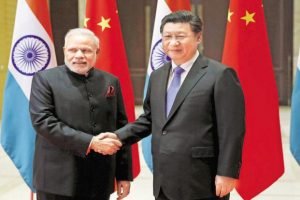 The Chinese envoy’s 1+1 formula indicates an emerging thinking among China’s top political establishment about proactively partnering with India with a view to blending strengths and core competencies to realise dreams of national rejuvenation by both countries. With his talk of a new beginning following the Modi-Xi meeting in Xiamen on September 5, the envoy has underlined a new post-Doklam template for scaling up India-China relations across the spectrum. It will take some time before the narrative of India-China relations will turn from adversarial to win-win and mutually empowering, but the ambassador’s remarks underscores a strong political will on the part of the Chinese president to improve relations with India, just before China heads for once-in-five-years leadership transition at the 19th Party Congress of CPC, starting October 18. Cultural Connect
 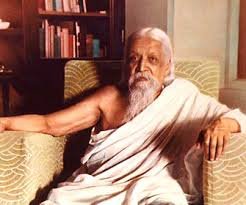 Moving beyond geopolitical issues that tend to shadow India-China relations, the envoy focused on centuries-old cultural connections between Asia’s largest countries. “Last week, I visited Pondicherry. It is one of my dreaming places. One of my teachers, Professor Xu Fancheng lived in Sri Aurobindo Ashram from 1945 to 1978. He was one of the most famous Chinese scholars translating the Upanisad, Bhagwad Gita, and Shakuntala from Sanskrit to Chinese. He also introduced Sri Aurobindo to China. More than 300 pieces of paintings of Professor Xu were kept in Sri Aurobindo Ashram. Looking at his legacies, our eyes were full of tears. He was one of the bridges between our two countries.”
 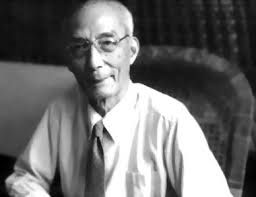 “In the history of bilateral engagement, there have been thousands of prominent persons like Professor Xu, including Xuanzang, Faxian, Bodhidharma and Tagore. We should never forget their contribution and legacies. The history could teach us a lot of things. Standing on their shoulders, we should do more today.” China set for brighter future Striking an upbeat note on the future of China, the envoy spoke about China’s “New Four Inventions,” which include high-speed train, Alipay, Bicycle-Sharing and Online Shopping. “The New Four Inventions are the new pride and glory, compared with the Four Inventions in ancient China, namely, Papermaking, Printing, Compass and Gunpowder.” “Next month, the 19th National Congress of the Communist Party of China will be held in Beijing. I firmly believe that under the leadership of the Communist Party of China and President Xi Jinping, China will have a brighter future,” he said while alluding to China’s $11 trillion economy.