
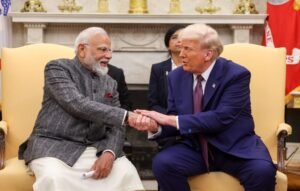


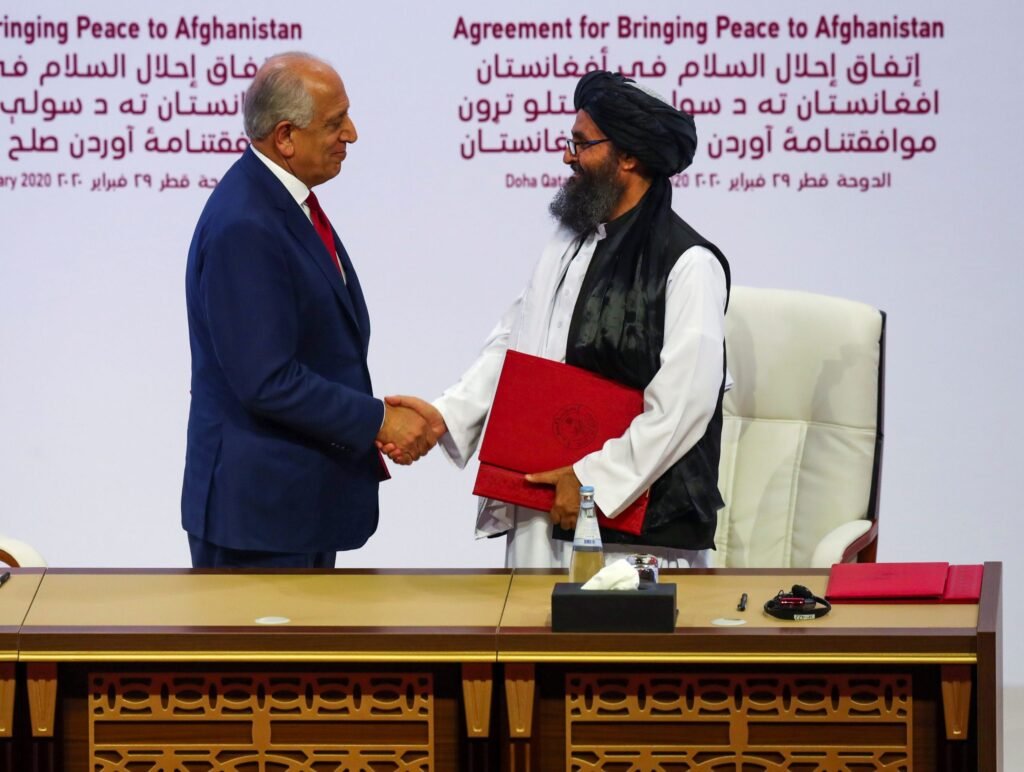
US President Donald Trump hailed the deal and said: “It’s time after all these years to go and bring our people back home. We The US-Taliban peace deal, that will pave the way for phased withdrawal of US troops from the violence-torn Afghanistan in return for the cessation of violence by the Taliban militia has sparked varying reactions from key capitals in the world, with some welcoming it while others airing their apprehensions. India, one of the biggest development partners of Afghanistan, has cautiously welcomed the deal while pitching for an Afghan-led, Afghan-owned and Afghan- controlled process”. “India’s consistent policy is to support all opportunities that can bring peace, security and stability in Afghanistan; end violence; cut ties with international terrorism; and lead to a lasting political settlement through an Afghan led, Afghan owned and Afghan controlled process,” said India’s Ministry of External Affairs. Here are reactions to the US-Taliban deal from some international organizations and countries: United Nations UN Secretary-General Antonio Guterres called the agreement an important development in achieving a lasting political settlement in Afghanistan. “The Secretary-General stresses the importance of sustaining the nationwide reduction in violence, for the benefit of all Afghans. He encourages continued efforts by all parties to create an enabling environment for the intra-Afghan negotiations and a comprehensive peace process,” UN spokesman Stephane Dujarric said in a statement. United States want to bring out people back home. We just signed an agreement that puts us in a position to get it done and bring it down to in the vicinity of 8,000 troops.” “If bad things happen, we’ll go back … go back with a force like nobody has ever seen,” Mr Trump added.US Secretary of State Mike Pompeo said: “I know there will be a temptation to declare victory, but victory for Afghans will only be achieved when they can live in peace and prosper.” Qatar Qatar’s foreign minister Sheikh Mohammed bin Abdulrahman Al Thani said: “We hope this historic agreement will contribute to achieving peace, stability and prosperity in the region and the world.” Saudi Arabia Saudi Arabia’s foreign ministry said it hoped the agreement would lead to a comprehensive and permanent ceasefire and nationwide peace in Afghanistan. Pakistan Pakistan’s Prime Minister Imran Khan said: “We welcome the Doha Accord signed between US and the Taliban. This is the start of a peace and reconciliation process to end decades of war and suffering of the Afghan people. I have always maintained that a political solution, no matter how complex, is the only meaningful path to peace.”Afghan President Ashraf Ghani said: “All the materials of the … deal are based on condition, it depend on the Taliban’s commitment to the peace deal. There are several points in the deal needs consideration which can be discussed in the talks with the Taliban. Our negotiating team, under the framework of the Afghan government, will be inclusive.” NATO In a statement, NATO said: “Recent progress on peace has ushered in a reduction of violence and paved the way for intra-Afghan negotiations … to reach a comprehensive peace agreement.” “We call on the Taliban to embrace this opportunity for peace. In this context, the alliance and its partners in the Resolute Support Mission will implement conditions-based adjustments, including a reduction to our military presence,” the statement added.NATO Secretary-General Jens Stoltenberg termed the agreement as a “first step to lasting peace”. “The way to peace is long and hard. We have to be prepared for setbacks, spoilers, there is no easy way to peace but this is an important first step,” he said.