

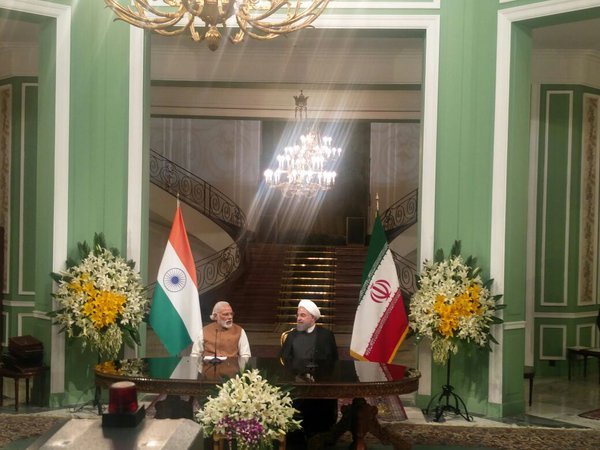
Pledging to combat terrorism and radicalism along with bolstering economic partnership, India and Iran inked 12 pacts including a pact on developing the Chabahar port that is of critical strategic importance to India. This pact is expected to usher in a new phase in India-Iran relations in the aftermath of the lifting of sanctions on Tehran. Prime Minister Narendra Modi’s visit to Iran from May 22-23 has proved to be a defining step in transforming relations between the two countries. Mr Modi began his visit to Iran on May 22 with a visit to the Bhai Ganga Singh Gurudwara in Tehran. The ground had been laid for the pact on Chabahar port to be inked during Mr Modi’s visit to Iran with regular high level visits from India in recent months. India had already committed around $500 million for the important port in Iran’s southern coast. The Chabahar port is a major link between India, Afghanistan and Iran, apart from giving access to Central Asia. The Chabahar port pact will give India Sea to land access to Afghanistan. Defence and Security India and Iran agreed to enhance interaction between defence and security institutions, with special focus on maritime security. In the backdrop of rising terrorism in the region, the two countries vowed to combat terror. Terming the friendship between India and Iran as old as history, Iran’s President Hassan Rouhani said: “Through centuries, our societies have stayed connected through art and architecture, ideas and traditions, and culture and commerce.” Stressing on the growing partnership between the two countries Mr Rouhani added: “Our relations will go beyond merely trade relation and turn into a full-fledged comprehensive economic one.” Post-sanctions era After being isolated internationally for years, Iran has re-entered the international markets. India is looking to proactively capitalize on the new Iran opportunity. After the sanctions were lifted in the backdrop of the historic nuclear agreement between Iran and the P5+1 countries, India has been working towards accelerating trade and investment with Iran. Iran is India’s second largest supplier of oil and can be a reliable partner for India to meet its growing energy needs. Fact-file: Pacts inked between India and Iran during PM Modi’s visit
- Pact on India-Iran Cultural Exchange Programmed
- Pact between the Ministry of External Affairs (MEA) and Ministry of Foreign Affairs (Moffat) Iran on Policy Dialogue between Governments and Interaction between Think Tanks
- Pact between Foreign Service Institute, MEA and the School of International Relations, Iran’s Moffat training of diplomats and exchange of eminent speakers.
- Pact on cooperation in the Fields of Science and Technology.
- Pact between Indian Council for Cultural Relations and Islamic Culture and Relations Organizations of Iran.
- Bilateral contract on Chabahar Port for port development and operations between IPGPL [India Ports Global Private Limited] and Arya Bander of Iran.
- A pact between EXIM Bank and Iran’s Ports and Maritime Organization (PMO) on current specific terms for the Chabahar Port project.
- A Confirmation Statement between EXIM Bank and Central Bank of Iran on the availability of credit of Rest 3000 crore for the import of steel rails and implementation of Chabahar port.
- Pact between ECGC [Export Credit Guarantee Corporation] Limited of India and the Export Guarantee Fund of Iran (EGFI).
- Pact between the National Aluminium Company Limited and the Iranian Mines and Mining Industries Development and Renovation Organization (IMIDRO).
- Pact between IRCON and Construction, Development of Transport and Infrastructure Company (CDTIC) of Iran.
- Pact for cooperation between the National Archives of India and the National Library and Archives Organisation of Iran.
(Sridhar Ramaswamy contributed inputs for the article)