




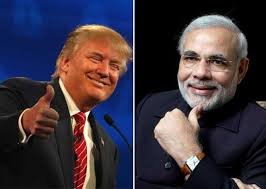
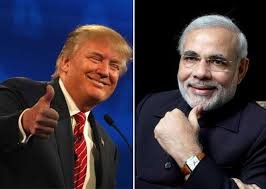
 With strong bipartisan consensus for developing India-US relations, New Delhi is not worried about the course of this vital relationship under the Donald Trump presidency, and is set to leverage enormous goodwill in the US Congress. At a time when top leaders of Britain, Israel and Japan had rushed to Washington to have a measure of the change of guard in the White House, India is doing the same in a way different from top-down approach. To begin with, a record number of 27 US Congressmen drawn from both the Democratic and the Republican parties will visit India beginning later this month, reflecting a long-standing bipartisan approach in Washington to further strengthening of relations with New Delhi. The first batchof 19 Congressmen, whose visit is being organised by prestigious American think-tank Aspen Institute, would be in India from February 20 to 25 and would be meeting a cross-section of politicians, officials, businessmen and policy-makers New Delhi and Hyderabad. Almost simultaneously, a separate bipartisan Congressional delegation of eight members, led by Bob Goodlatte, Chairman of powerful House Judiciary Committee, would be in New Delhi and Bangalore from February 20 to 23. India’s ambassador to US Navtej Singh Sarnasaid such visits reflected the efforts on the part of the US to “strengthen and build” and the consensus in the US Congress for India-US relations. Sarna’s view was echoed separately at a Capitol Hill reception “to celebrate India’s engagement with the 115th US Congress,” when Steny Hoyer, the House Democratic Whip, spoke eloquently about the future prospects of the India-US relationship. During their visit, the American lawmakers are scheduled to have discussions with top government officials, politicians, members of the think-tank bodies and non-governmental organisations on a wide range of issues, including security, terrorism, defence, trade and,most important, India’s role not only in Asia but also in the world. Mr Sarna said the lawmakers would get a first-hand experience of the dynamism of the political process in India, the economic reforms and explore potential new areas of engagement. Setting the tone of the Congressional delegations’ visit was the telephonic conversation between External Affairs Minister Sushma Swaraj and US Secretary of State Rex Tillerson,which focused on priority areas that will dominate the agenda during the Trump presidency. Swaraj and Tillerson agreed to work together closely to further expand and deepen the multi-faceted strategic partnership between India and the US, noting that that strong relations between India and the US were not only in mutual interest but also had regional and global significance. In this context, they agreed to intensify cooperation in various sectors, including the global fight against terrorism, defence and security, energy, and economy, a statement by India’s External Affairs Ministry said. Interestingly, Mr Hoyer emphasized on bilateral relations in defence and security while Republican Congressman Dana Rohrabacher spoke of the significance of addressing the threats emanating from radical Islamists. Visits by Congressional delegations to India are part of multi-faceted interactions between the world’s largest democracies. In 2013, 21 lawmakers had visited for an Aspen Congressional programme to study policy challenges for the US in South Asia. The India Caucus is the largest single country in the US Congress. The visits are being viewed as the spadework for a likely visit to the US later this year by Prime Minister Narendra Modi in the first top political-level contact between the two countries since Donald Trump became the US President. India appears to have adopted a path of calibrated approach to connect with the Trump administration.President Trump has already spoken on phone to Mr Modi and so have American Defence Secretary James Mattis and Defence Minister Manohar Parrikar with each other, which signals the efforts by the two countries to sustain the momentum in India-US relations amid continuing uncertainty surrounding the Trump administration’s foreign policy postures.