

Trump’s Meeting With Chinese Counterpart: Focus on Trade, North Korea Issue
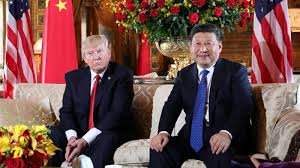
“The United States really has to change its policies because they’ve gotten so far behind on trade with China and frankly with other countries,” Trump said at an expanded meeting with President Xi. “And I have great respect for you for that because you are representing China. But it’s too bad that past administrations allowed it to get so far out of kilter.”Trump’s two-day visit to Beijing resulted in a number of trade agreements worth $253.4 billion, according to Xi Jinping’s statements during a joint press conference on Thursday. Moreover, on the eve of Trump’s visit, the US and Chinese companies have already signed a number of deals worth $9 billion.
India, Italy to upscale economic ties, enhance counter-terror cooperation
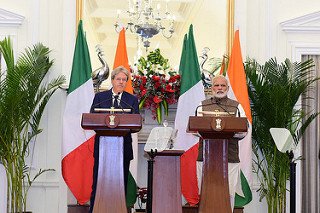
Resetting their bilateral ties on an upward trajectory after a prolonged chill following the Marines incident, India and Italy have decided to enhance counter-terror cooperation and upscale their economic relationship.
The first visit by an Italian prime minister in a decade by Paolo Gentiloni October 30 ended a hiatus of 10 years and firmed up a template for accelerating India-Italy partnership across the spectrum. Mr Gentiloni’s visit marks significant step forward since the two countries were embroiled in a crisis involving two Italian marines accused of killing two Indian fishermen in sea in 2012. The visit paves the way for a series of high-level Italian delegations that are scheduled to visit India in the coming days.
Pakistan important but needs to do more to fight terror: Tillerson
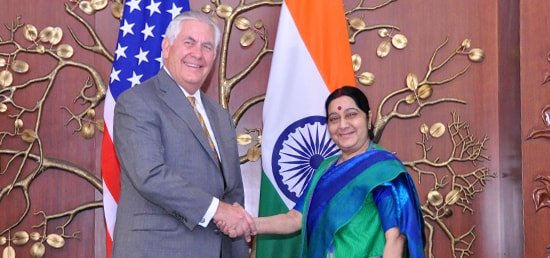
More than two months after US President Donald Trump called out Pakistan for providing “safe haven to agents of chaos, violence and terror,” US Secretary of State Rex Tillerson delivered an unequivocal message to Pakistan to dismantle its terror infrastructure or face consequences.
In Islamabad, Mr. Tillerson held extensive talks with Pakistan Prime Minister Shahid Khaqan Abbasi, Foreign Minister Khwaja Mohammad Asif and Army Chief General Qamar Javed Bajwa. During the talks, Tillerson said that Pakistan is “so important regionally to our joint goals of providing peace and security to the region and providing opportunity for greater economic relationship,” but it was important for Islamabad to keep its commitment on fighting terror.
Assuring his country’s continued support, Pakistani PM told Mr. Tillerson: “We have produced results. And we are looking forward to moving ahead with the US and building a tremendous relationship.” He added, “The US can rest assured that we are strategic partners in the war against terror and that today Pakistan is fighting the largest war in the world against terror.”
Modi cheers Abe’s big election win, India-Japan ties set for upswing
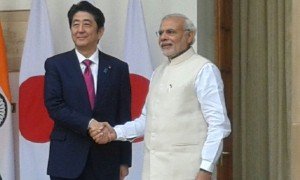
When Shinzo Abe secured a landslide victory in the national election on October 22, making him one of the longest-serving leaders of post-war Japan, one of the first congratulatory messages to reach him was that of his Indian friend, Prime Minister Narendra Modi. “Heartiest greetings to my dear friend @AbeShinzo on his big election win,” tweeted an elated Mr. Modi. “Look forward to further strengthen India—Japan relations with him.”
Mr. Abe is one of the few world leaders with whom Mr. Modi shares a great personal chemistry and is also engaged in various joint initiatives both domestically as well as internationally such as the Asia-Africa Growth Corridor which is widely seen as a counter to China’s Belt and Road Initiative.
China’s Xi pushes for balanced growth, more open economy
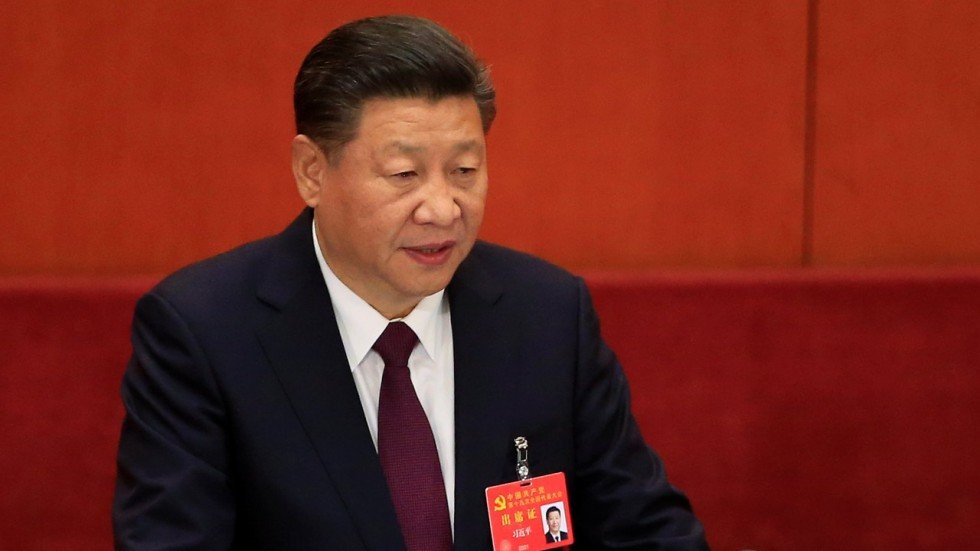
Setting the target for a “moderately prosperous society” and a “fully developed nation”, China’s President Xi Xinping has renewed the focus on the development of socialism with Chinese characteristics and focused on promoting balanced development at the 19th Party Congress of the CPC.
Mr. Xi has been a long- time proponent of a more open and inclusive Chinese economy, often facing flak from neo-Maoists who accuse him of moving away from Chairman Mao’s socialist agends. However, President Xi has been successful in consolidating his hold over the Party and has overseen a steady growth of the Chinese economy.
Laying out his strategy in 14 points that included diverse aspects like national security, elder care and reform, Mr. Xi was firm is declaring that “the party leads everything, everywhere”. A call for greater incentive to investment and serious market-oriented reform of its exchange rate as well as its financial system was made by the Chinese leader, while also emphasizing the authority of the state firms in the market. “Openness brings progress for ourselves, seclusion leaves one behind. China will not close its doors to the world, we will only become more and more open,” he said.
In the global scenario of increased protectionism and isolationist sentiments in the US, China is positioning itself as a major international player, aiding and assisting a host of infrastructural and development projects oversees and leading grand connectivity initiatives like the One Belt One Road. Proclaiming China as the future leader of the developing world, Mr. Xi attacked the pitfalls of the Western-style democracy claiming that “No country alone can handle all the challenges that mankind faces and no country can retreat into self-isolation.” “We have every confidence that we can give full play to the strengths and distinctive features of China’s socialist democracy, and make China’s contribution to the political advancement of mankind… We should not just mechanically copy the political systems of other countries,” he added.
Xi Consolidates Power as New China Leadership Line-up Revealed
As a five-yearly leadership shake-up is underway in Beijing, President Xi Jinping is expected to fill the ruling Communist Party’s apex of decision-making, the Politburo Standing Committee, with trusted allies.Xi’s line-up for his first term at the helm of the world’s largest political party was a compromise influenced by his two immediate predecessors. But China’s ongoing 19th party congress is seen as the new beginning for Xi, who is expected to enter his second term with a team stacked with trusted allies and followers.
World leaders hail Nobel Peace Prize for ICAN
Amid rising tensions of a nuclear threat from North Korea and the risks around the Iran nuclear deal, world leaders and peace activists have hailed the Nobel Peace Prize for the Geneva-based anti-nuclear advocacy group International Campaign to Abolish Nuclear Weapons (ICAN).
The recognition follows the organisation’s decade long work which led to the recent signing of the United Nations Treaty on the Prohibition of Nuclear Weapons.
“The organisation is receiving the award for its work to draw attention to the catastrophic humanitarian consequences of any use of nuclear weapons and for its ground-breaking efforts to achieve a treaty-based prohibition of such weapons,” the Norwegian Nobel Committee said in a statement. “Through binding international agreements, the international community has previously adopted prohibitions against land mines, cluster munitions and biological and chemical weapons. Nuclear weapons are even more destructive, but have not yet been made the object of a similar international legal prohibition,” said Nobel Committee chairman Berit Reiss-Andersen announcing the prize. The UN treaty adopted in July has the support of 122 countries, which also includes Iran. However, major nuclear powers like the United States and Russia have stayed away from it.
US oil shipment opens a new chapter in Indo-US ties
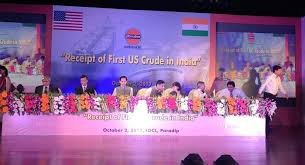
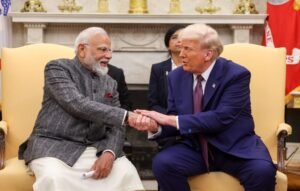
India’s quest to broad-base its energy security received a major boost after the first shipment of 1.6 million barrels of crude oil arrived at Paradip port in Orissa on October 2, following US President Donald Trump and Indian Prime Minister Narendra Modi’s agreement on a strategic energy partnership in June this year. The shipment is part of a cumulative order of 3.9 million barrel placed by the Indian public sector refiner Indian Oil.
Crude oil exports from the US were banned for nearly four decades, starting from the 1973 OPEC (Organization for Petroleum Exporting Countries) oil embargo to late 2015 when the then President Barack Obama signed the Consolidated Appropriations Act. Since 2017, crude oil exports have surpassed more than one million barrels per day (BPD) on multiple occasions.
Mr. Sanjay Sudhir, joint secretary (International Cooperation) in the Ministry of Petroleum and Natural Gas, hailed the shipment as a “new chapter in the history of Indo-US trade” that will be able to guide price stability and energy security in India. He was present along with Ms. Katherine B Hadda, US Consul General in Hyderabad, and other officials from the Ministry of External Affairs and Indian Oil at the ceremony to welcome the cargo. “MT New Prosperity, a Very Large Crude Carrier (VLCC), of capacity 2 million barrels of crude, left US Gulf Coast on 19th August and arrived at Paradip port today. Indian Oil will process the crude at its East-Coast base refineries, located at Paradip, Haldia, Barauni and Bongaigaon,” the press release said.
Protect interests of farmers, small industries: RSS chief
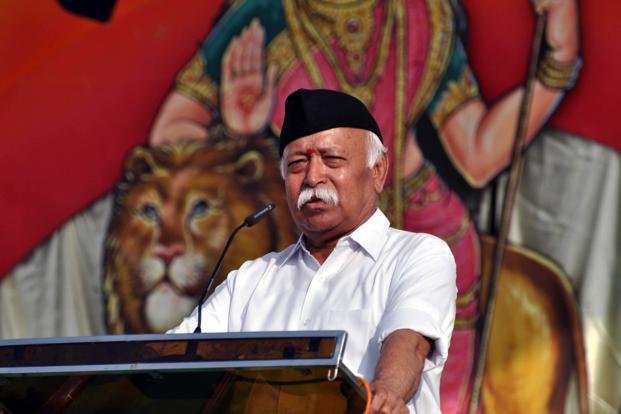
“To control corruption, the Central government has taken various policy decisions, yet there is requirement of an integrated policy. Policy should address needs of industry, trade, agriculture and environment which will safeguard interests of all. The biggest contribution to our economy is made by the small, medium industries and self-employed business. Our economic policies should […]
Human rights development with Chinese characteristics: China Foreign Minister
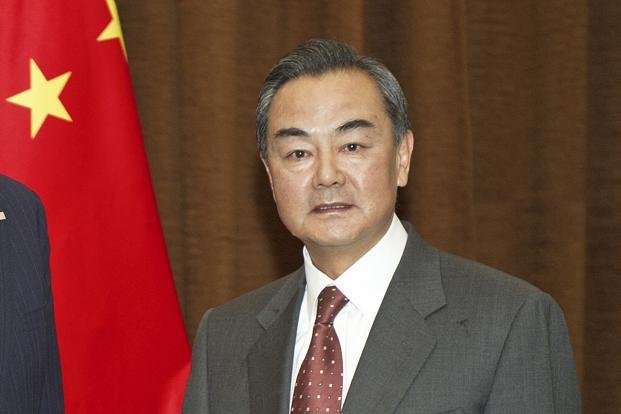
The past five years since the 18th National Congress of the Communist Party of China in November 2012 have seen an extraordinary journey by China. The CPC Central Committee with Comrade Xi Jinping as its core has led the people across the country in achieving tremendous progress in all fields, including the protection of human […]